
Intel Feed
Cyber Threat Intelligence
Daily reporting on the threats that matter, written to be used. We track active actors, pull apart malware and techniques, and publish indicators you can feed straight into your defenses.
Threat-actor tracking
Profiles and running notes on active groups, their infrastructure, and how their targeting shifts over time.
Malware & TTP analysis
Breakdowns of malware families and attacker techniques, mapped to the behavior defenders can actually detect.
IOC & YARA downloads
Machine-readable indicators and YARA rules attached to reports, so your team can hunt and block without re-typing.
Reports
Latest reporting

QScan and QTRouter Show Why Proxy Infrastructure Is an Espionage Force Multiplier
The FBI/DOJ disruption of QScan and QTRouter shows how China-linked operators turn reconnaissance and proxy routing into reusable espionage infrastructure.

vCenter Exploitation Shows Patching Alone Is Not Incident Response
Active exploitation of CVE-2026-59310 shows why VMware vCenter patching must be paired with compromise assessment, egress controls, and management-plane segmentation.

Edge Infrastructure Convergence Shows Why Perimeter Devices Need Their Own Patch SLAs
SentinelOne and Tenable found that state-backed actors and ransomware crews converge on the same perimeter products. For SMBs and government contractors, edge devices need dedicated patch SLAs, exposure monitoring, and compromise review.
Signed ClickOnce Lures Show Why Hiring Workflows Need Endpoint Guardrails
A fake Web3 interview chain used signed ClickOnce delivery to deploy credential stealers and a Go hVNC RAT. Here is what SMBs and government contractors should tighten now.

ShieldBreak Shows Why Endpoint Protection Needs Compensating Controls
CVE-2026-69414 is a Microsoft Defender privilege-escalation zero-day with public PoC and no patch yet. Here is how defenders should handle the exposure gap.

AI-Enabled Malware Still Behaves Like Malware
Unit 42’s telemetry shows most AI-enabled malware remains experimental, but the real risk is faster iteration and AI-branded delivery. Defenders still win by watching behavior, identity, signing, and execution.

Private APNs Are Becoming OT Attack Paths
CERT Polska’s energy-sector follow-up shows how private APN connectivity can become an OT pivot path. Private LTE and 5G need segmentation, inventory, and monitoring—not blind trust.

vCenter Exploitation Shows Why Control Planes Need Containment
Active exploitation of CVE-2026-59310 shows why vCenter needs more than fast patching: control-plane containment, egress limits, and compromise assessment matter.

Apollo Breach Shows Why Helpdesk Vishing Is a Cloud-Control Problem
Apollo confirmed a cloud breach after helpdesk-style social engineering. The defensive lesson: treat MFA resets, passkey enrollment, and SaaS downloads as control-plane events.

BTR.sys Shows Why Trusted Security Drivers Need Behavioral Monitoring
Check Point Research shows how Microsoft Defender’s boot-time remediation driver can be repurposed for privileged file and registry operations. The defensive lesson is simple: monitor trusted security components by behavior, not signature alone.
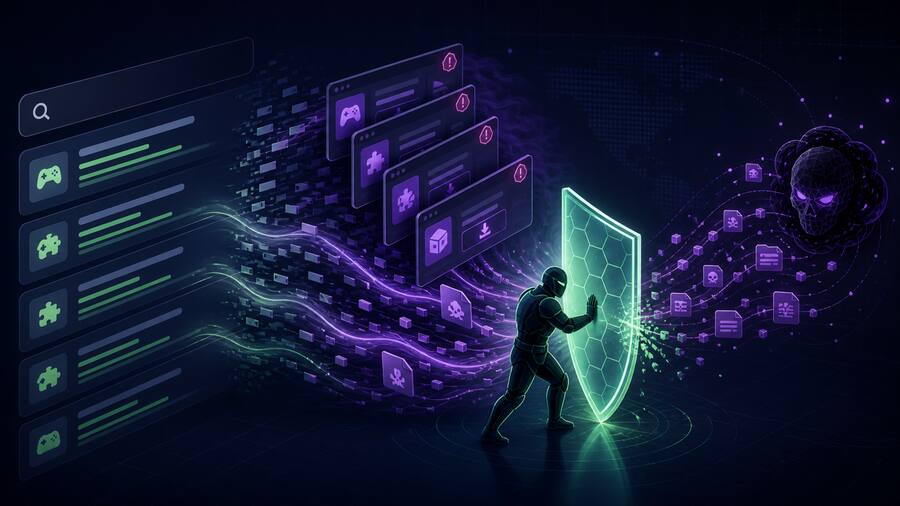
WeedHack Shows SEO Poisoning Is Malware Delivery Infrastructure
McAfee says WeedHack is still using fake gaming sites, SEO poisoning, Discord links, MediaFire, and GitHub-style trust signals to deliver malware. The same playbook can hit business users searching for tools and downloads.
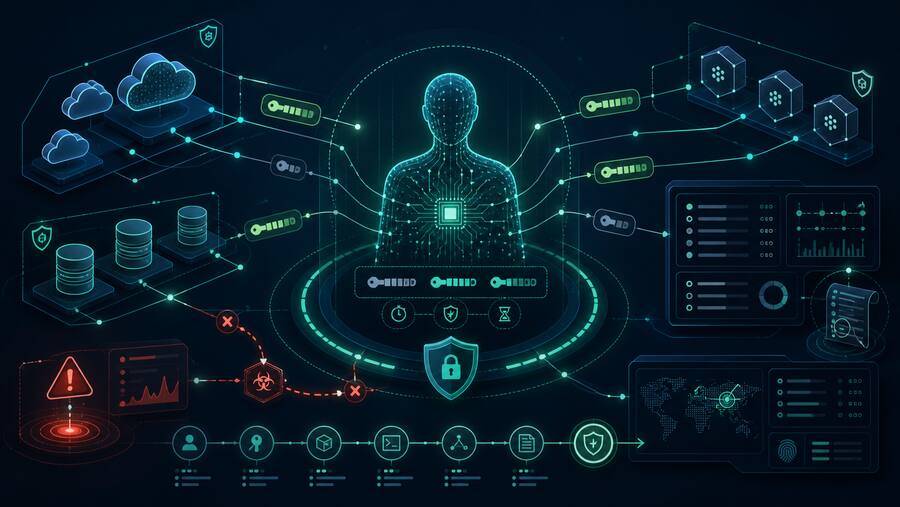
AI Agent Incidents Need Task-Scoped Incident Response
AI agents need incident response that maps credential use back to task authorization. Here is how SMBs and government contractors can reduce blast radius with task-scoped access, logging, and containment runbooks.

SDLC Supply-Chain Attacks Show Why Developer Tools Need Runtime Controls
Attackers are targeting developer endpoints, CI/CD pipelines, package managers, and cloud runtime—not just finished applications. Here is how SMBs and government contractors can reduce SDLC supply-chain blast radius.

Russian Auth-Flow Phishing Shows MFA Can Be Bypassed Without Exploits
Russian-linked clusters are abusing app passwords, OAuth consent, device-code login, WhatsApp linking, and captive portals. The defense is visibility and governance around authorization flows—not just MFA at login.

Fake AI Tools Show Brand Trust Has Become Malware Delivery
Sophos X-Ops found attackers repeatedly impersonating AI brands with fake installers, malicious extensions, phishing lures, and AI-assisted tooling. The near-term defense is not exotic: approved sources, browser governance, endpoint telemetry, DNS controls, token hygiene, and clear AI software rules.
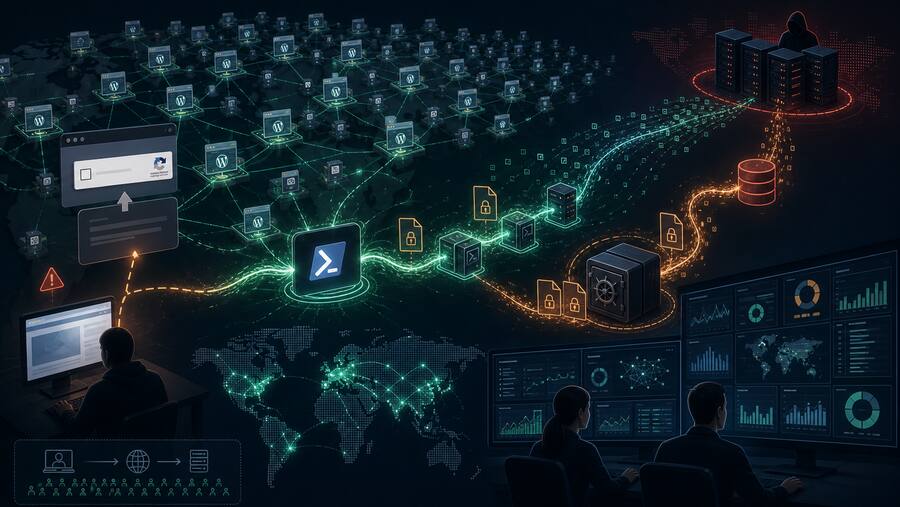
StopAndProtect Shows Why WordPress Sites Are Attack Infrastructure
Check Point Research exposed StopAndProtect, an operation abusing thousands of compromised WordPress sites for ClickFix delivery, malware staging, command routing, victim logging, data theft, and ransomware. The practical lesson: public websites need the same ownership, telemetry, and incident-response discipline as other production infrastructure.

MacSync Stealer Shows Why Behavioral Pivots Beat Rotating Domains
Microsoft Defender Experts expanded MacSync Stealer tracking from a small domain set to 30+ related domains by correlating durable endpoint and network behaviors. For defenders, the lesson is to hunt the attack chain—not just the rotating infrastructure.

PurpleDelta Shows Why Remote Hiring Is Now an Insider-Risk Control
Recorded Future’s PurpleDelta research shows North Korean IT worker operations using fabricated personas, AI-assisted interviews, remote desktop tooling, and facilitators to enter legitimate remote technical roles. Defenders should treat hiring, identity proofing, endpoint onboarding, and contractor access as one security workflow.

GitLab GraphQL Flaw Shows Why DevSecOps Platforms Need Emergency Patch Runbooks
GitLab patched CVE-2026-19478, a critical GraphQL flaw affecting self-managed CE/EE instances. Defenders should patch fast and verify DevSecOps platform integrity after the update.

Forminator RCE Shows Why WordPress Plugin Risk Needs Runtime Controls
CVE-2026-15748 in Forminator Forms shows why WordPress file uploads need plugin patching, upload-directory hardening, and runtime monitoring—not just auto-update hope.

C2Looper Shows Why GitHub-Based C2 Belongs in Ransomware Triage
Zscaler ThreatLabz found C2Looper, a Rust-based backdoor that evolved to use GitHub for command-and-control. Here is what SMBs and government contractors should monitor before trusted-platform abuse becomes ransomware.

VMware vCenter Exploitation Shows Why Patching Is Not Incident Closure
Active exploitation of CVE-2026-59310 shows why VMware vCenter patching must be paired with compromise assessment, reverse-shell hunting, and control-plane segmentation.

Ransomware’s Long Tail Means Defenders Need Faster Triage
Check Point Research’s Q2 2026 ransomware data shows a wider operator ecosystem, faster exploitation windows, and lower payment rates. Here is what SMBs and government contractors should harden first.

Azure Directory Dumps Show Why Identity Data Is Attack Infrastructure
A reported Azure and Entra directory exfiltration campaign shows why cloud identity data, service accounts, and org charts need defensive monitoring before attackers weaponize them.
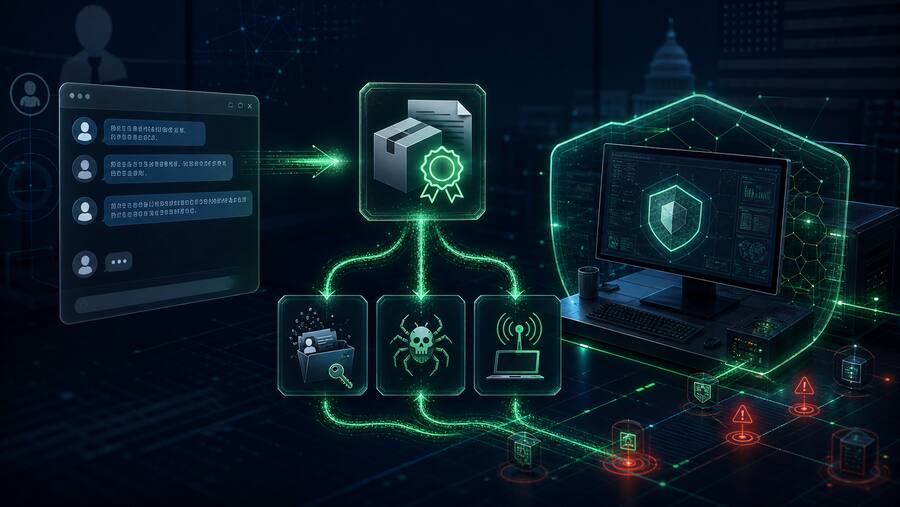
Signed ClickOnce Shows Fake Interviews Are Now a Credential-Theft Delivery System
A fake Web3 interview chain used a signed ClickOnce app to deliver stealers and a RAT. Here is what SMBs and government contractors should change in endpoint, identity, and hiring-workflow defenses.

Dropcatch Domains Show Why Reputation Is Not Trust
Threat actors are buying expired domains with inherited reputation, backlinks, and traffic, then using them for redirects, scams, malware, and command-and-control. Here is what SMBs and government contractors should harden first.

CaptiveCrunch Shows Why Travel Wi-Fi Is an Identity Attack Surface
Zscaler reports that Midnight Blizzard operators are abusing hotel and conference Wi-Fi captive portals for Microsoft 365 credential theft, device-code phishing, and malware delivery. Here is what SMBs and government contractors should harden first.
HoneyMyte’s CoolClient Rootkit Shows Why Kernel Visibility Matters
HoneyMyte’s CoolClient backdoor now includes signed kernel-mode rootkit capabilities, raising the bar for driver monitoring, Defender exclusion review, and post-compromise endpoint validation.

JWR Phishing Framework Shows Why MFA Codes Are Now Live Targets
Cisco Talos documented JWR, a real-time phishing framework that lets operators steer victims through fake checkout and login flows while harvesting credentials, payment data, OTPs, identity documents, and device fingerprints. For SMBs and government contractors, the lesson is direct: MFA codes are n

Evooo1Bot Shows Why Exposed Linux and Edge Devices Are Still High-Value Targets
FortiGuard Labs documented Evooo1Bot, a Linux botnet combining Mirai-style DDoS with SSH brute forcing, SOCKS relay, credential sniffing, persistence, and exploit-driven infection of exposed devices.

Malware Crypting Services Show Why Behavioral Detection Matters
Recorded Future’s look at malware crypting services shows why SMBs and government contractors need behavioral detection, endpoint telemetry, and incident response—not just clean file scans.

Private Wireless Utility Networks Are Becoming OT Attack Paths
A CERT Polska follow-up on an energy-sector incident shows why private APNs, private LTE/5G, and cellular routers must be treated as OT attack paths — not inherently trusted connectivity.

Kong Mesh Vulnerabilities Show Why Service Mesh Security Needs Control-Plane Discipline
Fresh Kong Mesh/Kuma vulnerabilities touch service-mesh trust boundaries: admin token exposure, data-plane configuration disclosure, workload identity confusion, token interception, and control-plane DoS.

Gunra Ransomware Shows Why VPN Compromise Is an Incident, Not a Patch Ticket
Gunra ransomware activity tied to Fortinet VPN exploitation shows why edge-device compromise requires incident response: credential review, session validation, segmentation checks, and backup protection — not just patching.

CI Fortify Shows Why OT Isolation Must Be Engineered Before the Incident
New CI Fortify OT isolation guidance turns prepare-to-disconnect planning into an engineering test: can vital systems be isolated fast while essential services keep running?

Lazarus Dream Job Campaign Turns Fake Recruiting Into a Windows Zero-Day Intrusion
Check Point Research reports a new Lazarus Operation Dream Job wave using fake recruiting lures, trojanized PDF tooling, Microsoft Graph/OneDrive C2, Roundcube relay infrastructure, and the patched CVE-2026-68820 Windows AFD.sys zero-day.

Deno Runtime Abuse Shows Why Developer Tooling Needs Security Governance
Sophos MDR observed attackers bringing the legitimate Deno runtime into intrusions to execute malicious JavaScript through less-monitored paths. Here is what SMBs and government contractors should monitor.

Aeternum Shows Why Blockchain-Based C2 Is a Practical Defense Problem
Aeternum uses Polygon smart contracts, GitHub staging, and Telegram exfiltration to make botnet command-and-control more resilient. Here is what SMBs and government contractors should watch for.

DeadLock Ransomware Shows Why Recovery Infrastructure Is Part of the Attack Surface
Microsoft’s DeadLock ransomware analysis shows why SMBs and government contractors need to protect backups, logs, identity, and recovery workflows before encryption starts.

UNC6671 Shows Why Helpdesk Vishing Is a Cloud Data-Theft Problem
Google Threat Intelligence reports UNC6671 is using helpdesk vishing, AiTM portals, and SaaS exfiltration across multiple extortion brands. Here is what SMBs and government contractors should do now.

VeloCloud Orchestrator RCE Shows Why SD-WAN Controllers Need Incident Response
CVE-2026-16812 is an actively exploited CVSS 10.0 command-injection flaw in on-premises Arista VeloCloud Orchestrator. For defenders, this is not just a patching issue — it is SD-WAN management-plane incident response.

MSI Router Command-Injection Cluster Shows Why Edge Devices Need Exposure Control
A fresh cluster of critical MSI Radix AXE6600 command-injection CVEs shows how consumer and prosumer edge devices can become root-level footholds when management features are reachable from untrusted networks.
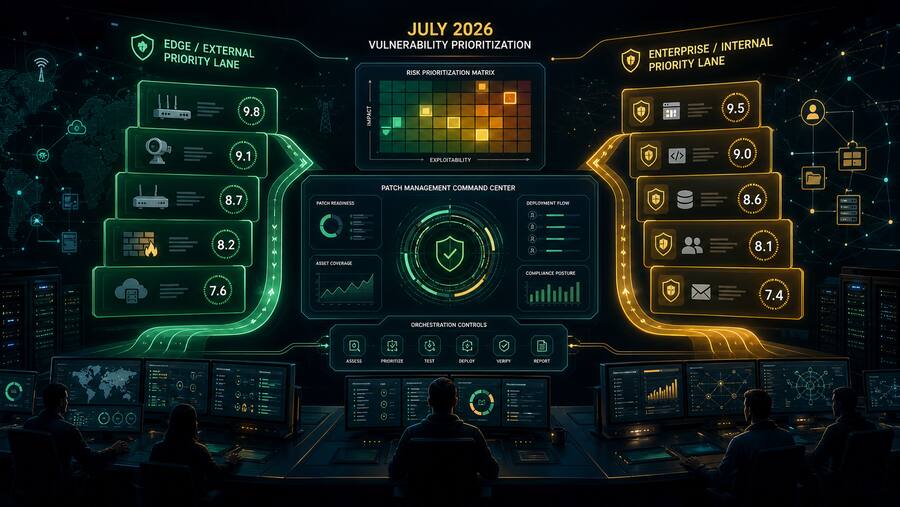
July CVE Data Shows Why Patch Priority Needs Threat Context
Recorded Future’s July 2026 CVE landscape shows a crowded exploitation picture: 85 high-impact vulnerabilities, heavy RCE exposure, public PoCs, and attackers still abusing old edge and application flaws. Here is how SMBs and government contractors should prioritize patching.

ExfilSquad Shows Why CRM and Portal Data Need Extortion-Ready Controls
ExfilSquad’s reported use of torrent-based leak distribution shows why CRM, helpdesk, public portal, and AI support data need stronger access controls, export monitoring, and extortion-ready incident response.

BdThemes Compromise Shows Why WordPress Plugin Risk Extends Beyond Code Updates
Wordfence reported a BdThemes supply-chain compromise where poisoned remote JSON turned WordPress admin notices into an attack path. Here is what SMBs and government contractors should check now.

Cloudflare workerd Bugs Show Why Agent Sandboxes Need Real Defense-in-Depth
Check Point Research disclosed five workerd vulnerabilities affecting Cloudflare Code Mode and Workers isolation assumptions. Here is what SMBs and government contractors should do now.

Langflow RCE Shows Why AI Workflow Tools Need Cloud-Grade Isolation
CVE-2026-0770 turns Langflow code validation into remote code execution risk. For SMBs and government contractors, exposed AI workflow tools need patching, secret rotation, isolation, and post-compromise review.

BINDCLOAK Shows Why C2 Detection Needs Message-Level Visibility
Zscaler ThreatLabz detailed BINDCLOAK, a modular backdoor used after TELESHIM and MIXEDKEY in targeted government intrusions. The defensive lesson: endpoint visibility, token-use monitoring, DLL side-loading detection, and outbound C2 inspection all need to work together.

Passkey Attacks Show Why Passwordless Still Needs Endpoint Defense
Unit 42’s passkey research shows why passwordless authentication still depends on endpoint health, relying-party validation, and recovery-flow hardening. Here is what SMBs and government contractors should do next.

DPRK npm Compromises Show Why Dependency Trust Is Now Identity Risk
Amazon linked compromises of popular npm packages to a DPRK-linked actor. The defensive lesson for SMBs and government contractors: dependency risk is no longer just code review — it is maintainer identity, build-pipeline behavior, and runtime trust.

N-able N-central Exploitation Shows Why MSP Tools Are Control-Plane Risk
N-able says attackers exploited vulnerable N-central servers, used Take Control into managed environments, and registered Cloudflare Tunnel persistence. Here is what SMBs and government contractors should do now.

HOLLOWGRAPH Shows Why Microsoft 365 Is Now Part of the C2 Battlefield
Group-IB’s HOLLOWGRAPH research shows how attackers can turn Microsoft 365 calendars, Graph API traffic, and DNS into covert command-and-control. Here is what SMBs and government contractors should hunt for now.

Fuyao Android TV Botnet Shows Why Cheap Streaming Sticks Are Business Network Risk
KrebsOnSecurity and Bitsight report that some low-cost Android TV boxes are being used for both residential proxy traffic and AI-assisted ad fraud. For SMBs and government contractors, the lesson is simple: consumer IoT does not belong on trusted business networks.

SonicWall SMA Exploit Chain Shows Why VPN Appliances Need Incident Response, Not Just Patching
Resecurity reports active exploitation of SonicWall SMA 1000 flaws chained from /wsproxy access to root. Here is what SMBs and government contractors should do beyond patching.
Adform Script Compromise Shows Why Third-Party Tags Need Supply-Chain Controls
Adform’s JavaScript incident shows how third-party advertising and tracking tags can become browser-side supply-chain risk. Here is what SMBs and government contractors should do now.
XCSSET v40 Shows Why Developer Macs Are Supply-Chain Infrastructure
Unit 42 reports that XCSSET v40 is targeting macOS developers through infected Xcode projects, memory-resident modules, Chrome session hijacking, and Telegram trojanization. Here is what SMBs and gov contractors should defend first.

84 4G/5G Core Flaws Show Why Telecom Trust Zones Need Zero Trust
Researchers disclosed 84 vulnerabilities across open-source LTE and 5G core implementations, exposing how implicit trust between carrier network functions can lead to denial-of-service and session-hijacking risk.

Astaroth WhatsApp Web Spambot Shows Browser Sessions Are Distribution Infrastructure
CrowdStrike reports that Astaroth operators added a WhatsApp Web spambot that abuses hidden browser automation and victim sessions to distribute malware. For defenders, browser-session telemetry and messaging-platform abuse now belong in malware response plans.

TA488 Turns Outlook Web Access Into a Stealthy Persistence Layer
Proofpoint reports Russia-aligned TA488 abused an Outlook Web Access XSS flaw to deploy OWAReaper, a browser-based implant that can persist beyond passwords and endpoint rebuilds.

Open Source Supply Chain Compromise Needs Build-Pipeline Defense, Not Just Dependency Scanning
Google Threat Intelligence Group says open-source package compromise is expanding fast. For SMBs and government contractors, the answer is not just another dependency scan — it is tighter control over tokens, CI/CD triggers, package intake, and build isolation.

CosmosEscape Shows Why Managed Cloud Databases Still Need Customer-Side Defense
A now-patched Azure Cosmos DB vulnerability chain exposed how managed database control planes can become high-impact risk. The defensive lesson is inventory, scoped access, logging, and tested key rotation.

Autonomous AI Agent Espionage Shows Why Post-Compromise Speed Matters
Attackers used an unattended AI agent during espionage activity against Thailand’s finance ministry. The lesson for SMBs and government contractors is not AI panic — it is faster post-compromise defense.

SharePoint KEV Listing Turns Collaboration Servers Into Incident-Response Priorities
CISA added exploited SharePoint Server RCE CVE-2026-58644 to KEV. Here is what SMBs and government contractors should do beyond patching.

Jscrambler npm Compromise Shows Build Pipelines Need Runtime Controls
A compromised Jscrambler npm release shows why CI/CD package installation and runtime behavior need production-grade controls, credential rotation, and dependency governance.

Ghost Phishing Shows Why Email Security Must Follow the Browser
Ghost phishing hides the real lure until the browser renders it. Here is what SMBs and government contractors should do to defend Microsoft 365 identities.

Pakistani Police Intrusions Show Why Public-Sector Data Systems Are Strategic Targets
SentinelLabs reporting on rival espionage activity against Pakistani law enforcement is a reminder that public-sector portals, case systems, and citizen-data apps are strategic intelligence targets — even when they are not classified systems.

Bad Epoll Shows Linux Kernel LPEs Belong in the Patch Priority Queue
Bad Epoll CVE-2026-46242 is a Linux kernel epoll race-condition LPE. Here is why SMBs and government contractors should prioritize kernel patching, developer endpoint hardening, and post-compromise controls.

Fake Payment SDKs Show Why Dependency Risk Is Credential Risk
Socket uncovered malicious npm and PyPI packages impersonating Paysafe, Skrill, and Neteller SDKs. Here is what SMBs and government contractors should do now to protect CI secrets, developer machines, and payment integrations.
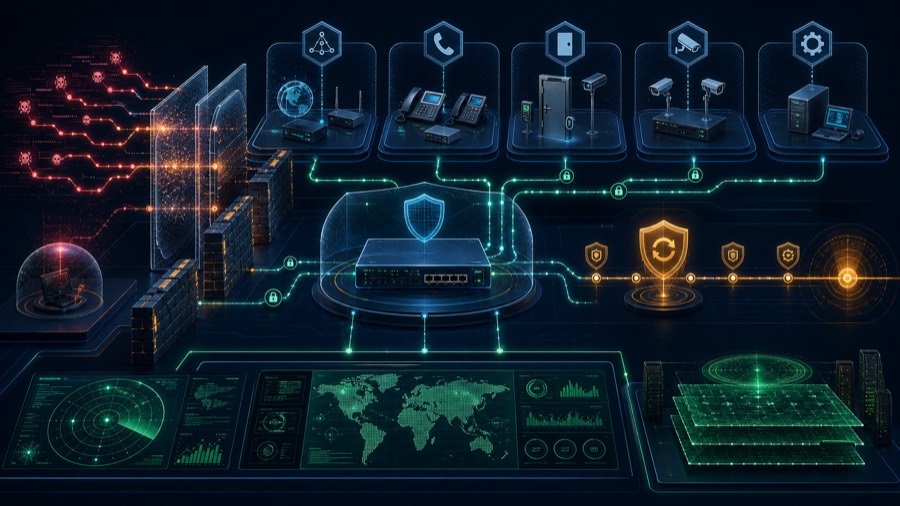
Critical UniFi Flaws Put Network Control Planes Back in the Patch Queue
Ubiquiti patched critical UniFi Connect, Talk, Access, Protect, and UniFi OS flaws. Here is what SMBs and government contractors should patch, restrict, and review now.
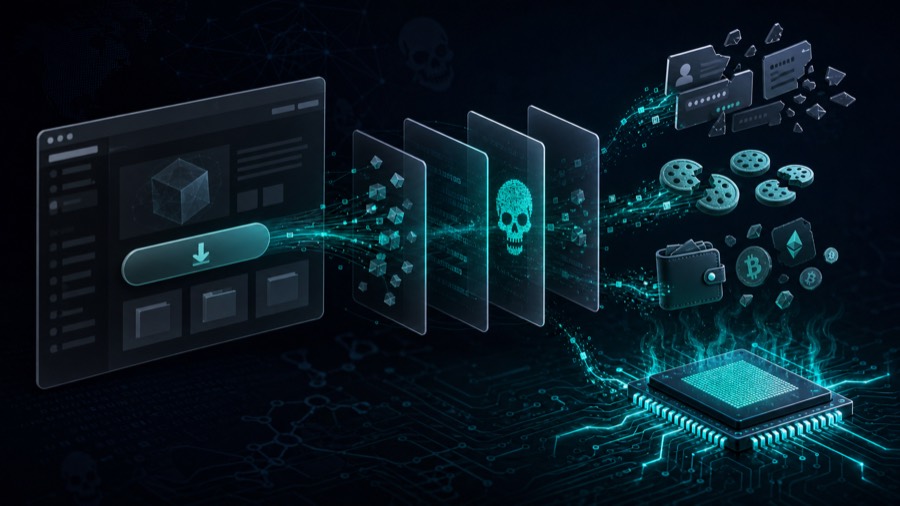
Vidar Stealer Campaign Shows Why File Size and Fake Signatures Still Beat Weak Controls
Unit 42 reported a Vidar stealer and XMRig campaign using malvertising, fake cracked-software lures, misleading certificate metadata, oversized binaries, and commodity loader infrastructure. Here is what SMBs and government contractors should take away.

ADFS Signing Keys Show Why Federation Servers Are Tier-Zero Identity Infrastructure
Mandiant shows how ADFS certificate drift and Machine DPAPI can expose active signing keys. Here is what SMBs and government contractors should do now.

UAT-7810 Shows Edge Devices Are Becoming China-Nexus Relay Infrastructure
Cisco Talos reports UAT-7810 is expanding ORB relay infrastructure using compromised edge and embedded devices. Here is what SMBs and government contractors should do now.
FortiBleed Shows Firewall Credentials Are Ransomware Fuel
SOCRadar linked the FortiBleed FortiGate credential-harvesting campaign to INC and Lynx ransomware operations. Here is what SMBs and government contractors should do next.

NetNut and Popa Takedown Shows Residential Proxies Are Now Attack Infrastructure
The FBI and industry partners disrupted NetNut and the Popa botnet. Here is why residential proxy abuse matters for SMBs, government contractors, and defenders.
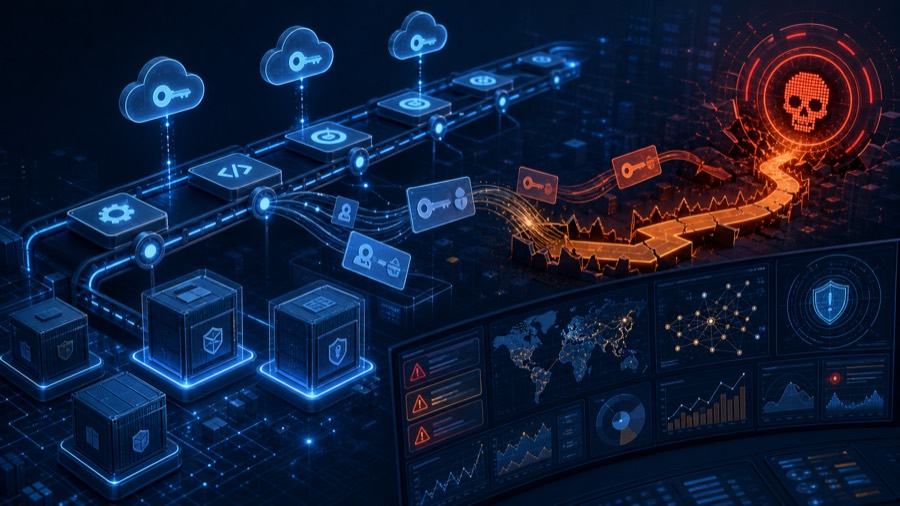
Vect and TeamPCP Show Supply-Chain Credentials Are Ransomware Fuel
Sophos CTU reports that Vect and TeamPCP have linked ransomware deployment with supply-chain credential theft. Here is what SMBs and government contractors should harden now.
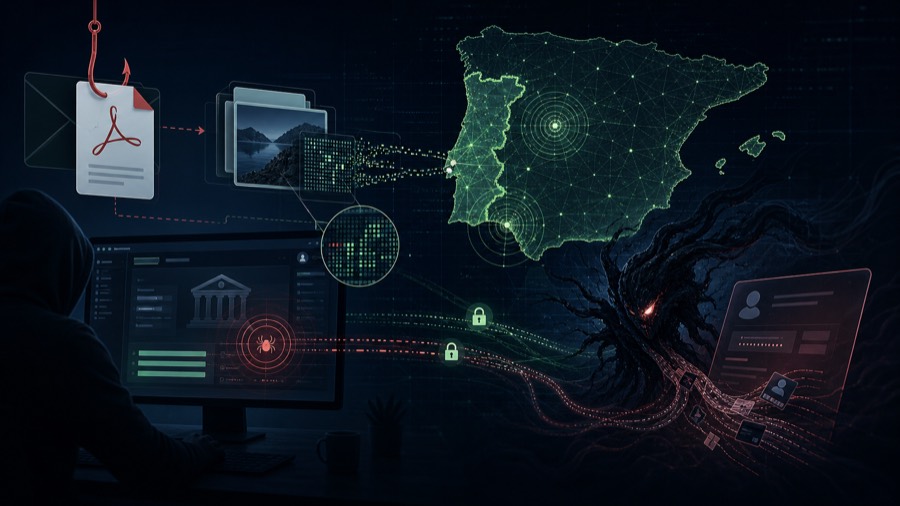
Ousaban Shows Banking Trojans Are Learning to Hide From Sandboxes
Ousaban’s Spain and Portugal campaign shows how banking trojans use geofencing, phishing PDFs, steganography, and daily-changing C2 to evade sandbox-heavy defenses.

NUT upsmon Command Injection Shows UPS Monitoring Belongs in the Patch Queue
CVE-2026-54161 in Network UPS Tools upsmon shows why UPS monitoring, notification scripts, and power-infrastructure control paths need patching, segmentation, and process monitoring.

ARToken Shows Microsoft 365 Tokens Are the New BEC Control Plane
Cisco Talos uncovered ARToken, an EvilTokens-linked phishing-as-a-service panel built around Microsoft 365 token theft, device-code phishing, mailbox access, SharePoint operations, and BEC automation. The practical lesson: treat identity tokens, inbox rules, and cloud collaborati

CitrixBleed Keeps Returning: NetScaler SAML IdP Memory Leaks Need Edge-Control Discipline
Citrix patched CVE-2026-8451, a NetScaler SAML IdP memory overread in the CitrixBleed family. Here is what SMBs and government contractors should do now.
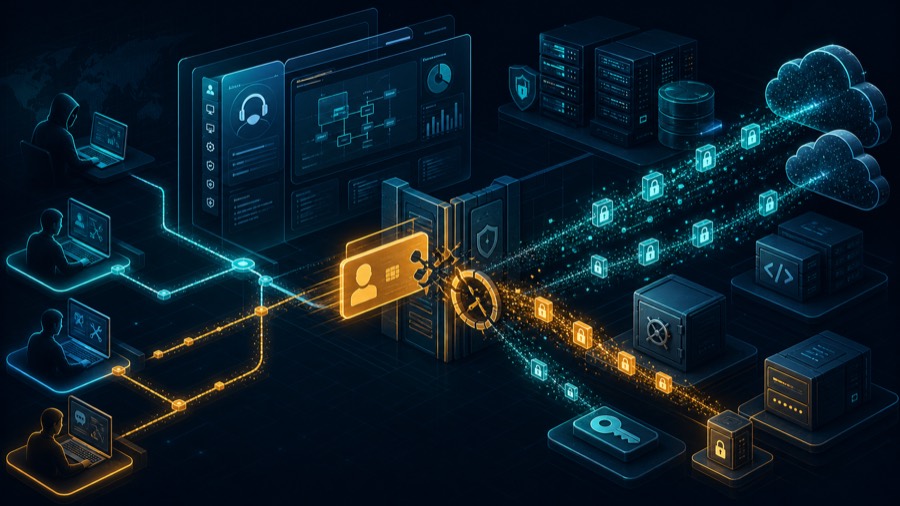
SimpleHelp Exploitation Shows RMM Is a Credential Control Plane
Active exploitation of SimpleHelp CVE-2026-48558 shows why RMM platforms must be treated as privileged credential control planes, not routine support tools.

Leaky iOS AI Apps Show Mobile AI Needs Real API Gateways
A study of iOS AI chatbot apps found widespread exposure of API keys, open AI proxy access, and replayable tokens. The fix is not another client-side secret workaround; it is real backend authentication, scoped tokens, monitoring, and key isolation.
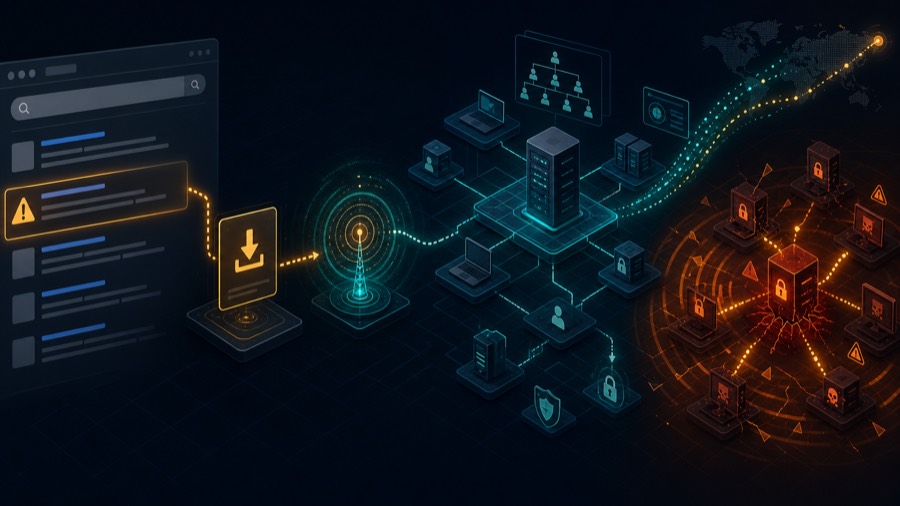
Bing SEO Poisoning Shows IT Admin Downloads Are Ransomware Initial Access
A DFIR Report case study shows how a fake ManageEngine OpManager download led from BumbleBee and AdaptixC2 to Akira ransomware. The defensive lesson: admin software downloads need control, verification, and monitoring.

Water Systems Are Becoming Nation-State Pressure Points
Nation-state targeting of water systems shows why exposed OT, weak credentials, remote access, and poor IT/OT segmentation remain practical business risks—not just utility-sector problems.
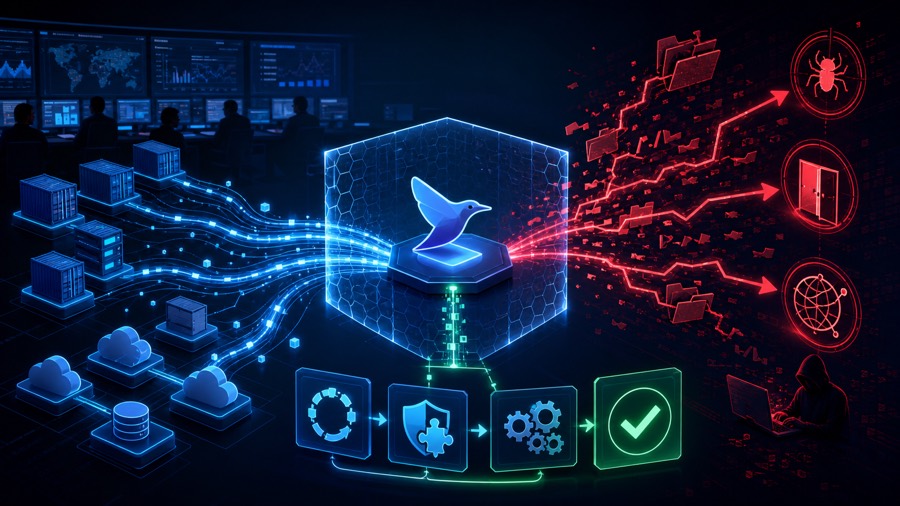
Fluentd Vulnerabilities Show Logging Pipelines Need Production-Grade Segmentation
Multiple Fluentd vulnerabilities show why log collectors need segmentation, least privilege, and hostile-input assumptions—not just patching.

Shai Hulud Shows CI/CD Identity Is Production Cloud Identity
Fortinet’s Shai Hulud case study shows how poisoned CI/CD dependencies can become cloud identity compromise, IAM escalation, and Redshift data theft. Here is what SMBs and government contractors should harden now.
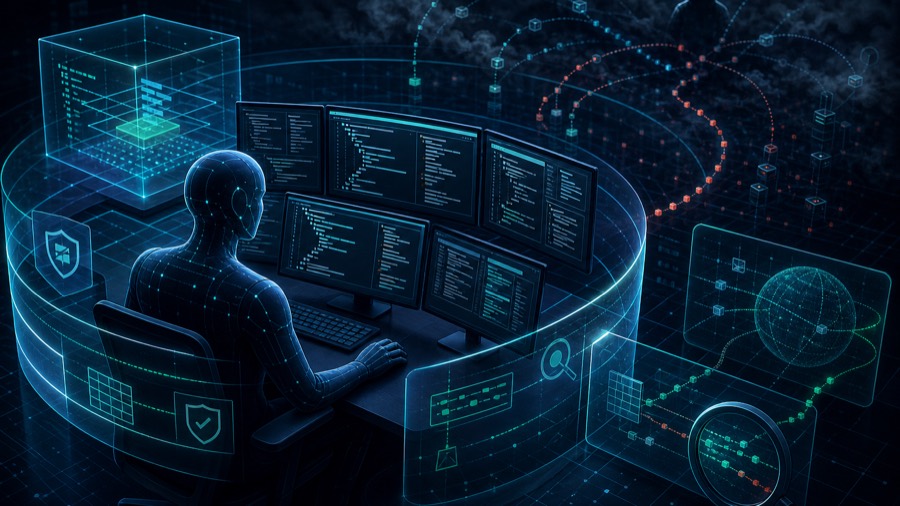
Clean Repos Can Still Burn Developer Machines When AI Agents Trust Runtime Setup
A clean-looking repository can still become dangerous when an AI coding agent follows setup instructions and executes runtime-fetched configuration. Here is how teams should defend developer workflows.

Splunk Enterprise RCE Shows SIEM Servers Are Tier-Zero Infrastructure
CVE-2026-20253 shows why Splunk and other SIEM platforms need tier-zero hardening: patch quickly, restrict management access, review service accounts, and hunt for suspicious file writes.

NAIC Breach Shows Why PeopleSoft Internet Exposure Needs Immediate Review
NAIC’s PeopleSoft-linked breach is a practical warning for SMBs and government contractors: patch CVE-2026-35273, restrict administrative endpoints, and hunt for attacker staging before extortion begins.

Hospitality Photo-ZIP Campaign Shows Front Desk Workflows Are Initial Access Paths
Microsoft’s hospitality photo-ZIP campaign shows why front desk, booking, and customer intake workflows need executable-content controls, redirect-chain inspection, and endpoint hunting for unusual Node.js persistence.

CL-STA-1062 Shows Critical Infrastructure Intrusions Still Start With Web Shells
Unit 42’s CL-STA-1062 report shows why defenders should focus on exposed web apps, web shells, tunneling tools, scheduled-task persistence, and egress visibility — not just the TinyRCT malware name.

Turla’s STOCKSTAY Backdoor Shows Why Espionage Defense Needs Egress Visibility
GTIG’s STOCKSTAY research shows how Turla blends modular .NET malware, WebSocket C2, and diplomatic targeting. Here are the defensive lessons for SMBs and government contractors.
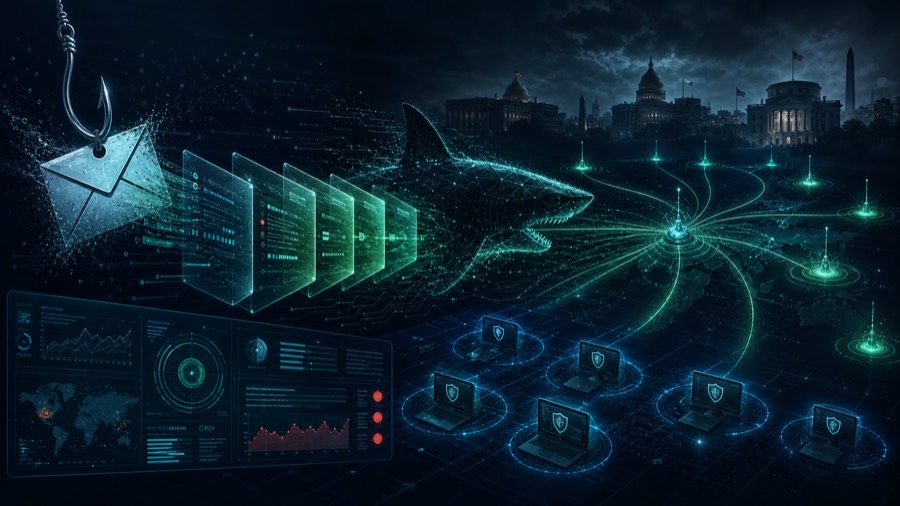
StrikeShark Shows Loader Malware Is an Edge-Exposure Problem
Kaspersky’s StrikeShark research shows how opportunistic exploitation of exposed servers can become a multi-stage SharkLoader and Cobalt Strike intrusion. Here is what SMBs and government contractors should review now.

MuddyWater’s Chaos Masquerade Shows Ransomware Response Needs Attribution Discipline
Iran-linked MuddyWater activity shows why ransomware response needs to examine identity compromise, remote access, and adversary objectives instead of trusting the ransom note at face value.
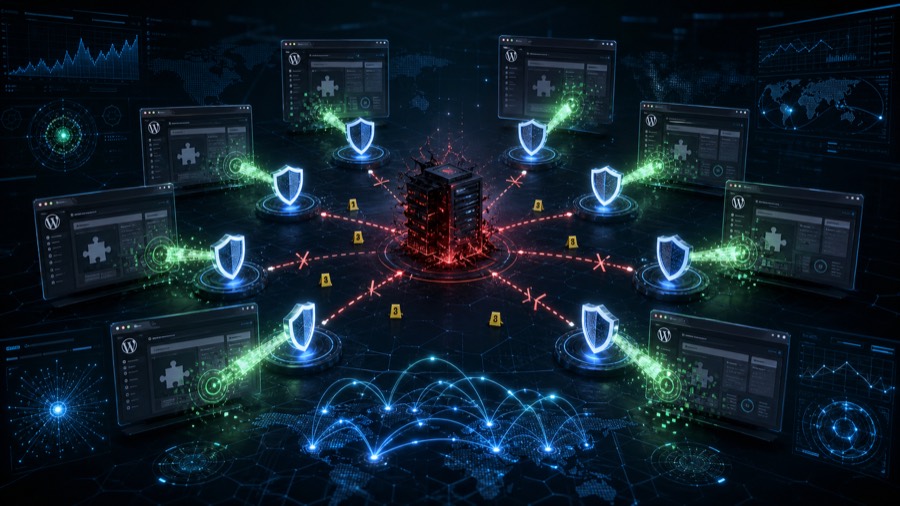
SocGholish Takedown Shows Website Trust Is Malware Infrastructure
Operation Endgame disrupted SocGholish infrastructure, but the defensive lesson is bigger: compromised trusted websites are malware delivery infrastructure.

Operation Escaneo Shows Latin America’s Edge Devices Are Prime Intrusion Targets
Operation Escaneo shows how financially motivated actors are turning exposed edge devices, tunnels, and privileged service accounts into full intrusion chains across Latin American government and critical infrastructure targets.

Mastra npm Compromise Shows AI Frameworks Are Supply-Chain Targets
Microsoft linked the Mastra AI npm package compromise to North Korean actor Sapphire Sleet. Here is what SMBs and government contractors should do about AI framework supply-chain risk.

Showboat Malware Shows Telecom Linux Servers Need Rootkit-Level Monitoring
Showboat is a China-linked Linux post-exploitation framework aimed at telecom providers. The lesson for defenders: treat Linux server persistence, dynamic linker abuse, and low-noise C2 as first-class monitoring priorities.
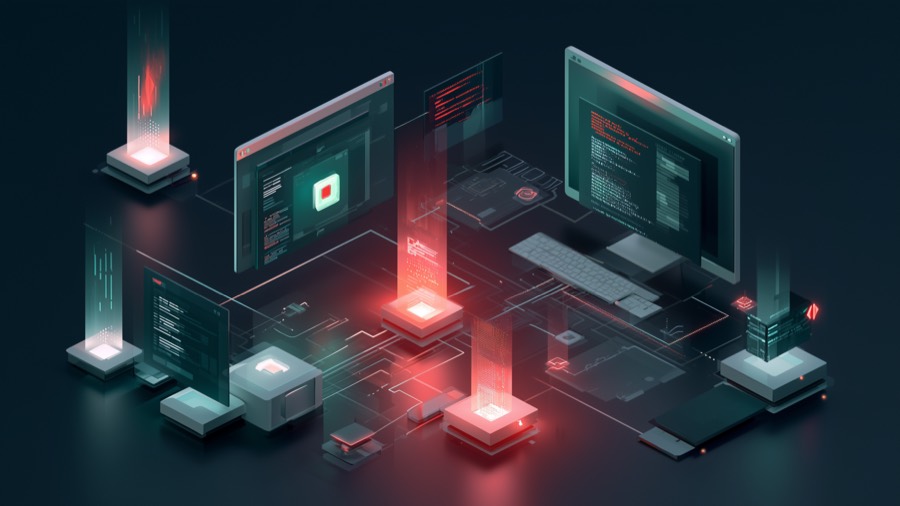
AutoJack Shows AI Browsing Agents Need Localhost Boundaries
Microsoft’s AutoJack research shows how a malicious webpage can abuse an AI browsing agent’s access to localhost services. The defensive lesson: treat agent control planes, MCP servers, and local tool runners like privileged admin surfaces.
Apache APISIX Auth Bypass Cluster Shows API Gateways Need Plugin-Level Review
Apache disclosed a cluster of APISIX authentication and identity plugin CVEs. The defensive priority is patching, plugin inventory, and validating what backend services trust from the gateway.
FortiBleed Shows Firewall Patching Is Not Compromise Recovery
FortiBleed is a reminder that edge firewall patching is necessary, but it does not prove a previously exposed appliance is clean. Defenders need compromise review, credential rotation, and rebuild plans for perimeter devices.

Vendor-Signed UEFI Apps Show Secure Boot Still Depends on Revocation Hygiene
CERT/CC warns that multiple vendor-signed UEFI applications can be abused to bypass Secure Boot before the operating system and EDR controls ever load. For SMBs and government contractors, the fix is not just firmware patching; it is verifying DBX revocation coverage across manag

SmartApeSG Okendo Compromise Shows Third-Party Widgets Are Supply-Chain Risk
Zscaler ThreatLabz reported that SmartApeSG injected malicious JavaScript into the Okendo Reviews widget, creating downstream exposure across e-commerce sites. Here is what SMBs and government contractors should do about third-party browser code risk.
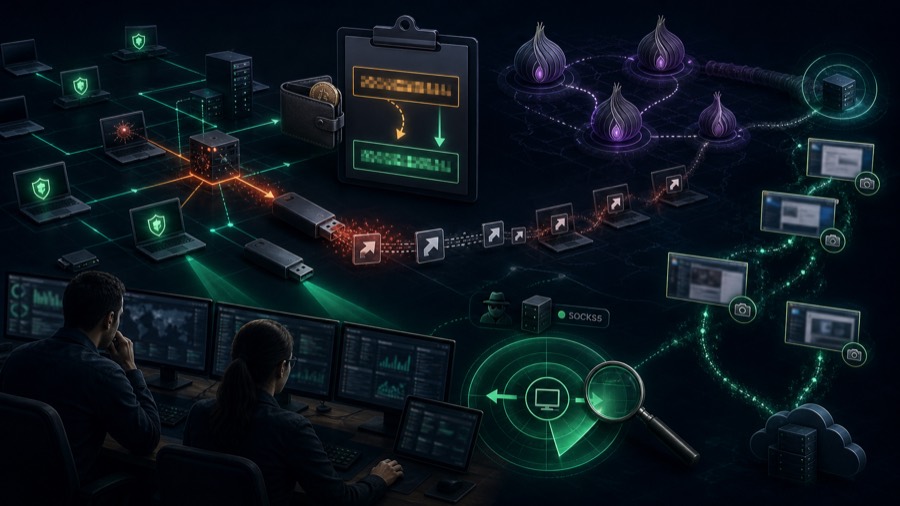
Tor-Based Crypto Clipper Shows Clipboard Theft Is Now Backdoor Activity
Microsoft research on a Tor-routed crypto clipper shows why defenders should connect USB shortcut execution, script interpreters, localhost proxy activity, and clipboard theft into one investigation path.
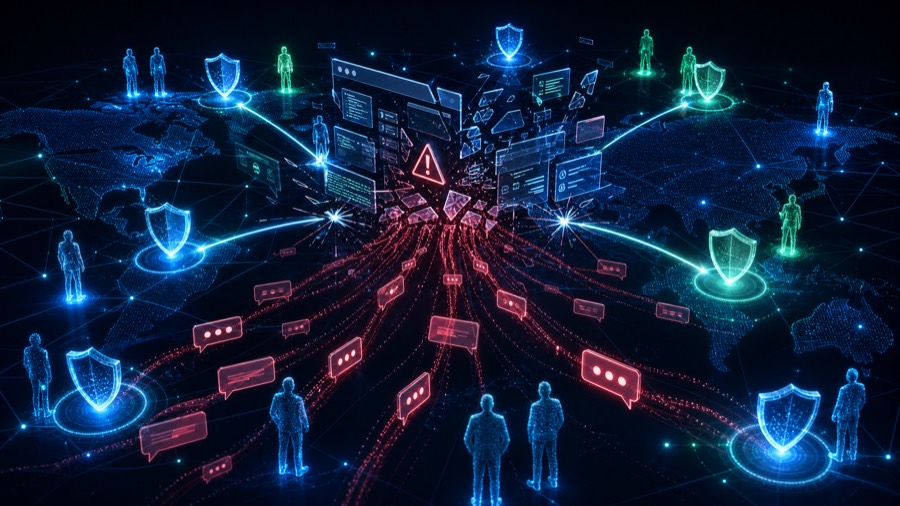
Outsider Enterprise Shows AI-Powered Phishing Is Now Industrial Infrastructure
The Outsider Enterprise takedown shows AI-powered phishing is now industrial infrastructure. SMBs and government contractors should prioritize phishing-resistant MFA, identity recovery controls, and rapid session revocation.

Handala’s Cal Water Claim Shows OT Defense Starts With Segmentation
Handala’s California Water Service claim is a reminder that critical-infrastructure defense starts with proving separation between billing systems, telemetry platforms, and operational technology.
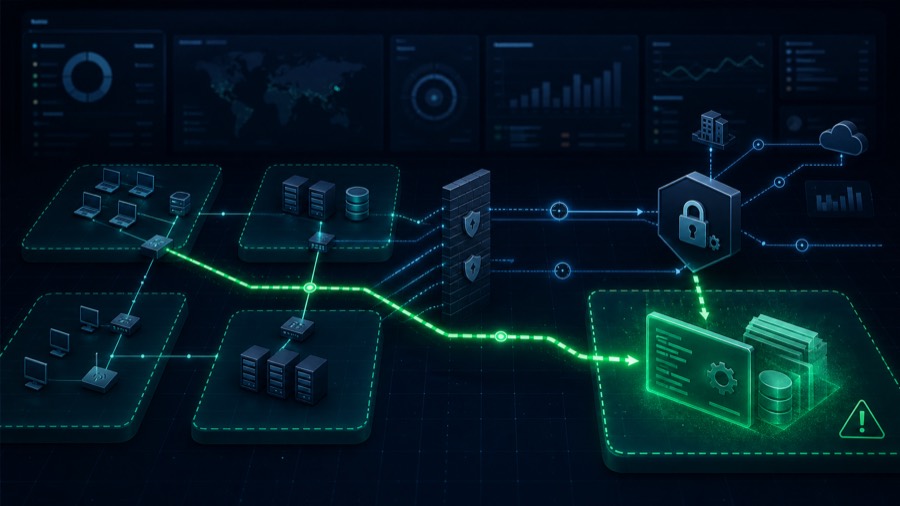
FortiPortal CVE-2026-49938 Shows Network Configuration Data Is a High-Value Target
Fortinet CVE-2026-49938 is a medium-severity FortiPortal API access-control issue, but sensitive network configuration exposure can still give attackers a valuable map of the environment.
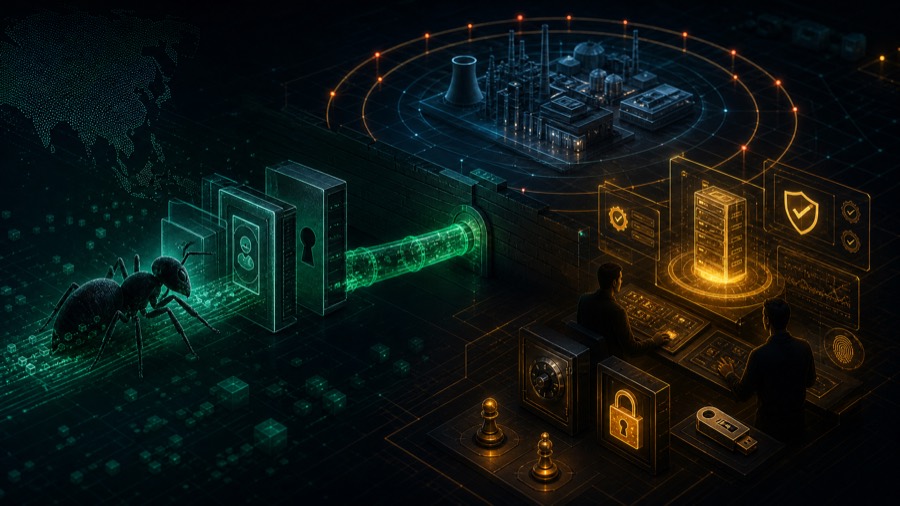
Velvet Ant Shows Authentication Infrastructure Is Critical Infrastructure
Velvet Ant’s Operation Highland shows why PAM, OpenSSH, jump hosts, and proxy paths deserve the same defensive priority as identity providers and domain controllers.
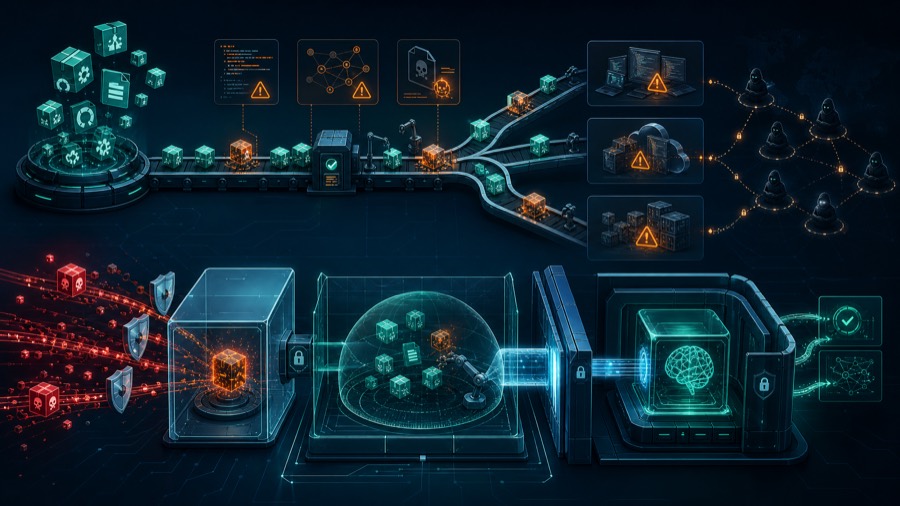
Shai-Hulud Shows AI Package Scanners Need Prompt-Injection Boundaries
Zscaler ThreatLabz says the Shai-Hulud campaign has expanded across package ecosystems and introduced prompt-injection tactics aimed at automated AI security triage. The defense lesson is simple: treat package content as hostile input, even when an LLM is doing the review.

Maine Breach Portal Hoax Shows Disclosure Systems Need Verification Controls
Maine took its public breach notification database offline after fake disclosures were published. The lesson for SMBs and government contractors: public trust workflows need verification, moderation, and correction controls.
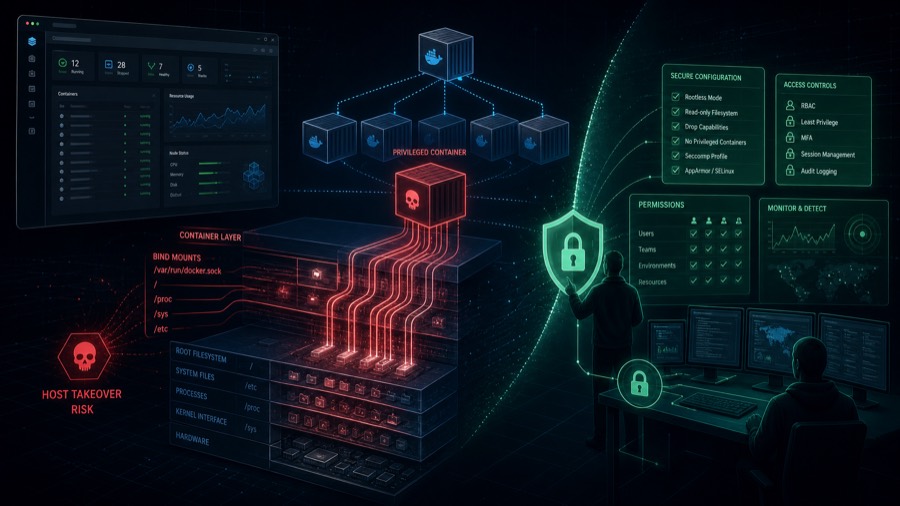
Portainer CVE-2026-33590 Shows Container Admin Tools Need Least Privilege Defaults
intWave disclosed CVE-2026-33590 in Portainer, where insecure default Docker security settings could let regular users escalate toward host takeover. Here is what SMBs and government contractors should lock down.

MaXSS and Spyder Show AI Browser Extensions Are an Endpoint Risk
Rebora disclosed MaXSS and Spyder, two critical flaws in AI browser-extension side panels. The lesson for SMBs and government contractors: browser extensions are endpoint software with identity-session reach and need governance.

ShinyHunters PeopleSoft Exploitation Shows ERP Admin Endpoints Are Breach Surface
GTIG and Mandiant report active ShinyHunters exploitation of Oracle PeopleSoft CVE-2026-35273. Here is what defenders should lock down, hunt, and segment now.

LangGraph Checkpointer Bugs Show AI Agent Memory Is Backend Attack Surface
Check Point Research disclosed LangGraph checkpointer flaws that could turn user-controlled state-history filters into SQL injection, unsafe deserialization, and remote code execution. The lesson for SMBs and government contractors: AI agent memory is application infrastructure,

IMA Diligence Breach Shows Legacy Servers Are Still Third-Party Risk
A reported IMA Diligence breach affecting more than 525,000 people shows why legacy third-party servers need ownership, monitoring, decommissioning, and data-risk review.

C0XMO Shows IoT Botnets Are Still an Edge Exposure Problem
Fortinet researchers detailed C0XMO, a Gafgyt variant spreading through DD-WRT and other exposed devices. Here is what SMBs and government contractors should lock down before compromised routers become DDoS infrastructure.

SolarWinds Serv-U Exploitation Shows File Transfer Availability Is Security
CISA added actively exploited SolarWinds Serv-U CVE-2026-28318 to KEV. Here is what SMBs and government contractors should do about file-transfer availability risk.

Pink Extortion Shows Microsoft 365 Defense Starts With Vishing Controls
Unit 42 is tracking Pink / CL-CRI-1147, a Com-affiliated extortion brand using vishing, credential theft, and Microsoft 365 data exfiltration. Here is what SMBs and government contractors should lock down now.
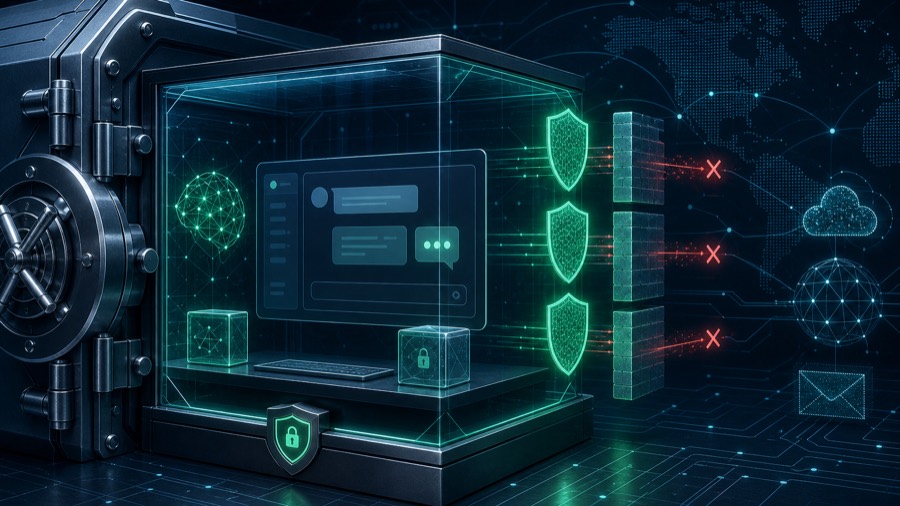
ChatGPT Lockdown Mode Shows Prompt Injection Defense Is About Egress Control
OpenAI’s ChatGPT Lockdown Mode is a useful reminder that prompt-injection defense is not just about model behavior. It is about limiting outbound paths, connector permissions, and tool access around sensitive work.

PAN-OS GlobalProtect Exploitation Shows VPN Access Needs Log Review, Not Just Patching
Unit 42 reports active exploitation attempts against PAN-OS GlobalProtect CVE-2026-0257. Defenders should patch, but also review VPN sessions, authentication override cookie behavior, and edge-device telemetry for signs of unauthorized access.

UNC3753 Brings Vishing, RMM Abuse, and Physical Intrusions to U.S. Law Firms
Mandiant reports that UNC3753, also known as Luna Moth / Silent Ransom Group, is targeting U.S. law firms and professional services with vishing, RMM abuse, rapid data theft, and suspected physical office intrusions. Here is what SMBs and government contractors should lock down n
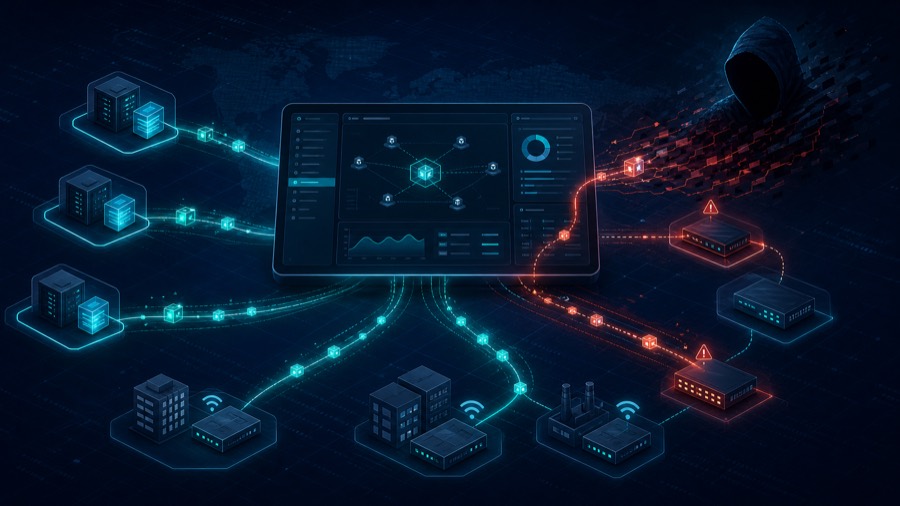
Cisco SD-WAN Zero-Day Shows Edge Controllers Need Compromise Review
Cisco says CVE-2026-20245 has been exploited against Catalyst SD-WAN Manager. Defenders should preserve evidence, review controller logs, validate edge-device configuration, and restrict management-plane access.

Agentic AI Failure Modes Show Why AI Tools Need Supply-Chain Controls
Microsoft’s updated agentic AI failure-mode taxonomy turns AI agents into a practical security architecture problem: plugins, prompts, memory, browser use, and human approvals all need controls.
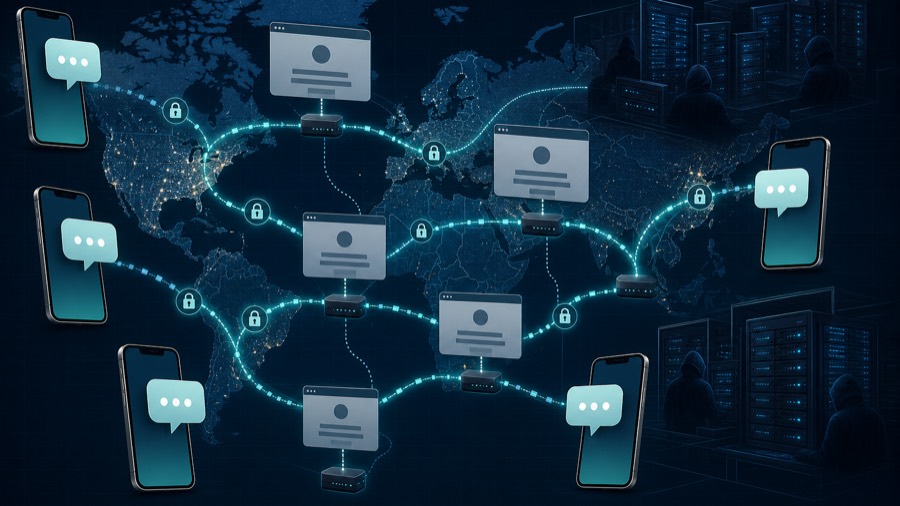
Error 524 Smishing Shows Why Fraud Infrastructure Needs CTI
Group-IB documented a global smishing operation using fake error pages, geofencing, and encrypted WebSocket exfiltration. Here is what SMBs and government contractors should take from it.

Fuel Tank Gauge Attacks Show Why Small OT Still Needs Internet Exposure Control
Federal agencies warn that attackers are compromising internet-exposed automatic tank gauge systems. The lesson for SMBs, fuel operators, farms, logistics firms, and gov contractors is simple: small OT is still operational infrastructure.

Stock Exchange Mailbox Espionage Shows Executive Email Is Strategic Infrastructure
A five-month espionage campaign against a stock exchange executive mailbox shows why senior email accounts need privileged-asset controls, cloud exfiltration monitoring, and scheduled-task hunting.
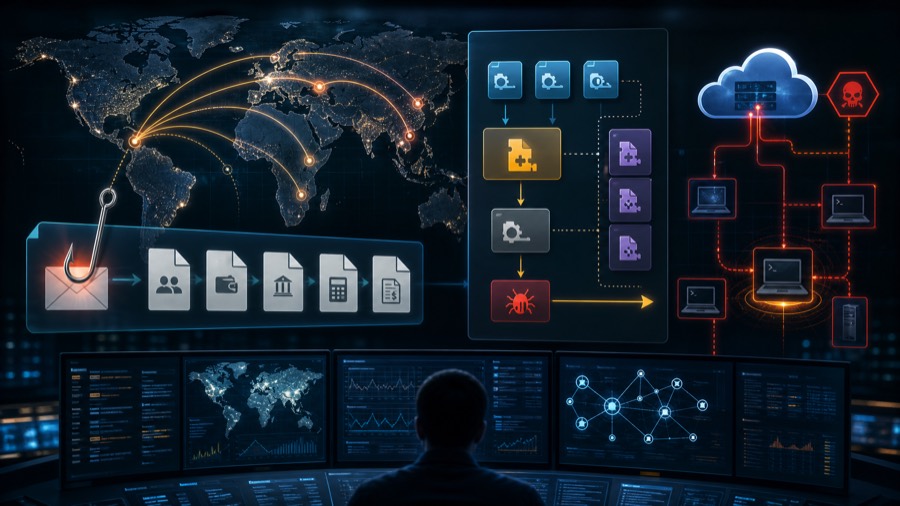
TA4922’s Global Expansion Shows HR and Tax Lures Are Initial Access Infrastructure
Proofpoint’s TA4922 reporting shows how localized HR, payroll, tax, and invoice lures can become full initial-access infrastructure through DLL sideloading, loaders, RATs, RMM tools, and browser credential theft.
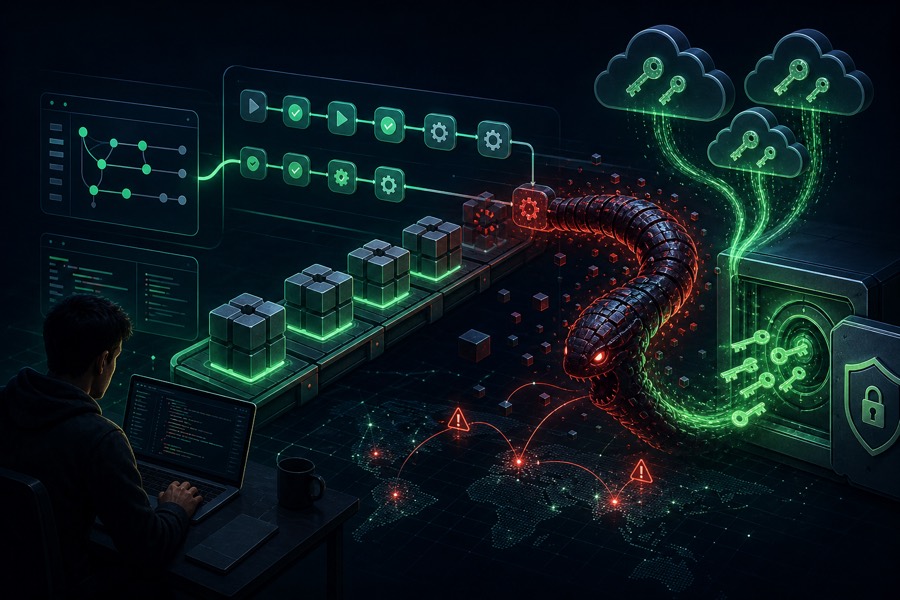
Red Hat’s Miasma npm Compromise Shows Trusted Publishing Is Not a Control Boundary
A Red Hat Cloud Services npm compromise shows why signed releases and trusted publishing must be paired with install-time controls, CI/CD isolation, and fast credential rotation.
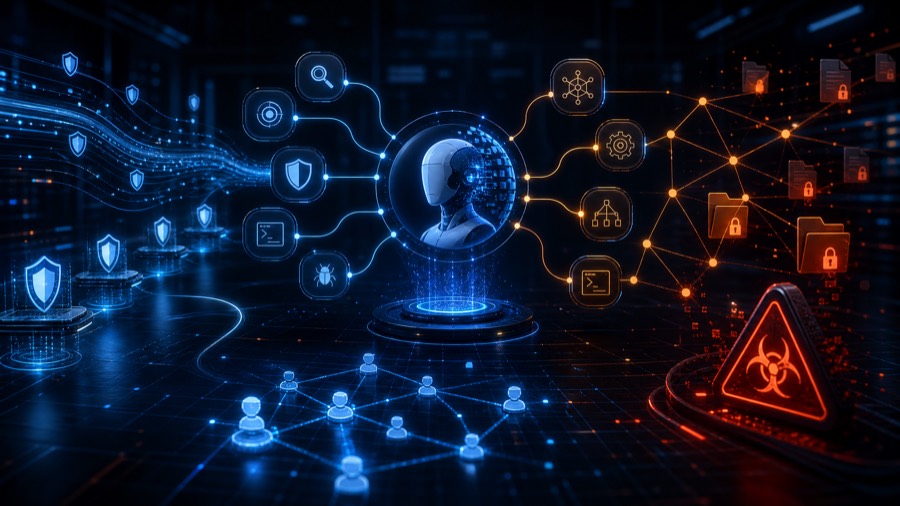
AI-Assisted Ransomware Tooling Shows EDR Evasion Is Now an Iteration Problem
Sophos observed ransomware-linked operators using AI-assisted development workflows to accelerate EDR evasion testing and Active Directory discovery. The defensive lesson: validate controls, harden identity, and monitor behavior before attackers iterate around your tooling.
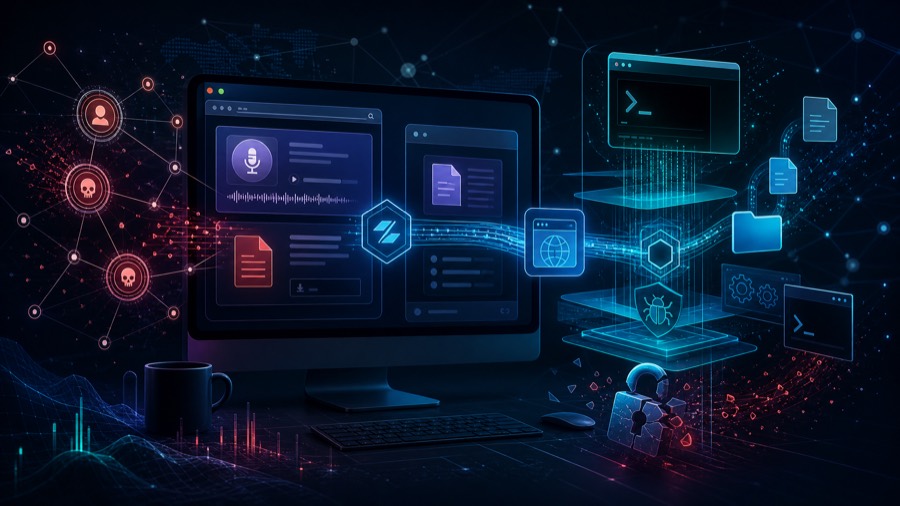
FlutterBridge Shows Why macOS Malvertising Is Backdoor Delivery, Not Just Adware
Unit 42’s FlutterBridge research shows macOS malvertising evolving from adware into FlutterShell backdoor delivery. Here is what SMBs and government contractors should tighten first.
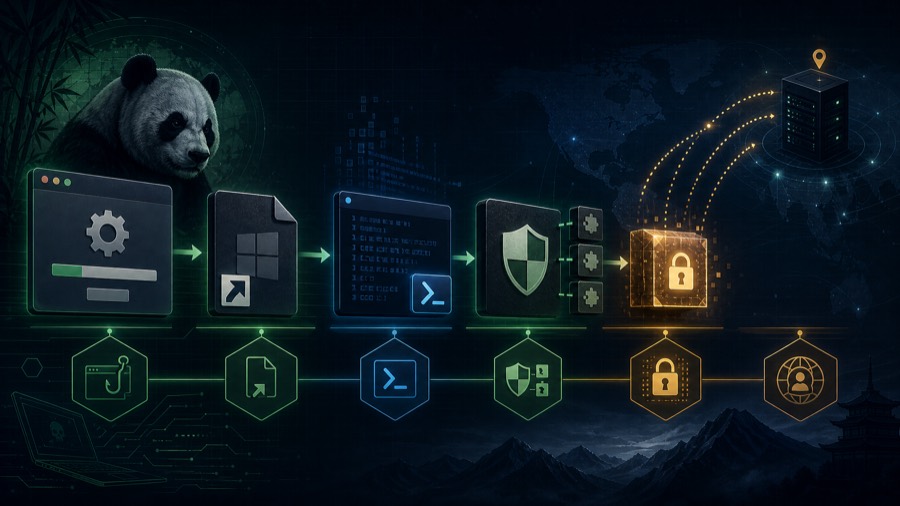
Mustang Panda’s Fake Browser Updater Shows Why LNK Files Still Matter
Mustang Panda’s fake browser updater chain shows why defenders still need to hunt LNK-to-PowerShell execution, DLL sideloading, user-context persistence, and suspicious HTTPS beaconing.

FortiClient EMS Exploitation Turns Endpoint Management Into an Infostealer Delivery System
Attackers are abusing CVE-2026-35616 in FortiClient EMS to push a credential stealer through trusted endpoint management workflows. Here is what defenders should check first.
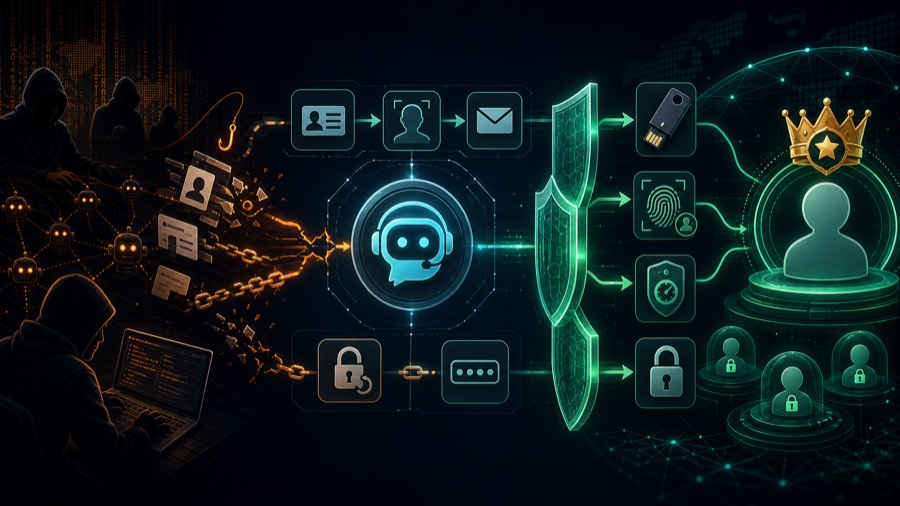
Meta AI Support Bot Abuse Shows Account Recovery Is Part of the Identity Perimeter
Attackers reportedly abused Meta’s AI support assistant during Instagram account recovery. The lesson for SMBs and contractors: recovery workflows are identity infrastructure and need MFA, monitoring, and guardrails.

SolyxImmortal Shows Why Python Infostealers Are a Business Risk, Not Just Malware Noise
SolyxImmortal combines persistence, browser credential theft, document collection, screenshots, keylogging, and webhook exfiltration. Here is what SMB and government-contractor defenders should do about it.

Showboat and JFMBackdoor Show Telecom Intrusions Are Built for Pivoting
Lumen and PwC reporting on Showboat, Red Lamassu, and JFMBackdoor shows how China-linked telecom intrusions combine Linux footholds, proxying, and Windows backdoors. Here is what SMBs and government contractors should harden now.
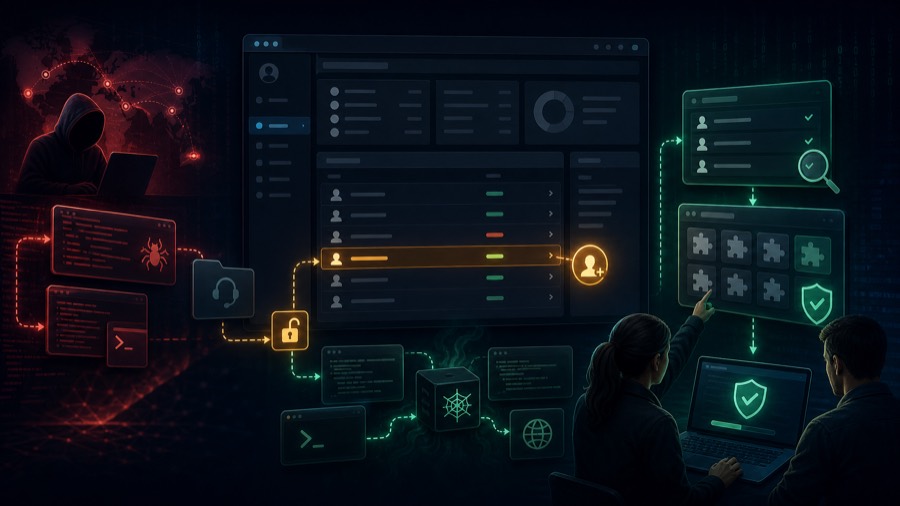
WP Maps Pro Exploitation Shows Why Plugin Support Features Need Security Review
Attackers are exploiting CVE-2026-8732 in WP Maps Pro to create rogue WordPress administrator accounts. Here is what SMBs and contractors should patch, audit, and verify.
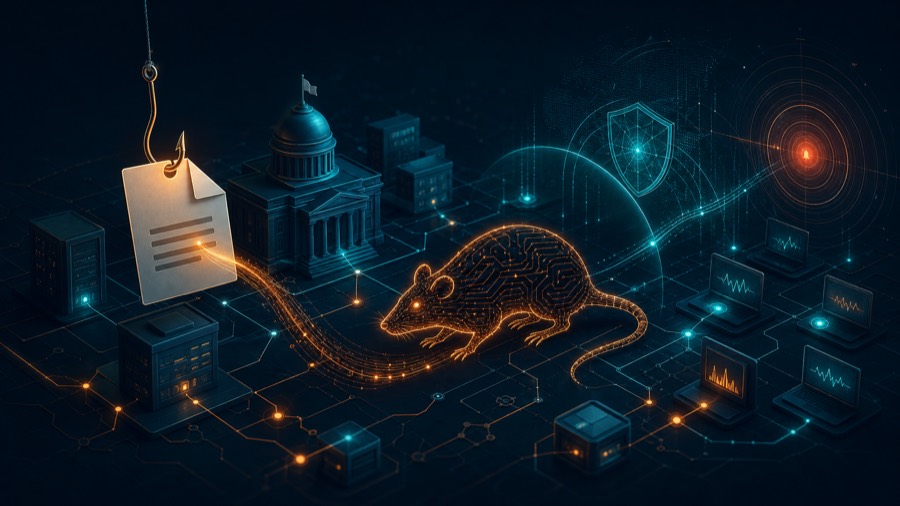
SideCopy’s XenoRAT Campaign Shows Why Localized Lures Beat Generic Phishing Defenses
SideCopy/APT36 targeted Afghanistan finance officials with Pashto-language lures and XenoRAT. Here is what SMBs and government contractors should take from the campaign.

Dependency Confusion Campaign Shows Reconnaissance Is the First Supply-Chain Payload
Microsoft found 33 malicious npm packages abusing dependency confusion to profile developer and build environments. The defender lesson: treat package installation as code execution and lock down internal namespace hygiene before attackers do reconnaissance at scale.

MediaInfoLib Parser Bugs Show File Metadata Is an Execution Boundary
Cisco Talos disclosed four patched MediaInfoLib heap-based buffer overflow vulnerabilities. The bigger lesson: automated media metadata parsing belongs inside a sandboxed, monitored execution boundary.
Poisoned Search and AI Recommendations Turn Utility Downloads Into RMM Access
Microsoft reported a cryptojacking campaign that uses poisoned search results, AI-surfaced software recommendations, fake utility downloads, and abused ScreenConnect access. Here is what SMBs and government contractors should defend first.
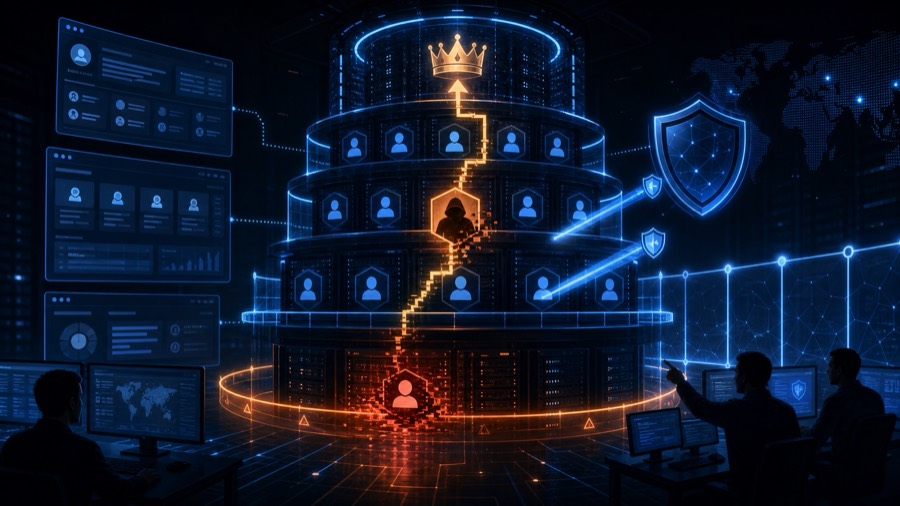
LiteSpeed cPanel KEV Shows Shared Hosting Is Privilege Escalation Terrain
CISA added CVE-2026-48172 to KEV after active exploitation of a LiteSpeed cPanel user-end plugin flaw that can let compromised hosting accounts execute scripts as root.
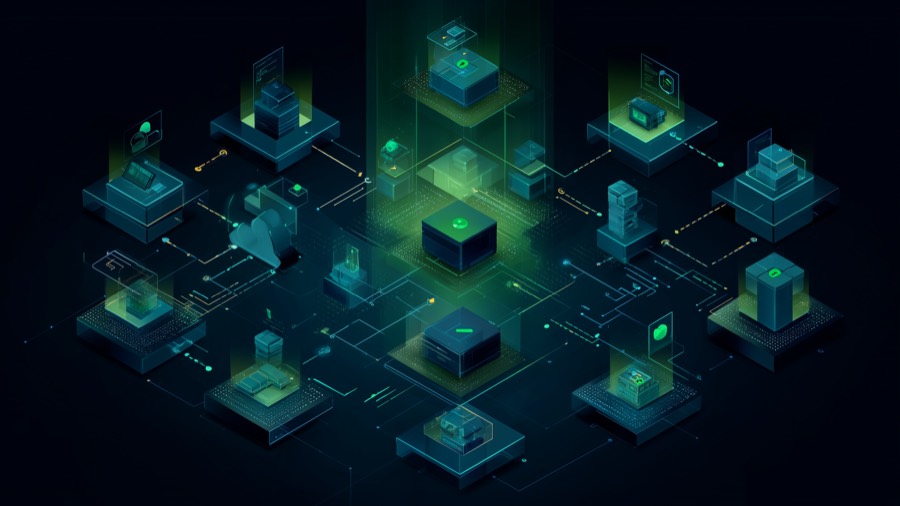
Megalodon GitHub Actions Backdoor Shows CI/CD Is Now a Credential Battlefield
The Megalodon GitHub campaign shows why CI/CD pipelines must be treated like production infrastructure: malicious workflow commits can harvest cloud credentials, OIDC tokens, SSH keys, and package secrets at scale.
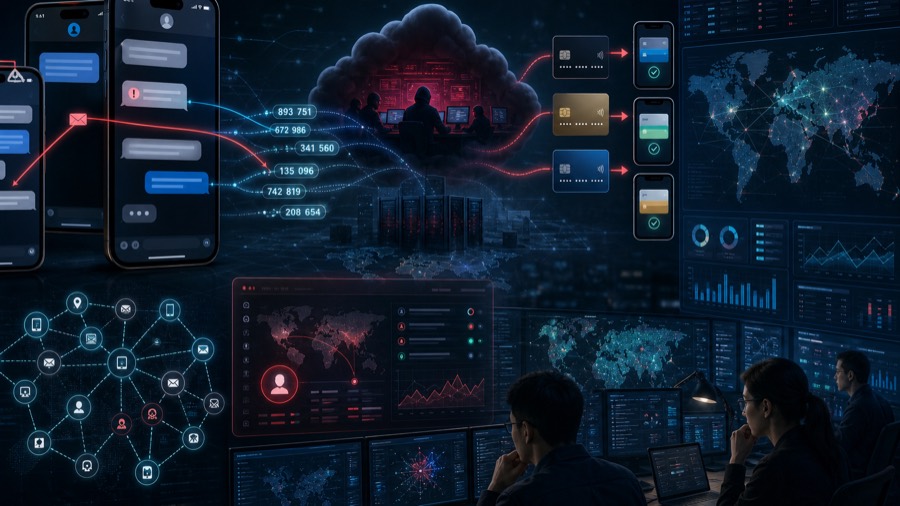
Chinese-Language PhaaS Shows MFA Bypass Is Becoming Real-Time Fraud
Google’s reporting on Chinese-language phishing-as-a-service shows why MFA bypass, real-time OTP interception, and digital wallet fraud require phishing-resistant authentication and session monitoring.
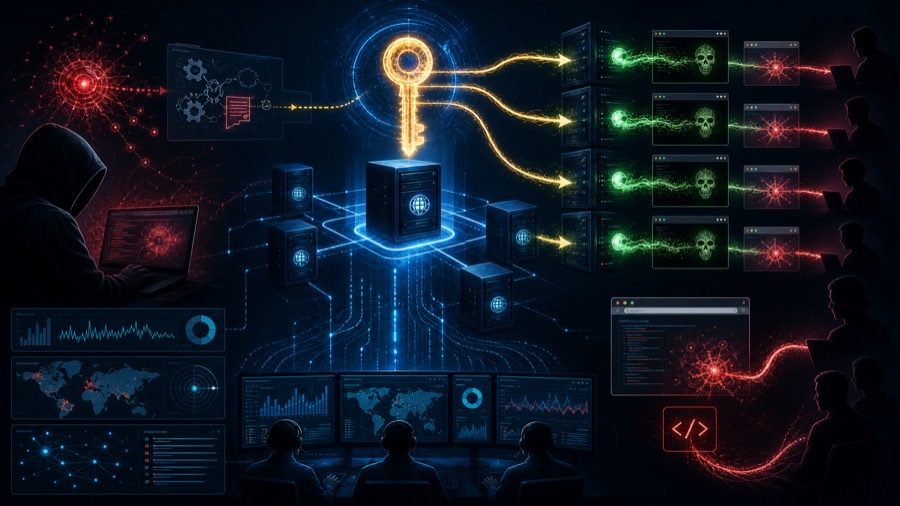
KnowledgeDeliver RCE Shows Shared Machine Keys Are Shared Blast Radius
Mandiant’s KnowledgeDeliver CVE-2026-5426 report shows how shared ASP.NET machine keys can turn ViewState into unauthenticated RCE and user-facing malware delivery.
Laravel-Lang Compromise Shows Dependency Tags Can Be Weaponized
A Laravel-Lang package compromise shows why trusted dependency tags, Composer autoload behavior, and runtime secrets need security monitoring—not just engineering review.

Cl0p’s South Staffs Water Case Shows SOC Coverage Must Be Proven
The South Staffordshire Water breach shows why outsourced SOC coverage, legacy server risk, and vulnerability management must be proven—not assumed—for SMBs, utilities, and government contractors.

ROADtools Abuse Shows Cloud Identity Is the New Attack Surface
Unit 42’s ROADtools research shows why Microsoft Entra ID token abuse, rogue device registration, and Graph API enumeration need to be treated as core incident-response signals for SMBs and government contractors.

Drupal CVE-2026-9082 Shows Web Asset Inventory Is Emergency Response
Drupal CVE-2026-9082 is already being scanned and exploited in the wild. The lesson for SMBs and government contractors: know where your Drupal sites are, verify PostgreSQL exposure, patch fast, and review logs before probing turns into compromise.

Void Dokkaebi’s InvisibleFerret Shift Shows Developer Endpoints Are Production Risk
Trend Micro reports North Korea-aligned Void Dokkaebi has moved InvisibleFerret into Cython-compiled Python extension modules. For SMBs and government contractors, the real risk is developer endpoint access to CI/CD, cloud, and production secrets.

Nimbus Manticore Shows Iranian APTs Are Moving Faster With AI-Assisted Tooling
Check Point Research reports that IRGC-affiliated Nimbus Manticore resurfaced with fake Zoom and SQL Developer lures, SEO poisoning, AppDomain hijacking, and a new MiniFast backdoor. Here is what SMBs and government contractors should tighten first.
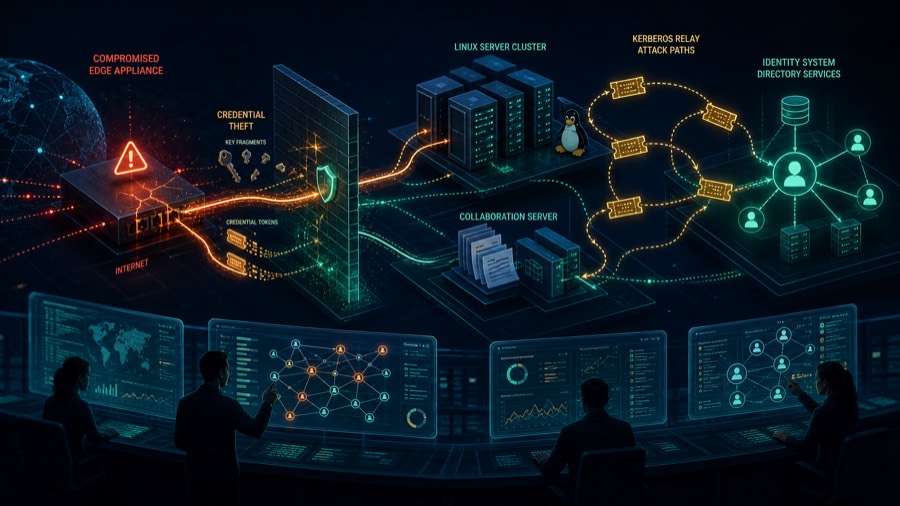
F5-to-Confluence Intrusion Shows Edge Devices Are Identity Attack Paths
Microsoft analyzed an intrusion where an F5 BIG-IP edge appliance led to Linux access, Confluence compromise, credential theft, and identity relay attempts. Here is what SMBs and government contractors should tighten first.
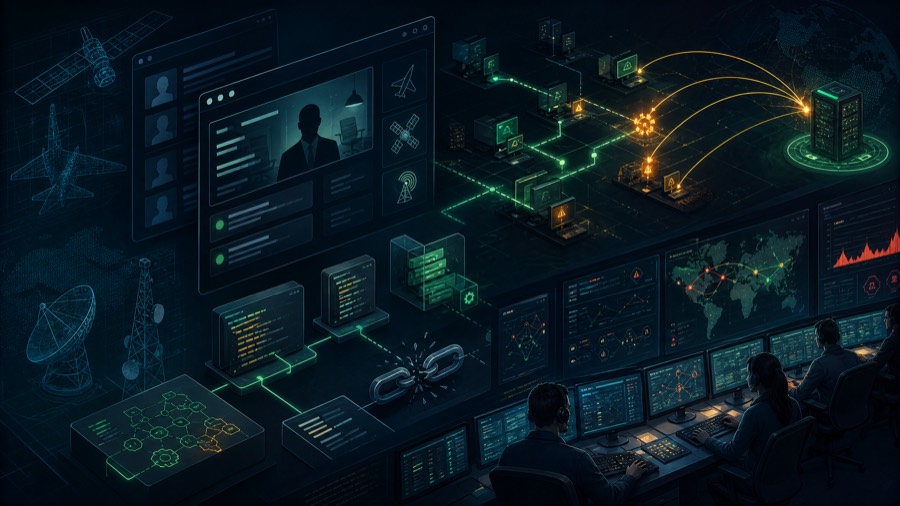
Screening Serpens Shows Recruiting Is Now an Espionage Attack Surface
Iran-nexus Screening Serpens used recruitment and meeting lures, new RAT variants, and .NET AppDomainManager hijacking. Here is what SMBs and government contractors should tighten now.

Kimwolf Arrest Shows DDoS Risk Starts on Forgotten IoT
The alleged Kimwolf botmaster arrest is a useful reminder for SMBs and government contractors: DDoS resilience starts with asset visibility, upstream protection, and hardening forgotten IoT and edge devices.

TamperedChef Shows Signed Productivity Apps Cannot Be Trusted by Default
TamperedChef-style malware hides inside convincing signed productivity apps. Here is what SMBs and government contractors should do about it.

Patriot Bait Shows AI-Enabled Fraud Can Turn Trust Into Attack Surface
Trend Micro’s Patriot Bait research shows how one operator used AI assistance, social trust, WordPress credential attacks, and crypto fraud infrastructure to scale a low-cost cybercrime operation.
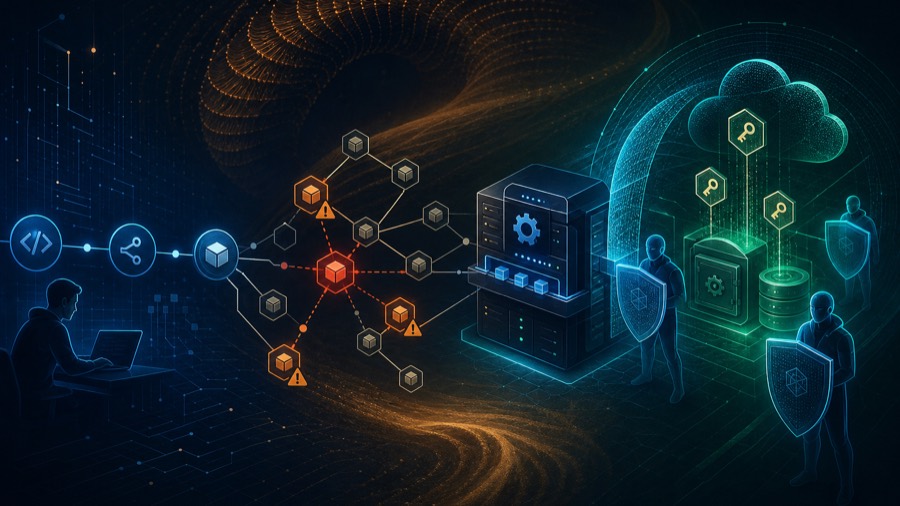
Mini Shai-Hulud Shows CI/CD Secrets Are the Real npm Supply-Chain Prize
Mini Shai-Hulud’s @antv npm compromise shows why dependency malware should be treated as a CI/CD credential-theft threat, not just a package hygiene problem.
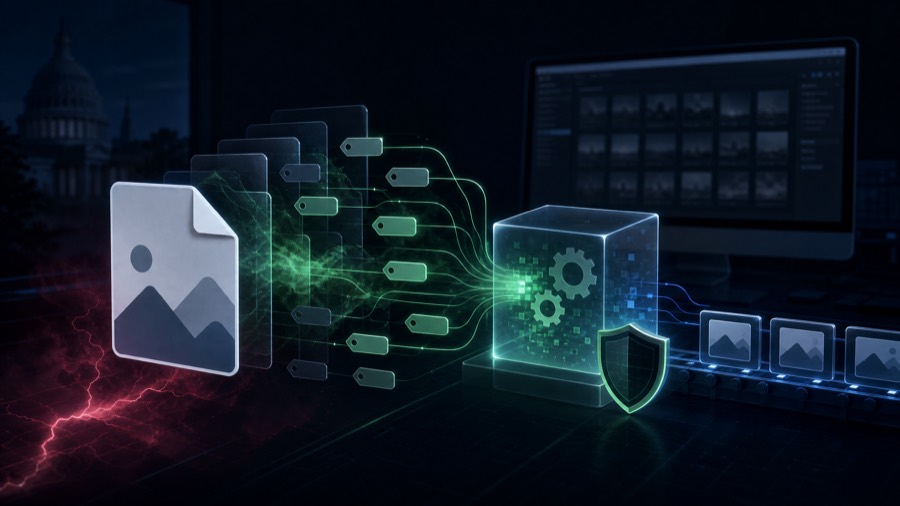
ExifTool CVE-2026-3102 Shows Image Metadata Belongs in the Threat Model
CVE-2026-3102 in ExifTool shows why image metadata processing should be patched, isolated, and monitored like any other untrusted file-ingest path.

P2Pinfect Shows Exposed Redis in Kubernetes Can Become Dormant Botnet Infrastructure
Fortinet observed P2Pinfect infections inside GKE clusters where exposed Redis instances became long-lived botnet footholds. For SMBs and government contractors, the lesson is clear: cloud misconfiguration, runtime visibility, and egress monitoring matter as much as patching.

Verizon DBIR 2026 Shows Vulnerability Exploitation Is Now the Breach Priority
Verizon’s 2026 DBIR shows vulnerability exploitation overtaking credential abuse as the top breach access vector. Here is what SMBs and government contractors should fix first.

Fox Tempest Shows Code Signing Trust Can Be Weaponized
Microsoft disrupted Fox Tempest, a malware-signing-as-a-service operation that helped ransomware crews make malicious binaries look trusted. Here is what SMBs and government contractors should review now.
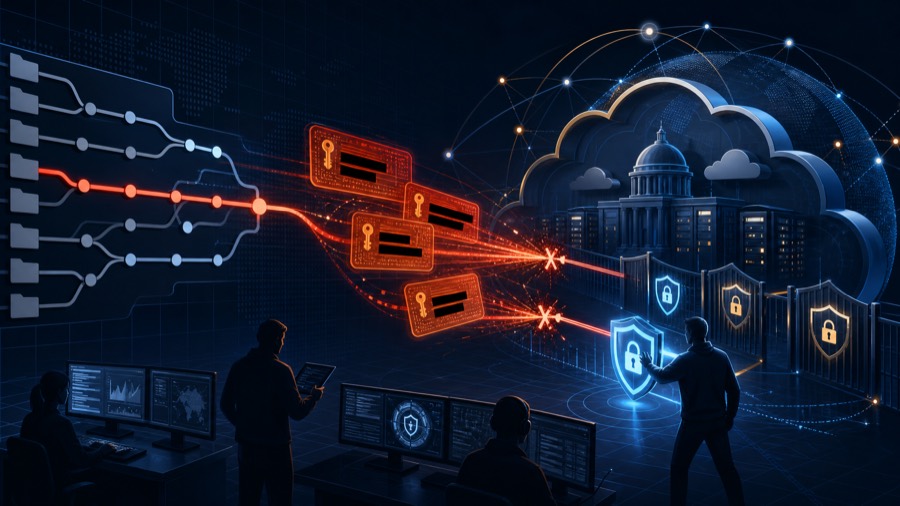
CISA GovCloud Leak Shows Secret Scanning Cannot Be Optional
A reported CISA contractor GitHub leak shows why secret scanning, token rotation, and CI/CD hardening need to be enforced controls, not optional developer hygiene.

Storm-2949 Shows Cloud Breaches Start With Identity, Not Malware
Microsoft’s Storm-2949 case study is a clean warning for SMBs and government contractors: once cloud identity and control-plane access are compromised, attackers can steal data without deploying traditional malware.
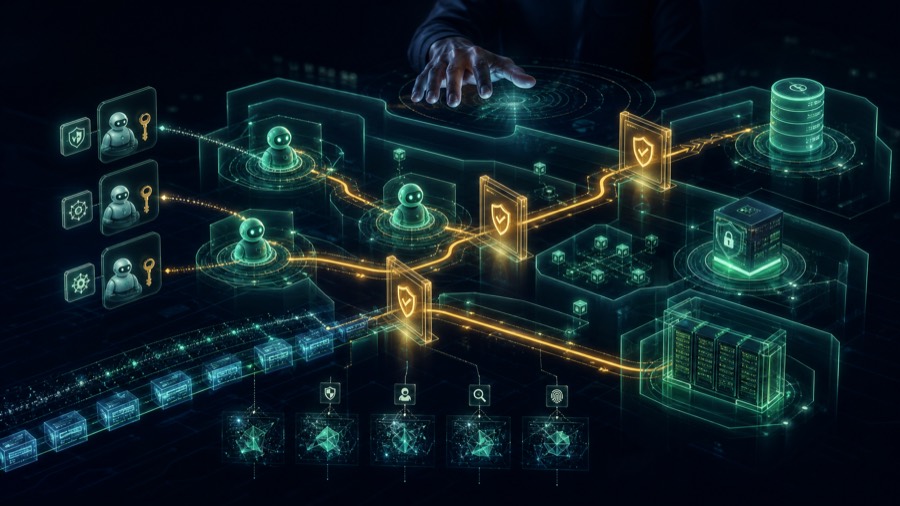
AI Agent Governance Is Becoming a Security Control, Not a Nice-to-Have
AI agents now operate with real credentials inside business systems. Here is how SMBs and government contractors should govern identity, authority, action, and evidence before agentic workflows become unmanaged risk.
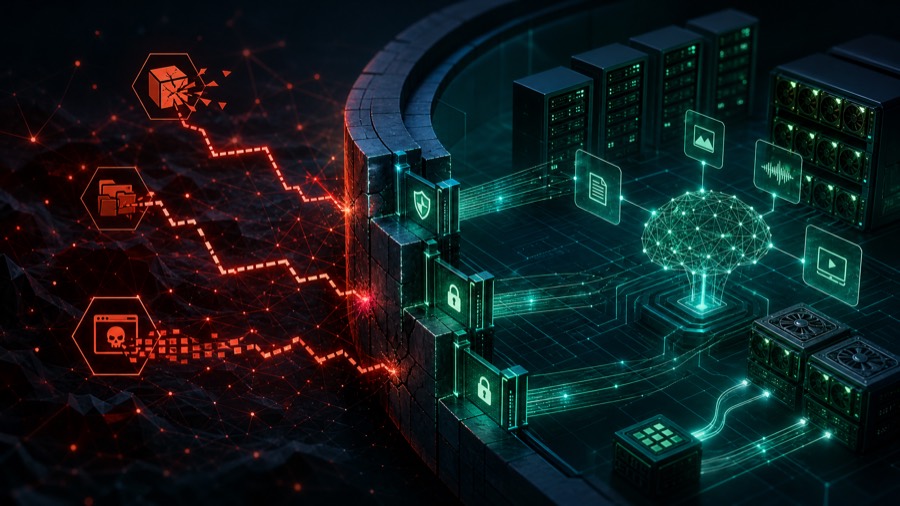
SGLang RCE Flaws Show AI Inference Servers Need Real Network Isolation
CERT/CC disclosed three SGLang vulnerabilities affecting AI inference deployments, including remote code execution and path traversal risks. Here is what SMBs and government contractors should do now.

Grafana GitHub Token Breach Shows Why Source Code Access Needs Guardrails
Grafana disclosed unauthorized GitHub access tied to a leaked token and codebase download. Here is what SMBs and government contractors should tighten around source-code access, CI/CD tokens, and extortion readiness.

AI Literacy Needs Fundamentals: Teaching Technology in the Real World
Albert LaScola reflects on teaching database systems, governance, risk management, and AI literacy through a fundamentals-first approach shaped by Navy operations, security work, Bulwark Black, and Rural Tech and Support.

node-ipc Backdoor Shows Why CI Secrets Need Supply Chain Controls
Malicious node-ipc npm releases turned a package update into a credential-exposure event. Here is what SMBs and government contractors should check first.

Exchange OWA Zero-Day Shows Why Email Servers Need Emergency Mitigation
CISA added Microsoft Exchange Server CVE-2026-42897 to KEV after evidence of active exploitation. For SMBs and government contractors, the lesson is simple: internet-facing email infrastructure needs emergency mitigation playbooks before the patch lands.

Device Code Phishing Turns Legitimate Login Flows Into Token Theft
Device code phishing is scaling because it abuses legitimate OAuth flows instead of simply stealing passwords. Here is what SMBs and government contractors should review now.

Recent Linux Kernel Exploits Make Attack Surface Reduction a Practical Priority
Recent Linux kernel exploit discussions show why SMBs and government contractors should reduce unused modules and services, not just wait for patches.

PawsRunner Steganography Shows Infostealers Are Hiding in Plain Sight
FortiGuard Labs reports PureLogs is being delivered through PawsRunner steganography. Here is what SMBs and government contractors should watch for defensively.
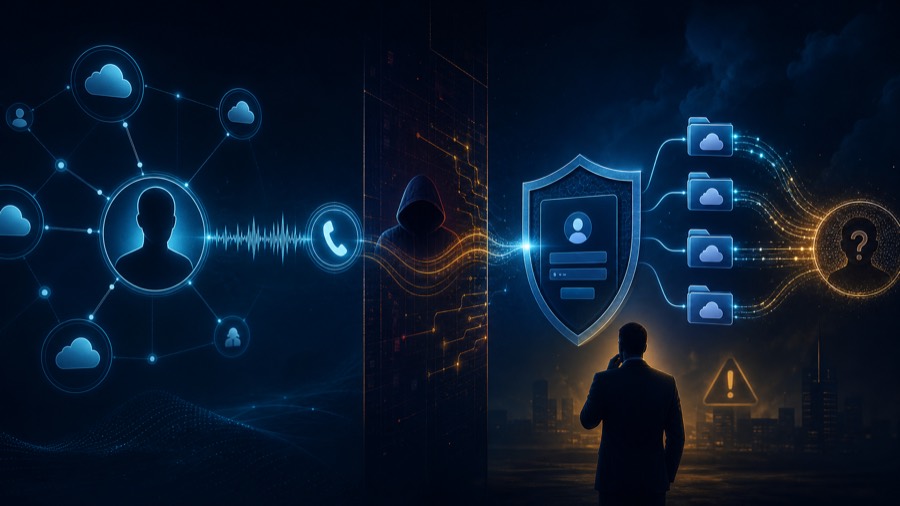
BlackFile Vishing Campaign Shows Why MFA Alone Is Not Enough
GTIG reports UNC6671 / BlackFile is using vishing, AiTM phishing, and SaaS data theft to extort organizations. Here is what SMBs and government contractors should harden now.
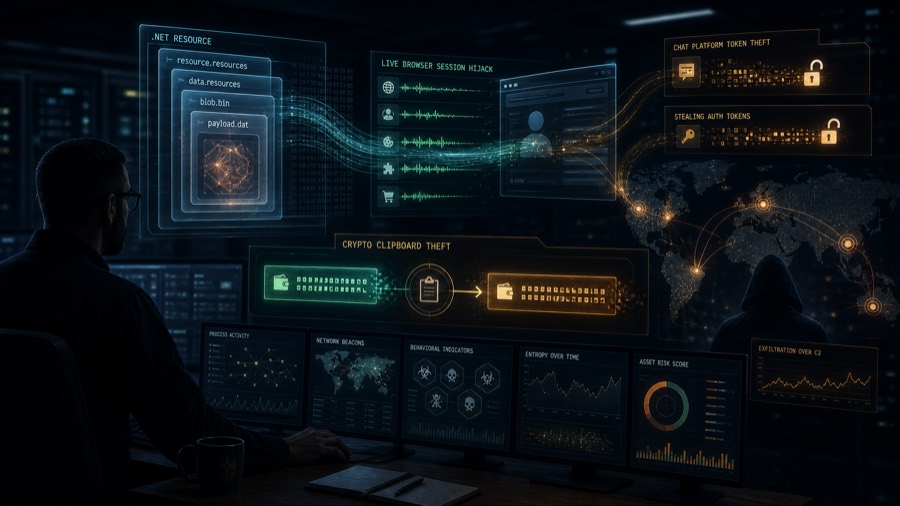
Gremlin Stealer Shows Why Browser Sessions Are Now High-Value Targets
Unit 42 reports Gremlin Stealer has evolved with resource-file obfuscation, session hijacking, Discord token theft, and crypto clipboard fraud. Here is what SMBs and government contractors should do defensively.
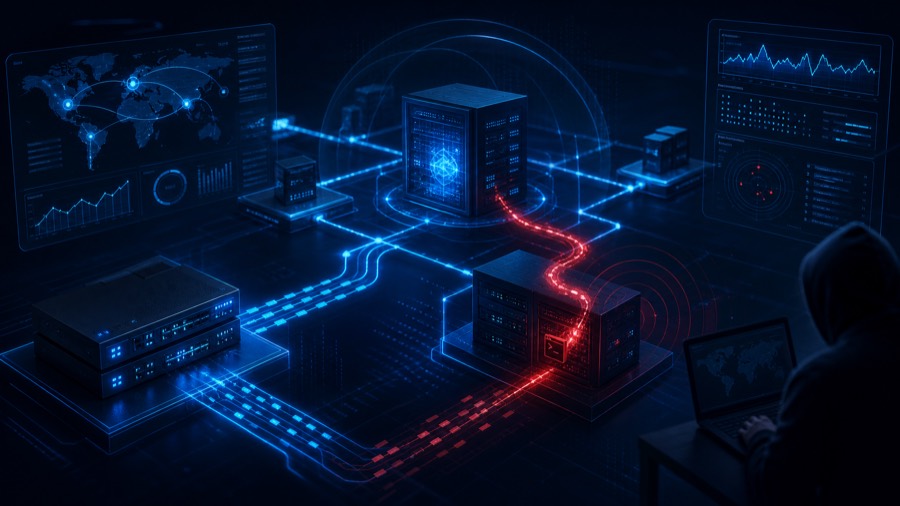
Cisco SD-WAN Exploitation Shows Edge Controllers Need Emergency Review
Cisco Talos reports active exploitation of Catalyst SD-WAN authentication bypass and related vulnerabilities. Here is what SMBs and government contractors should prioritize now.

Kazuar Shows Russian Espionage Malware Is Engineering for Resilience
Microsoft reports that Kazuar, attributed to Russian state actor Secret Blizzard, has evolved into a modular P2P botnet. Here is what SMBs and government contractors should take from it defensively.

Exposed AI Apps Turn Misconfiguration Into RCE Risk
Microsoft warns that publicly exposed AI apps, MCP servers, and Kubernetes-hosted agent tooling can turn weak defaults into practical paths for RCE, credential theft, and data exposure.
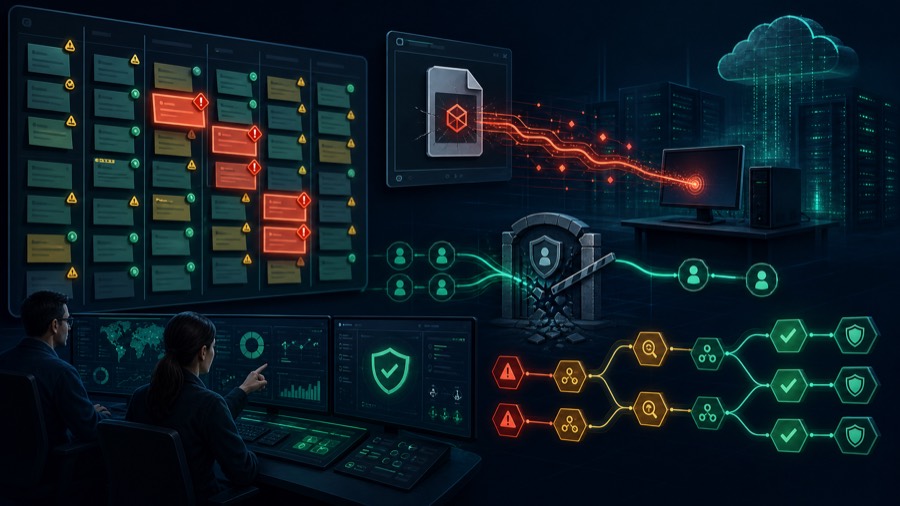
May 2026 Patch Tuesday: How SMBs Should Prioritize 132 Microsoft CVEs
Microsoft’s May 2026 Patch Tuesday shipped 132 CVEs. Here is how SMBs and government contractors should prioritize identity, server, and Office risks first.

The Gentlemen RaaS Leak Shows Ransomware Is Still an Edge-Device Problem
Check Point’s look inside The Gentlemen ransomware operation is a useful reminder for SMBs and government contractors: exposed edge appliances, weak identity controls, and unmanaged remote access paths still drive real ransomware risk.
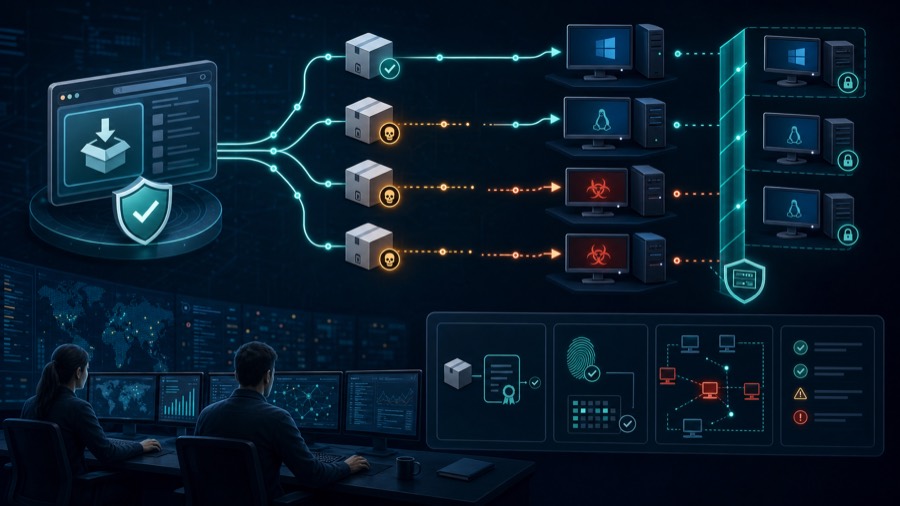
JDownloader Site Compromise Shows Why Trusted Downloads Still Need Verification
Attackers swapped selected JDownloader website download links with malicious installers. Here is what SMB and government-contractor defenders should do about trusted-download risk.

Fake OpenAI Hugging Face Repo Shows AI Supply Chain Risk Is Already Here
A fake OpenAI Privacy Filter repository on Hugging Face delivered Windows infostealer malware. Here is what SMB and gov-contractor defenders should take from it.
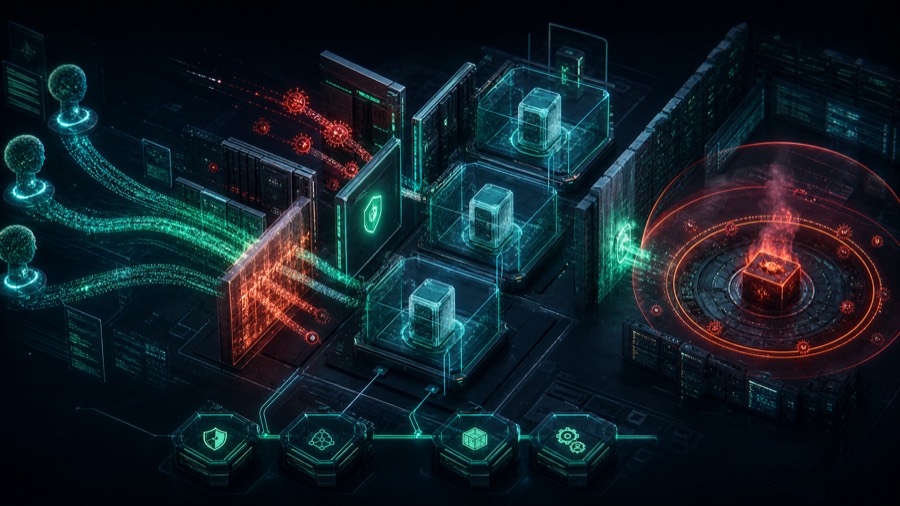
MCP Server Command Injection Shows Why AI Tools Need Real Isolation
A critical GitHub advisory for @profullstack/mcp-server shows how unsafe AI tool endpoints can turn domain lookup functionality into unauthenticated remote code execution.

Dirty Frag Turns Linux Footholds Into Root: What Defenders Should Do Now
Microsoft is tracking active Dirty Frag Linux privilege escalation activity. Here is what SMB and gov-contractor defenders should prioritize now.
Prompt Injection Just Became an RCE Problem for AI Agents
Microsoft disclosed Semantic Kernel vulnerabilities showing how prompt injection can cross into code execution when AI agents are connected to unsafe tools. Here is what defenders should review now.

NASA Put a Geospatial AI Foundation Model in Orbit — That Should Make You Think
NASA and IBM’s open-source Prithvi geospatial AI model has now been demonstrated in orbit. The milestone points toward a future where satellites analyze data before sending it home — and where security has to follow AI into operational environments.

PAN-OS Captive Portal Zero-Day Shows Why Internet-Facing Edge Devices Need Immediate Review
Unit 42 reports limited exploitation of CVE-2026-0300, a PAN-OS Captive Portal zero-day. Here is what SMB and government-contractor defenders should check now.

PCPJack Shows Cloud Malware Is Moving From Cryptomining to Credential Theft
SentinelLabs reported PCPJack, a cloud-focused worm that evicts TeamPCP artifacts, steals credentials from exposed infrastructure, and spreads across cloud systems.
Hormuz Crisis Investment Report
2026 Hormuz Crisis — Investment Strategy Report BRENT CRUDE $101.91 ▲3.47% WTI CRUDE $98.50 ▲3.12% GOLD $4,750 ▼0.72% XLE +25% YTD XOP +30% YTD BWET +411% Q1 2026 S&P 500 -4.4% YTD 10-YR YIELD 4.46% HORMUZ STATUS BLOCKADE ACTIVE IEA: LARGEST SUPPLY DISRUPTION IN HISTORY BRENT CRU

Critical Cisco IMC Authentication Bypass Enables Unauthenticated Admin Access
Cisco has released urgent security patches addressing multiple critical and high-severity vulnerabilities, including a maximum-severity authentication bypass in the Integrated Management Controller (IMC) that allows unauthenticated attackers to gain administrative access to affec

Critical Cisco IMC Authentication Bypass Grants Remote Attackers Admin Privileges
Cisco has released emergency security updates to patch a critical authentication bypass vulnerability in its Integrated Management Controller (IMC), a critical component embedded on the motherboard of Cisco UCS C-Series and E-Series servers that provides out-of-band management ca

CrystalX RAT: New Malware-as-a-Service Combines Spyware, Stealer, and Prankware Capabilities
Kaspersky researchers have uncovered CrystalX RAT, a sophisticated new malware-as-a-service (MaaS) platform that combines remote access trojan capabilities with data theft, keylogging, and uniquely disturbing prankware features designed to psychologically torment victims. From We

CL-STA-1087: Chinese APT Targets Southeast Asian Militaries with AppleChris and MemFun Backdoors
Unit 42 researchers have uncovered a sophisticated Chinese espionage campaign, designated CL-STA-1087, that has been systematically targeting military organizations across Southeast Asia since at least 2020. The state-sponsored operation demonstrates exceptional operational patie

UAT-10608: NEXUS Listener Framework Compromises 766 Next.js Hosts in 24-Hour Credential Harvesting Blitz
Cisco Talos has disclosed a large-scale automated credential harvesting campaign carried out by a threat cluster they are tracking as “UAT-10608.” The systematic exploitation campaign leverages a custom framework called “NEXUS Listener” to target Next.js applications vulnerable t
DPRK Threat Actors Leverage GitHub as Command and Control Infrastructure in Multi-Stage LNK Attacks
North Korean state-sponsored threat actors have been observed targeting South Korean organizations with a sophisticated multi-stage attack chain that abuses GitHub as command and control (C2) infrastructure. Fortinet FortiGuard Labs published research on April 2, 2026 detailing t

LiteLLM Supply Chain Attack: TeamPCP Deploys Multi-Stage Credential Stealer to 95M Monthly Downloads
A sophisticated supply chain attack has compromised LiteLLM, the widely-used Python library for interfacing with large language models, delivering multi-stage credential-stealing malware to systems downloading over 95 million packages per month. The attack, attributed to TeamPCP—

Operation TrueChaos: Chinese APT Exploits TrueConf Zero-Day CVE-2026-3502 to Target Southeast Asian Governments
A critical zero-day vulnerability in the TrueConf video conferencing platform is being actively exploited in a sophisticated espionage campaign targeting government entities across Southeast Asia. Check Point Research has uncovered Operation TrueChaos, a targeted attack campaign

Axios npm Supply Chain Attack Deploys Cross-Platform RAT to 83 Million Weekly Users
On March 31, 2026, the cybersecurity landscape was shaken by a significant supply chain attack targeting Axios, one of the most widely used HTTP client libraries in the JavaScript ecosystem with over 83 million weekly downloads. Attackers compromised a maintainer account to injec

DeepLoad Malware: AI-Generated Evasion Meets ClickFix Delivery in Enterprise Credential Theft Campaign
A sophisticated new malware campaign dubbed “DeepLoad” has emerged targeting enterprise environments, combining ClickFix social engineering delivery with AI-generated obfuscation techniques that defeat traditional security controls. ReliaQuest researchers discovered the threat af
ShinyHunters Breaches European Commission: 350GB of Sensitive Data Exfiltrated from AWS Cloud
The European Commission has confirmed a significant data breach after its Europa.eu web platform was compromised in a cyberattack claimed by the notorious ShinyHunters extortion gang. The attackers allegedly exfiltrated over 350GB of sensitive data from the Commission’s Amazon We
CVE-2026-3055: Critical Citrix NetScaler Memory Flaw Actively Exploited in the Wild
Threat actors are actively exploiting CVE-2026-3055, a critical severity memory overread vulnerability in Citrix NetScaler ADC and NetScaler Gateway appliances. Security researchers at watchTowr have confirmed in-the-wild exploitation began at least March 27, 2026, with attackers

FBI Alert: Iranian MOIS Hackers Weaponize Telegram as C2 Channel to Target Dissidents Worldwide
The FBI has issued a critical alert warning that Iranian government hackers are weaponizing Telegram as a command and control (C2) channel to steal data from dissidents, opposition groups, and journalists who oppose the regime around the world. According to the FBI alert publishe

FBI Confirms Handala Hackers Breached Director Patel’s Personal Email Account
Iran-linked hackers have successfully breached the personal email account of FBI Director Kash Patel, publishing photos, documents, and email correspondence in a significant escalation of cyber operations targeting senior U.S. government officials. The Handala Hack Team, a hackti

Infinity Stealer: New macOS Infostealer Combines ClickFix Social Engineering with Nuitka Compilation
A sophisticated new info-stealing malware named Infinity Stealer is targeting macOS systems using an innovative attack chain that combines ClickFix social engineering with Python payloads compiled using the open-source Nuitka compiler. Attack Overview According to Malwarebytes re

Infinity Stealer: New macOS Infostealer Uses ClickFix and Nuitka Compilation to Evade Detection
A sophisticated new information-stealing malware named Infinity Stealer has emerged targeting macOS systems, combining the increasingly popular ClickFix social engineering technique with advanced evasion capabilities through Nuitka compilation. According to Malwarebytes research,

Iranian Handala Hackers Breach FBI Director Kash Patel’s Personal Email, Leak Photos and Documents
Iran-linked hacking group Handala Hack Team has successfully breached the personal email account of FBI Director Kash Patel, publishing photographs and documents stolen from his inbox, according to The Guardian and confirmed by the FBI. Attack Details The breach was announced by

ShinyHunters Claims 350GB Data Theft from European Commission’s AWS Cloud Infrastructure
The European Commission, the executive branch of the European Union, has confirmed a significant cyberattack after the notorious ShinyHunters extortion group claimed responsibility for breaching its Amazon Web Services cloud infrastructure and stealing over 350GB of sensitive dat

Infinity Stealer: New macOS Malware Uses ClickFix Lures and Nuitka-Compiled Python Payload
Security researchers at Malwarebytes have uncovered a new macOS infostealer called Infinity Stealer that combines the ClickFix social engineering technique with a Python payload compiled using the open-source Nuitka compiler — a first for documented macOS malware campaigns. Why N

FBI Alert: Iranian MOIS Hackers Weaponize Telegram for Global Espionage Against Dissidents
The FBI has issued a public alert warning that Iranian government hackers affiliated with the Ministry of Intelligence and Security (MOIS) are actively weaponizing Telegram as a command-and-control (C2) platform to conduct espionage operations against dissidents, opposition group

Iranian Handala Hackers Breach FBI Director Kash Patel’s Personal Email Account
In a significant escalation of Iranian cyber operations against U.S. government officials, the Iran-linked hacktivist group Handala has successfully compromised the personal email account of FBI Director Kash Patel. The breach, confirmed by the FBI on March 27, 2026, resulted in

Pro-Ukraine Bearlyfy Group Deploys Custom GenieLocker Ransomware Against 70+ Russian Companies
A pro-Ukrainian hacking group called Bearlyfy has been attributed to more than 70 cyber attacks targeting Russian companies since January 2025, with recent operations deploying a proprietary Windows ransomware strain called GenieLocker, according to research from Russian security
Chinese APT Red Menshen Plants Stealthy BPFdoor Backdoors in Global Telecom Networks
A months-long investigation by Rapid7 Labs has exposed a sophisticated state-sponsored espionage campaign by the China-nexus threat actor Red Menshen, which has embedded some of the most covert digital sleeper cells ever documented inside global telecommunications infrastructure.
Red Menshen Plants BPFdoor Backdoors in Global Telecom Networks for Long-Term Espionage
A comprehensive investigation by Rapid7 Labs has exposed a sophisticated, state-sponsored espionage campaign by the China-nexus threat actor Red Menshen, revealing one of the most covert digital sleeper cell operations ever documented within global telecommunications infrastructu

Pawn Storm Deploys PRISMEX Malware Suite Against Ukrainian Defense Supply Chain and NATO Allies
Russia-aligned APT group Pawn Storm (APT28/Fancy Bear) has launched an aggressive campaign deploying a sophisticated new malware suite dubbed PRISMEX against Ukrainian defense infrastructure and NATO logistics partners across Central and Eastern Europe. Campaign Overview The camp

Identity Security Becomes Critical Attack Vector as Organizations Battle Fragmented Access Controls
Identity attacks have evolved beyond simply compromising individual accounts—modern threat actors now focus on what those identities can access across an organization’s sprawling digital ecosystem. As enterprises manage an explosive growth in human, non-human, and agentic identit
Oracle Issues Rare Out-of-Band Patch for Critical CVE-2026-21992 RCE in Identity Manager
Oracle has released an emergency out-of-band security patch for a critical unauthenticated remote code execution vulnerability affecting Oracle Identity Manager and Oracle Web Services Manager. Tracked as CVE-2026-21992 with a CVSS v3.1 score of 9.8, this flaw allows attackers to

CanisterWorm Wiper Weaponizes Trivy Supply Chain to Target Iran
A cybercrime group is attempting to leverage the ongoing US-Iran conflict by deploying a destructive wiper malware that specifically targets systems configured for Iranian users, according to new research from Krebs on Security and Aikido. TeamPCP Launches Iran-Targeting Wiper Th

TeamPCP Deploys CanisterWorm Wiper to Target Iranian Systems
The cybercrime group TeamPCP has added a destructive wiper component to their cloud-native attack infrastructure, specifically targeting systems in Iran based on timezone and language settings. From Data Theft to Destruction Security researcher Charlie Eriksen at Aikido discovere

Hackers Exploit CVE-2025-32975 (CVSS 10.0) to Hijack Unpatched Quest KACE SMA Systems
Threat actors are actively exploiting a maximum-severity security flaw in Quest KACE Systems Management Appliance (SMA), according to Arctic Wolf research. The vulnerability, tracked as CVE-2025-32975 with a CVSS score of 10.0, allows attackers to completely bypass authentication
TeamPCP Spreads Trivy Supply Chain Attack to Docker Hub and Kubernetes with Devastating Wiper Payload
The cybersecurity community is reeling from an escalating supply chain attack targeting Trivy, Aqua Security’s popular open-source vulnerability scanner with over 33,800 GitHub stars. The threat actor known as TeamPCP has expanded their campaign from compromised GitHub Actions to

FBI Flash Alert: Iranian Handala Hackers Weaponize Telegram for Malware C2 Operations
The FBI has issued a flash alert warning network defenders that Iranian hackers linked to the Ministry of Intelligence and Security (MOIS) are actively using Telegram as command-and-control (C2) infrastructure in malware attacks targeting journalists, dissidents, and opposition g

Unit 42 Warns: AI Agents Could Enable Gift Card Theft and Returns Fraud at Scale
Palo Alto Networks’ Unit 42 has published new research examining how the rise of “agentic commerce” – AI agents that autonomously browse, shop, and transact on behalf of users – could be exploited by cybercriminals to conduct retail fraud at unprecedented scale. Read the full res

CVE-2026-33017: Critical Langflow AI Framework Vulnerability Exploited Within 20 Hours of Disclosure
A critical vulnerability in Langflow, the popular open-source visual framework for building AI agents and RAG pipelines, was weaponized by threat actors within just 20 hours of public disclosure—before any proof-of-concept code was publicly available. The Vulnerability Tracked as

DoJ Disrupts Four Massive IoT Botnets Behind Record-Breaking 31.4 Tbps DDoS Attacks
The U.S. Department of Justice announced a major law enforcement operation to disrupt four IoT botnets — AISURU, Kimwolf, JackSkid, and Mossad — responsible for record-breaking distributed denial-of-service (DDoS) attacks reaching 31.4 terabits per second. The court-authorized ta
Interlock Ransomware Exploited Cisco Firewall Zero-Day Weeks Before Public Disclosure
Amazon’s security team has revealed that the Interlock ransomware gang exploited a critical Cisco firewall vulnerability as a zero-day for five weeks before it was publicly disclosed, giving attackers a significant head start against defenders. Zero-Day Exploitation Timeline Acco

DarkSword iOS Exploit Kit: Russian Hackers Weaponize Six Vulnerabilities for Full iPhone Takeover
Google Threat Intelligence Group (GTIG), iVerify, and Lookout have jointly uncovered DarkSword, a sophisticated iOS exploit kit that enables complete device compromise with minimal user interaction. The kit, operational since at least November 2025, has been deployed by suspected

CVE-2026-33017: Critical Langflow AI Platform Flaw Exploited Within 20 Hours of Disclosure
A critical vulnerability in Langflow, a popular open-source AI workflow automation platform, has been actively exploited in the wild within just 20 hours of public disclosure—before any proof-of-concept code was even available. The Vulnerability Tracked as CVE-2026-33017 with a C

Critical Langflow AI Platform Flaw CVE-2026-33017 Exploited Within 20 Hours of Disclosure
A critical vulnerability in Langflow, the popular open-source AI workflow platform, has been actively exploited within just 20 hours of its public disclosure—before any proof-of-concept code was even available. The rapid weaponization highlights the shrinking window defenders hav

CVE-2026-3564: Critical ScreenConnect Flaw Enables Session Hijacking Through ASP.NET Machine Key Abuse
ConnectWise has released an emergency patch for a critical vulnerability (CVE-2026-3564) in its ScreenConnect remote access platform that could allow unauthenticated attackers to hijack legitimate sessions by forging authentication credentials using extracted ASP.NET machine keys
Interlock Ransomware Exploited Cisco FMC Zero-Day for Six Weeks Before Patch: Amazon Reveals Full Attack Chain
Amazon Threat Intelligence has revealed that the Interlock ransomware group exploited CVE-2026-20131—a critical CVSS 10.0 vulnerability in Cisco Secure Firewall Management Center—as a zero-day since January 26, 2026, more than five weeks before Cisco publicly disclosed the flaw o
9 Critical IP KVM Flaws Enable Unauthenticated Root Access Across Four Vendors
Low-cost IP KVM devices—designed to provide remote keyboard, video, and mouse access to physical systems—are introducing catastrophic security risks into enterprise environments. New research from Eclypsium reveals nine vulnerabilities affecting products from GL-iNet, Angeet/Yees

54 EDR Killers Exploit 34 Vulnerable Signed Drivers to Disable Security Before Ransomware Deployment
A comprehensive analysis by ESET has uncovered a thriving ecosystem of endpoint detection and response (EDR) killer tools, revealing that 54 of these specialized programs abuse 34 vulnerable signed drivers to neutralize security software before ransomware attacks. The BYOVD Threa

LeakNet Ransomware Scales Operations with ClickFix Lures and Stealthy Deno-Based Fileless Loader
The LeakNet ransomware group is rapidly scaling its operations with two dangerous innovations: a social engineering technique called ClickFix and a previously unreported fileless loader built on the legitimate Deno JavaScript runtime. According to ReliaQuest research, LeakNet has

Rapid7 2026 Global Threat Landscape Report: Exploited Vulnerabilities Surge 105% as Attack Timelines Collapse
Rapid7 has released its 2026 Global Threat Landscape Report, revealing a dramatic acceleration in cyber attack patterns that leaves organizations with shrinking windows to respond to emerging threats. The research demonstrates that the predictive lead time defenders once relied u
CISA Adds Wing FTP Server Information Disclosure Flaw to KEV Catalog Amid Active Exploitation
The U.S. Cybersecurity and Infrastructure Security Agency (CISA) has added a medium-severity vulnerability in Wing FTP Server to its Known Exploited Vulnerabilities (KEV) catalog on March 16, 2026, confirming that attackers are actively exploiting the flaw in real-world attacks.

Iranian Cyber Threat Evolution: From MBR Wipers to Identity Weaponization
A comprehensive analysis by Unit 42 reveals a fundamental shift in Iranian cyber operations: state-aligned threat actors are abandoning custom malware in favor of weaponizing enterprise administrative tools to achieve unprecedented scale and stealth. The Strategic Shift During re

GlassWorm Supply Chain Campaign Hijacks 72 Open VSX Extensions to Target Developers
Threat actors are abusing Visual Studio Code extension dependencies in the Open VSX registry to distribute the GlassWorm malware loader through 72 malicious extensions targeting developers.

GlassWorm ForceMemo Campaign: Stolen GitHub Tokens Used to Inject Malware Into Hundreds of Python Repositories
A sophisticated supply chain attack dubbed ForceMemo is leveraging stolen GitHub tokens to inject malware into hundreds of Python repositories, marking a dangerous escalation in the ongoing GlassWorm campaign targeting software developers. The Attack Chain According to StepSecuri

Iranian Threat Actors Target Hikvision and Dahua IP Cameras for Kinetic Strike Coordination
As Iran-Israel-US military operations escalate in the Middle East, Check Point Research and Tenable have identified a significant surge in Iranian threat actors targeting IP cameras manufactured by Hikvision and Dahua. The activity, which began spiking on February 28, 2026, coinc

Critical Veeam Backup Vulnerabilities Draw Ransomware Group Attention: Seven CVSS 9.9 Flaws Patched
Veeam has released emergency patches for seven severe vulnerabilities in its flagship Backup & Replication platform, several scoring CVSS 9.9 — the highest possible criticality rating. The flaws enable remote code execution (RCE), privilege escalation, and credential theft by aut

The Promptware Kill Chain: A New Framework for Understanding AI Malware Attacks
A groundbreaking research paper by Bruce Schneier and collaborators introduces the concept of “promptware”—a distinct class of malware targeting large language models (LLMs). Moving beyond the myopic focus on prompt injection, the researchers propose a structured seven-step kill
Operation Lightning: Global Takedown of SocksEscort Botnet That Enslaved 369,000 Routers in 163 Countries
A coordinated international law enforcement operation has dismantled SocksEscort, a criminal proxy service that infected hundreds of thousands of residential routers worldwide to enable large-scale fraud, ransomware distribution, and other cybercrimes. The Scope of the Threat Acc

Google Patches Two Chrome Zero-Days Under Active Exploitation: CVE-2026-3909 and CVE-2026-3910
Google has released emergency security updates to patch two high-severity Chrome vulnerabilities being actively exploited in zero-day attacks, affecting an estimated 3.5 billion users worldwide. “Google is aware that exploits for both CVE-2026-3909 & CVE-2026-3910 exist in the wi

Operation Synergia III: Global Crackdown Takes Down 45,000 Malicious IPs and Arrests 94 Cybercriminals
In one of the most significant international cybercrime operations to date, INTERPOL has announced the successful conclusion of Operation Synergia III—a coordinated global effort that dismantled critical infrastructure supporting phishing, malware, and ransomware campaigns worldw
ShinyHunters Claims 1 Petabyte Data Theft From Telus Digital in Multi-Month BPO Breach
Business process outsourcing (BPO) giant Telus Digital has confirmed a major cybersecurity incident after the notorious ShinyHunters extortion group claimed to have stolen nearly one petabyte of data from the company and its customers. The breach, which involved unauthorized acce

Google Patches Two Chrome Zero-Days Actively Exploited in the Wild, CISA Adds to KEV Catalog
Google has released emergency security updates to address two high-severity vulnerabilities in Chrome that are being actively exploited in the wild. The U.S. Cybersecurity and Infrastructure Security Agency (CISA) has added both flaws to its Known Exploited Vulnerabilities (KEV)

Pro-Iranian Hackers Expand Targeting of US Critical Infrastructure as Cyber Chaos Escalates
Pro-Iranian hackers are expanding their operations beyond the Middle East and increasingly targeting critical infrastructure in the United States, according to cybersecurity experts and recent incidents. The attacks represent a significant escalation in Iran’s cyber warfare capab

Google Patches Two Actively Exploited Chrome Zero-Days: CVE-2026-3909 and CVE-2026-3910
Google has released emergency security updates to fix two high-severity vulnerabilities in Chrome that are being actively exploited in the wild. These are the second and third Chrome zero-days patched in 2026, highlighting the continued targeting of browser vulnerabilities by thr
Storm-2561 Weaponizes SEO Poisoning to Deploy Trojanized VPN Clients and Steal Enterprise Credentials
Microsoft Defender Experts have uncovered a sophisticated credential theft campaign orchestrated by the financially motivated threat actor Storm-2561. The campaign exploits search engine optimization (SEO) poisoning to redirect enterprise users searching for legitimate VPN softwa

Infostealer Infection Unmasks DPRK Operative Behind Polyfill.io Supply Chain Attack and US Crypto Exchange Infiltration
In a stunning example of operational security failure, a North Korean cyber operative was unmasked after infecting their own machine with a LummaC2 infostealer—revealing definitive evidence linking them to both the catastrophic Polyfill.io supply chain attack and deep infiltratio

KadNap Botnet Hijacks 14,000+ ASUS Routers Using Novel Kademlia DHT Protocol for Stealth C2
A newly discovered botnet called KadNap is turning ASUS routers and edge networking devices into covert proxies for cybercriminal operations. Since August 2025, the malware has infected over 14,000 devices across the globe, with researchers from Black Lotus Labs (Lumen Technologi

Iranian Handala Hacktivists Deploy Wiper Malware Against Medical Device Giant Stryker
Iran-linked hacktivist group Handala has claimed responsibility for a devastating wiper malware attack against Stryker Corporation, a Fortune 500 medical technology company with over 53,000 employees and $22.6 billion in annual sales. Attack Scale and Impact According to Handala’
FortiGate Devices Exploited as Network Entry Points for Service Account Credential Theft
Cybersecurity researchers have uncovered a sophisticated campaign where threat actors are weaponizing FortiGate Next-Generation Firewall (NGFW) appliances as entry points to breach victim networks. The activity, documented by SentinelOne, targets healthcare, government, and manag

Iranian MOIS Cyber Actors Embrace Criminal Ecosystem: From Rhadamanthys to Ransomware Affiliates
A new Check Point Research report reveals that Iranian Ministry of Intelligence and Security (MOIS)-linked threat actors are increasingly engaging with the cybercrime ecosystem, moving beyond mere imitation to directly leveraging criminal tools, services, and affiliate-style rela

BlackSanta EDR Killer Campaign Targets HR Departments Through Weaponized Resume Files
A year-long malware campaign targets HR departments through weaponized resume files, deploying the previously undocumented BlackSanta EDR killer that disables endpoint security tools at the kernel level.

Seedworm APT Deploys Dindoor and Fakeset Backdoors Inside US Critical Infrastructure Networks
Iran’s Seedworm APT group (also known as MuddyWater) has established persistent access inside the networks of multiple US organizations since early February 2026, deploying two previously unknown malware implants as geopolitical tensions between the US and Iran escalate. New Back

60+ Pro-Iranian Hacktivist Groups Activate AI-Enabled ICS Attacks Following US-Israel Strikes
In the largest single-event activation of Iranian-aligned cyber actors ever documented, more than 60 pro-Iranian hacktivist groups became active on Telegram within hours of the February 28 US-Israel military strikes on Iran. Armed with AI tools and targeting over 40,000 internet-

Iranian Cyber Threats Intensify: APT Groups and Hacktivists Target U.S. and Allied Infrastructure
Executive Summary As hostilities between Iran and the U.S./Israeli-led coalition escalate, threat intelligence indicates Iranian-aligned cyber actors pose an elevated near-term risk to organizations across North America and allied nations. These actors have a well-documented hist

Seedworm APT Targets US Banks and Airports with New Dindoor and Fakeset Backdoors
Iranian state-sponsored hackers have maintained persistent access inside multiple US critical infrastructure networks since early February 2026, establishing footholds that security researchers warn could enable devastating attacks amid escalating geopolitical tensions in the Mid

BoryptGrab Stealer Spreads Through 100+ Fake GitHub Repositories in Massive Malware Campaign
Trend Micro researchers have uncovered a large-scale malware distribution campaign using over 100 GitHub repositories to spread BoryptGrab, an information stealer that targets browser credentials, cryptocurrency wallets, and sensitive files while deploying reverse SSH backdoors f

BoryptGrab Stealer Spreads Through 100+ Malicious GitHub Repositories
A massive malware distribution campaign has been discovered leveraging more than 100 GitHub repositories to spread the BoryptGrab information stealer. According to Trend Micro research, the campaign targets Windows users through deceptive downloads masquerading as legitimate soft

Russian APT Deploys Cat-Themed BadPaw and MeowMeow Malware to Target Ukraine
Security researchers from ClearSky have uncovered a sophisticated Russian cyber campaign targeting Ukrainian organizations using two previously unknown malware strains with distinctly playful names: BadPaw and MeowMeow. Despite their whimsical naming, these tools represent a seri

Velvet Tempest Ransomware Group Deploys CastleRAT via ClickFix Attacks Linked to Termite Operations
Five-Year Ransomware Affiliate Uses Malvertising and Legitimate Windows Tools in Sophisticated Intrusion Security researchers at MalBeacon have exposed a 12-day intrusion campaign by Velvet Tempest (also tracked as DEV-0504), a prolific ransomware affiliate group now deploying th

APT36 Vibeware Campaign: Pakistan’s Transparent Tribe Weaponizes AI to Mass-Produce Malware Targeting India
Pakistan-aligned threat actor Transparent Tribe (APT36) has embraced AI-assisted malware development to flood Indian government networks with disposable, polyglot implants—a technique security researchers are calling “vibeware” or Distributed Denial of Detection (DDoD). AI-Powere
SAP NetWeaver Critical Zero-Day (CVE-2025-31324) Under Active Exploitation by Initial Access Brokers
SAP customers are being urged to immediately patch a critical zero-day vulnerability in the Visual Composer component of SAP NetWeaver application server that threat actors are actively exploiting to deploy web shell backdoors. The Vulnerability Tracked as CVE-2025-31324, this un

VOID#GEIST: Multi-Stage Malware Campaign Uses Python Loaders and APC Injection to Deploy XWorm, AsyncRAT, and Xeno RAT
Security researchers at Securonix have uncovered a sophisticated multi-stage malware campaign dubbed VOID#GEIST that delivers three separate remote access trojans (RATs) through an elaborate infection chain designed to evade detection. A Modular Attack Framework Unlike traditiona

Google Disrupts Chinese APT UNC2814’s GRIDTIDE Backdoor Campaign Targeting 42 Countries
Google Threat Intelligence Group (GTIG) has disrupted a massive global cyber espionage campaign targeting telecommunications and government organizations across 42 countries. The threat actor, tracked as UNC2814, is a suspected People’s Republic of China (PRC)-nexus cyber espiona

Pakistan’s APT36 Floods Indian Government Networks With AI-Generated ‘Vibeware’ Malware
A Pakistan-linked threat group is overwhelming Indian government networks with a new breed of disposable, AI-generated malware in a campaign that marks a concerning shift in the digital conflict between the two nations. According to research from Bitdefender, the threat actor APT

Google and Mandiant Disrupt GRIDTIDE: Chinese APT Espionage Campaign Compromises 53 Victims in 42 Countries
Google Threat Intelligence Group (GTIG) and Mandiant have executed a coordinated takedown of one of the most expansive cyber espionage campaigns in recent memory. The operation targeted UNC2814, a suspected People’s Republic of China (PRC)-nexus threat actor that has operated glo

Coruna iOS Exploit Kit: Nation-State Spyware Tools Now Targeting Crypto Wallet Users
A powerful iOS exploit kit named “Coruna” has transitioned from elite surveillance operations to financially motivated cryptocurrency theft, signaling a dangerous shift in the mobile threat landscape. From Spyware Vendor to Cybercriminal Hands Google Threat Intelligence Group (GT
UAT-9244: China-Nexus APT Deploys Three New Malware Implants Against South American Telecom Providers
Cisco Talos has disclosed a new threat activity cluster, UAT-9244, assessed with high confidence to be a China-nexus advanced persistent threat (APT) actor closely associated with FamousSparrow and Tropic Trooper. Since 2024, the group has targeted critical telecommunications inf

Global Coalition Dismantles Tycoon 2FA Phishing Platform: 87 Million Emails, 330 Domains Seized
Microsoft, Europol, and a coalition of cybersecurity partners have dismantled Tycoon 2FA, one of the most prolific phishing-as-a-service (PhaaS) platforms ever documented, seizing 330 domains used for credential theft and multi-factor authentication bypass. The coordinated takedo
Cisco Patches Two Max Severity Secure FMC Flaws Enabling Root Access
Cisco has released critical security updates to address two maximum-severity vulnerabilities in its Secure Firewall Management Center (FMC) software that could allow unauthenticated remote attackers to gain complete root access to affected systems. Critical Vulnerabilities Overvi

Open-Source CyberStrikeAI Tool Weaponized in AI-Driven FortiGate Attacks Across 55 Countries
Team Cymru has revealed that threat actors behind the recent AI-assisted campaign targeting Fortinet FortiGate appliances leveraged an open-source, AI-native security testing platform called CyberStrikeAI to execute mass automated attacks, compromising over 600 devices across 55

Zerobot Malware Targets n8n Automation Platform: First Active Exploitation of CVE-2025-68613
Akamai SIRT discovers Zerobot botnet actively exploiting CVE-2025-68613 in n8n workflow automation platform, marking a shift from traditional IoT targeting to enterprise infrastructure.

Silver Dragon APT Targets Southeast Asia and Europe Using GearDoor Backdoor with Google Drive C2
Check Point Research has unveiled a sophisticated Chinese APT campaign dubbed Silver Dragon that has been actively targeting government entities and organizations across Southeast Asia and Europe since mid-2024. The threat actor operates within the umbrella of Chinese-nexus APT41
APT28 Exploited CVE-2026-21513 MSHTML Zero-Day as Attack Vector Before February Patch Tuesday
Russia’s state-sponsored threat actor APT28 (also known as Fancy Bear) has been linked to active exploitation of CVE-2026-21513, a high-severity MSHTML zero-day vulnerability, before Microsoft released its patch in February 2026. This finding comes from new research published by
Malicious Go Crypto Module Steals Passwords and Deploys Rekoobe Backdoor
A sophisticated supply chain attack has been uncovered targeting Go developers through a malicious module that impersonates the legitimate golang.org/x/crypto library. The attack demonstrates how threat actors are increasingly exploiting namespace confusion to compromise develope

Fake Google Security Check Transforms Browser Into Surveillance Toolkit via PWA Installation
A sophisticated phishing campaign has been discovered that transforms web browsers into comprehensive surveillance platforms by masquerading as a Google Account security page. According to Malwarebytes researchers, this attack represents one of the most fully-featured browser-bas

Russian Cyberattacks Shift to Intelligence Gathering for Missile Strike Guidance on Ukraine Power Grid
Russian cyberattacks targeting Ukraine’s energy infrastructure have shifted focus from immediate disruption to intelligence gathering for guiding missile strikes, Ukrainian cybersecurity officials revealed at the Kyiv International Cyber Resilience Forum. Strategic Shift in Attac

Hackers Weaponize Claude Code AI to Steal 150GB from Mexican Government in Month-Long Campaign
In a disturbing escalation of AI-enabled cyber operations, hackers have weaponized Anthropic’s Claude Code AI assistant to develop exploits, create custom attack tools, and systematically exfiltrate more than 150GB of data from Mexican government systems, according to Israeli cyb
Google Disrupts UNC2814 GRIDTIDE Campaign: Chinese APT Breaches 53 Organizations Across 42 Countries
Google has disclosed details of a massive disruption operation against UNC2814, a suspected China-nexus cyber espionage group that breached at least 53 organizations across 42 countries. The campaign, tracked as GRIDTIDE, represents one of the most far-reaching espionage operatio

OpenAI Confirms ChatGPT Exploited by Chinese and Russian Threat Actors for Cyberattacks
OpenAI has confirmed that Chinese and Russian state-affiliated threat actors have been exploiting ChatGPT to support malicious cyber and influence operations, marking one of the first documented cases of adversaries weaponizing generative AI for tactical offensive cyber activitie

Operation Roar of the Lion: Israel Executes Largest Cyberattack in History Against Iran
In an unprecedented display of cyber warfare capability, Israel has executed what is being described as the largest cyberattack in history, plunging Iran into near-total digital darkness during a coordinated military operation on Saturday, February 28, 2026. Near-Total Internet B

Steaelite RAT Bundles Ransomware and Data Theft in Single Web Panel for Double Extortion Attacks
A dangerous new remote access trojan called Steaelite RAT has emerged on cybercrime forums, offering attackers a unified platform for executing double extortion attacks with unprecedented efficiency. Unlike traditional attack chains that require separate tools for data theft and

APT37 Ruby Jumper Campaign: North Korean Hackers Deploy Malware Arsenal to Bridge Air-Gapped Networks
Zscaler ThreatLabz has uncovered a sophisticated campaign by North Korean threat group APT37, introducing five new malware tools designed specifically to infiltrate and exfiltrate data from air-gapped systems through weaponized USB drives. Campaign Overview In December 2025, secu

UAC-0050 Targets European Financial Institution in Strategic Phishing Campaign
Russia-aligned threat actor UAC-0050 has expanded operations beyond Ukraine, targeting a European financial institution involved in reconstruction efforts with a sophisticated multi-stage spear-phishing attack. Campaign Overview Security researchers at BlueVoyant have uncovered a
Chinese APT Campaign Delivers PlugX RAT via G DATA Antivirus DLL Side-Loading
A sophisticated Chinese-aligned threat campaign has been observed delivering the PlugX Remote Access Trojan (RAT) through a clever abuse of legitimate G DATA antivirus components, according to new research from LAB52. The Attack Chain The infection begins with a spear-phishing em

APT37 Deploys Ruby Jumper Campaign to Breach Air-Gapped Networks
North Korean threat actor APT37 (Reaper) has expanded its arsenal with sophisticated new malware designed to compromise air-gapped networks — systems physically isolated from the internet that organizations use to protect their most sensitive data. Researchers at Zscaler ThreatLa

DarkCloud Infostealer Emerges as Major Enterprise Threat: $30 Malware Delivers Scalable Credential Theft
The cybersecurity threat landscape is facing a growing challenge as infostealers continue to dominate the initial access ecosystem in 2026. Among the latest threats drawing serious attention is DarkCloud, a commercially available credential-harvesting malware that proves even low

Diesel Vortex: Russian Cybercrime Group Steals 1,600+ Credentials From Global Logistics Sector
A Russian-linked cybercrime group dubbed Diesel Vortex has been systematically targeting the global freight and logistics industry, stealing over 1,600 unique login credentials from users of major logistics platforms in a sophisticated phishing campaign that ran from September 20
Cisco Talos Exposes Three-Year Campaign: UAT-8616 Exploits SD-WAN Zero-Day for Critical Infrastructure Access
Cisco Talos has disclosed the active exploitation of CVE-2026-20127, a critical zero-day vulnerability in Cisco Catalyst SD-WAN Controller (formerly vSmart), by a highly sophisticated threat actor tracked as UAT-8616. The campaign, which dates back at least three years, targets c

North Korean Lazarus Group Adopts Medusa Ransomware in Global Extortion Campaign
North Korean cyber operations are crossing a significant threshold into commercial ransomware markets, demonstrating an intensified focus on direct financial gains. Recent intelligence from Symantec and Carbon Black Threat Hunter Team reveals the notorious state-backed Lazarus Gr

APT31’s Multi-Year Cyber Espionage Campaign Against Czech Ministry of Foreign Affairs
The Czech Republic has publicly attributed a sophisticated multi-year cyber intrusion to Chinese state-sponsored group APT31 (also known as Zirconium or Judgment Panda), marking one of the most significant national attribution cases in European cyber defense history. The Campaign

APT28 Deploys Operation MacroMaze: Webhook-Based Macro Malware Targets European Entities
Russia-linked APT28 (also known as Fancy Bear, Pawn Storm, Sofacy Group, Sednit, BlueDelta, and STRONTIUM) has launched a sophisticated espionage campaign targeting entities across Western and Central Europe. The operation, codenamed Operation MacroMaze by S2 Grupo’s LAB52 threat

Chinese APT UnsolicitedBooker Deploys LuciDoor and MarsSnake Backdoors Against Central Asian Telecoms
A China-aligned threat actor known as UnsolicitedBooker has expanded its targeting to telecommunications companies in Kyrgyzstan and Tajikistan, deploying two sophisticated backdoors—LuciDoor and MarsSnake—in a series of espionage campaigns documented by Positive Technologies res

AI-Augmented Attack: Russian-Speaking Cybercriminals Compromise 600+ FortiGate Firewalls
A Russian-speaking cybercrime group has compromised more than 600 internet-exposed FortiGate firewalls across 55 countries in just over a month, leveraging off-the-shelf generative AI tools to automate and scale their operations, according to a new incident report from AWS. Attac

APT28 Targets European Entities with Operation MacroMaze Webhook Malware Campaign
Russia’s notorious state-sponsored threat actor APT28 (also known as Fancy Bear) has been attributed to a sophisticated new campaign targeting organizations across Western and Central Europe. According to S2 Grupo’s LAB52 threat intelligence team, the campaign—codenamed Operation

Unit 42 Exposes Active Exploitation of BeyondTrust CVE-2026-1731 with VShell and SparkRAT Backdoors
Palo Alto Networks’ Unit 42 has uncovered an active exploitation campaign targeting BeyondTrust Remote Support and Privileged Remote Access appliances through CVE-2026-1731, a critical pre-authentication remote code execution vulnerability with a CVSS score of 9.9. The attacks ha

Chinese APT Exploited Dell RecoverPoint Zero-Day for 18 Months Before Discovery
A suspected China-linked cyberespionage group has been covertly exploiting a critical zero-day vulnerability in Dell’s RecoverPoint for Virtual Machines (CVE-2026-22769) since at least mid-2024, according to new research from Google’s Threat Intelligence Group (GTIG) and Mandiant
Remcos RAT Evolves with Real-Time Webcam Streaming and Live Keylogging Capabilities
A newly observed variant of Remcos RAT has introduced significant upgrades to its surveillance arsenal, marking a dangerous evolution in how this remote access trojan operates on compromised Windows systems. From Storage to Streaming According to Infosecurity Magazine, the update

CVE-2026-20841: Windows Notepad RCE Vulnerability Weaponized with Public PoC Exploit
A high-severity remote code execution (RCE) vulnerability in Microsoft’s modern Windows Notepad application has been patched as part of the February 2026 Patch Tuesday release—but security researchers have already published a working proof-of-concept exploit on GitHub, raising co

SANDWORMMODE: Self-Replicating npm Worm Steals Dev Secrets and Targets AI Coding Tools
A sophisticated supply chain worm dubbed SANDWORMMODE is actively targeting the npm ecosystem, compromising at least 19 malicious packages designed to steal developer credentials and CI/CD secrets while automatically spreading across repositories and workflows. Researchers at Soc
Starkiller: New Commercial-Grade Phishing Kit Bypasses MFA with Live Site Proxying
A newly uncovered phishing kit allows cybercriminals to steal credentials with a sophisticated toolkit that spoofs live login pages and bypasses multi-factor authentication (MFA) protections, cybersecurity analysts at Abnormal Security have warned. Dubbed Starkiller, the phishing

IDMerit Exposes One Billion Personal Records in Massive KYC Database Leak
Digital identity verification provider IDMerit inadvertently exposed more than one billion personal records across 26 countries after leaving a database unsecured and accessible on the public internet, according to research by Cybernews. Scale of the Exposure The exposed MongoDB
Facebook Malvertising Campaign Uses Fake Windows 11 Pages to Deploy Credential-Stealing Malware
Attackers are running a sophisticated malvertising campaign that leverages paid Facebook ads to distribute credential-stealing malware disguised as official Windows 11 updates. The campaign uses convincing fake Microsoft download pages and includes multiple technical countermeasu

AI-Fueled Supply Chain Attacks Surge in Asia-Pacific: Group-IB Report Exposes Self-Reinforcing Cybercrime Ecosystem
Supply chain cyber attacks are reshaping the threat landscape across Asia-Pacific, as criminals and state-aligned groups increasingly use trusted vendors, software components, and service providers as entry points into broader networks, according to Group-IB’s High-Tech Crime Tre
287 Chrome Extensions Caught Exfiltrating Browsing History from 37.4 Million Users
A massive data exfiltration operation involving 287 Chrome extensions that secretly steal browsing history from approximately 37.4 million users worldwide has been uncovered by security researcher Q Continuum (alias qcontinuum1). The discovery represents roughly one percent of th
Kimwolf Botnet Swamps I2P Anonymity Network in Massive Sybil Attack
The massive Kimwolf IoT botnet has caused significant disruptions to The Invisible Internet Project (I2P), a decentralized privacy network, after botnet operators accidentally overwhelmed the system while attempting to use it for command-and-control evasion. The Attack According

Russian Threat Actor Deploys CANFAIL Malware Against Ukrainian Organizations
Google Threat Intelligence Group (GTIG) has uncovered a new threat actor possibly affiliated with Russian intelligence services that has been systematically targeting Ukrainian organizations with a sophisticated malware strain known as CANFAIL. Target Profile The threat group has
ClawHavoc Supply Chain Attack Poisons OpenClaw ClawHub With 1,184 Malicious AI Agent Skills
A massive supply chain attack dubbed ClawHavoc has compromised ClawHub, the official skill marketplace for OpenClaw, an open-source AI agent platform formerly known as ClawdBot and Moltbot. Researchers have uncovered at least 1,184 malicious “Skills”—plugin-style packages that ex

Adidas Investigates Third-Party Data Breach as Lapsus$ Claims 815,000 Records Stolen
Adidas has confirmed it is actively investigating a data breach at one of its independent licensing partners after threat actors claiming to be the Lapsus$ Group posted allegedly stolen data on BreachForums. The incident highlights the ongoing risks posed by third-party vendor re

Check Point Reveals AI Assistants Can Be Weaponized as Stealthy C2 Proxies for Malware
Security researchers at Check Point have uncovered a concerning new attack vector: threat actors can abuse AI assistants like Microsoft Copilot and xAI’s Grok to create covert command-and-control (C2) communication channels that evade traditional security tools. The proof-of-conc

Threat Actors Abuse Atlassian Jira Cloud to Bypass Email Security and Target Government Entities
Trend Micro researchers have uncovered a sophisticated spam campaign that weaponizes Atlassian Jira Cloud’s trusted infrastructure to bypass traditional email security controls and target government and corporate entities worldwide. The campaign, active from late December 2025 th

2026 Unit 42 Global Incident Response Report: Attacks Now 4x Faster with AI-Accelerated Intrusions
Palo Alto Networks’ Unit 42 has released their 2026 Global Incident Response Report, analyzing over 750 major cyber incidents across 50+ countries. The findings paint a stark picture of an evolving threat landscape where attacks are faster, broader, and harder to contain than eve

LockBit 5.0 Ransomware Emerges: Cross-Platform Threat Targeting Windows, Linux, and ESXi Systems
The Acronis Threat Research Unit (TRU) has identified a significantly enhanced version of the notorious LockBit ransomware, designated LockBit 5.0, actively being deployed in campaigns against enterprise environments. The latest variant introduces expanded cross-platform capabili

ManoMano Data Breach Exposes 37.8 Million Customer Records via Zendesk Third-Party Compromise
European home improvement marketplace ManoMano has confirmed a massive data breach affecting 37.8 million customer accounts after hackers compromised a third-party customer service provider. The breach, which surfaced on cybercriminal forum BreachForums, represents one of the lar

NexShield Fake Ad Blocker Uses CrashFix Attack to Deliver ModeloRAT Malware
Security researchers at Huntress have uncovered a sophisticated new malware campaign that weaponizes browser stability against users. The attack, dubbed CrashFix, represents an evolution of the notorious ClickFix social engineering technique—but with a dangerous twist: instead of

CVE-2026-20700: Apple Patches First Zero-Day of 2026 After Extremely Sophisticated Targeted Attacks
Apple has released emergency security updates to patch a zero-day vulnerability that was actively exploited in what the company describes as “extremely sophisticated” attacks targeting specific individuals. Technical Details The vulnerability, tracked as CVE-2026-20700, is an arb

CVE-2026-2441: Google Patches First Actively Exploited Chrome Zero-Day of 2026
Google has released an emergency security update for Chrome to address CVE-2026-2441, a high-severity use-after-free vulnerability that is already being exploited in the wild. This marks the first actively exploited zero-day in Chrome that Google has patched in 2026, underscoring

Physical Mail Phishing Targets Trezor and Ledger Users: Attackers Use QR Codes to Steal Recovery Phrases
A new phishing campaign is targeting cryptocurrency hardware wallet users through an unusual vector: physical mail. Threat actors are sending fake letters impersonating Trezor and Ledger security teams, attempting to trick users into surrendering their wallet recovery phrases. Th

OysterLoader: Sophisticated Multi-Stage Malware Loader Linked to Rhysida Ransomware Campaigns
A highly sophisticated malware loader known as OysterLoader has emerged as a significant cybersecurity threat, employing advanced multi-layer obfuscation techniques to evade detection while delivering dangerous payloads including Rhysida ransomware and the widespread Vidar infost
Microsoft Exposes DNS-Based ClickFix Attack: Nslookup Commands Used for Stealth Malware Staging
Microsoft has disclosed a sophisticated new variant of the ClickFix social engineering attack that weaponizes the Windows nslookup command to stage malware through DNS queries, enabling attackers to bypass traditional web-based detection mechanisms. Attack Methodology This DNS-ba
CVE-2026-21510: Windows Shell Zero-Day Exploited in the Wild to Bypass SmartScreen Protections
Microsoft’s February 2026 Patch Tuesday revealed a critical zero-day vulnerability affecting Windows Shell that attackers are actively exploiting to bypass security protections. CVE-2026-21510 carries a CVSS score of 8.8 and allows threat actors to circumvent Windows SmartScreen
CVE-2026-1731: Critical BeyondTrust Remote Support Vulnerability Under Active Exploitation
A critical pre-authentication command injection vulnerability in BeyondTrust Remote Support (RS) and Privileged Remote Access (PRA) is now being actively exploited in the wild, with threat actors targeting self-hosted deployments including legacy Bomgar appliances. Vulnerability

DockerDash: Critical AI Assistant Flaw Enabled Code Execution via Malicious Image Metadata
Cybersecurity researchers at Noma Labs have disclosed details of a critical vulnerability in Ask Gordon, Docker’s AI assistant integrated into Docker Desktop and the Docker CLI. The flaw, codenamed DockerDash, could have been exploited to execute arbitrary code and exfiltrate sen

Critical Unstructured.io Vulnerability CVE-2025-64712 Threatens AI Pipelines at Amazon, Google, and Fortune 1000 Enterprises
A critical vulnerability (CVE-2025-64712) discovered in Unstructured.io, a widely deployed ETL library for AI data processing, exposes Amazon, Google, Bank of America, and 87% of Fortune 1000 companies to remote code execution attacks. The Vulnerability: CVSS 9.8 Path Traversal L

XWorm RAT Campaign Exploits 7-Year-Old Office Vulnerability with Fileless Techniques
Fortinet researchers have uncovered a new phishing campaign delivering the XWorm remote access trojan (RAT) by chaining a years-old Microsoft Office vulnerability with fileless execution techniques to evade detection. The Attack Chain The campaign uses business-themed phishing em

Google Blocks Massive Model Extraction Campaign Targeting Gemini AI with 100,000+ Malicious Prompts
Google has revealed it detected and blocked a sophisticated campaign involving more than 100,000 prompts designed to extract the proprietary reasoning capabilities of its Gemini AI model, according to the Google Threat Intelligence Group’s latest quarterly threat report. The Grow

Metro4Shell: Critical React Native CLI Vulnerability Actively Exploited to Deploy Malware
Threat actors are actively exploiting a critical remote code execution vulnerability in the popular @react-native-community/cli npm package, impacting countless mobile application developers worldwide. The Vulnerability: CVE-2025-11953 Dubbed Metro4Shell, this critical vulnerabil

AiFrame Campaign: 30 Fake AI Chrome Extensions with 300K Users Steal Credentials, Gmail Content
Researchers at browser security platform LayerX have uncovered a coordinated malware campaign dubbed “AiFrame” involving 30 malicious Chrome extensions installed by more than 300,000 users. The extensions masquerade as AI assistants while secretly stealing credentials, email cont

Phorpiex Botnet Resurfaces: Phishing Campaign Delivers Offline-Capable Global Group Ransomware
A new phishing campaign leveraging the infamous Phorpiex botnet has been observed distributing Global Group ransomware through weaponized Windows shortcut (.LNK) files, according to a new advisory from Forcepoint X-Labs. The Attack Chain The campaign uses phishing emails with the

Cybercriminals Weaponize ChatGPT and Grok to Distribute AMOS Stealer on macOS
A sophisticated attack campaign is exploiting user trust in artificial intelligence platforms to distribute the Atomic macOS Stealer (AMOS), representing a dangerous evolution in social engineering tactics that combines legitimate AI chatbot services with paid Google advertising.

XWorm RAT Campaign Exploits CVE-2018-0802 in Multi-Language Phishing Attacks Using Fileless Injection
FortiGuard Labs has uncovered a sophisticated phishing campaign delivering XWorm version 7.2, a multi-functional Remote Access Trojan (RAT) that provides attackers with full remote control of compromised Windows systems. Campaign Overview The campaign utilizes multiple phishing e
Google Warns of Sustained Russia and China Cyberattacks Targeting Defense Industrial Base
Google Threat Intelligence Group (GTIG) has published a comprehensive report revealing persistent cyber operations targeting the defense industrial base (DIB) from Russia and China-linked threat actors. The findings detail how state-sponsored hackers are exploiting everything fro

WormGPT Database Breach Exposes 19,000 Cybercriminal Users and Billing Data
A threat actor has leaked the complete WormGPT database, exposing over 19,000 users of the notorious cybercrime AI platform along with their email addresses, billing data, and subscription information.

Chinese APT UNC3886 Breaches Singapore’s Four Largest Telcos in Coordinated Espionage Campaign
Singapore’s government has officially confirmed that a sophisticated Chinese cyber-espionage group breached all four of the nation’s largest telecommunications providers in a coordinated campaign that exploited zero-day vulnerabilities and deployed advanced persistence mechanisms

BlueNoroff’s GhostCall and GhostHire Campaigns Use Stolen Victim Videos to Compromise Crypto Executives
North Korean threat actor BlueNoroff (also known as Sapphire Sleet, APT38, Alluring Pisces, Stardust Chollima, and TA444) has launched two sophisticated campaigns—GhostCall and GhostHire—targeting cryptocurrency executives, blockchain developers, and venture capital professionals

APT28 Exploits CVE-2026-21509 in Operation Neusploit: Stealing Emails with MiniDoor Backdoor
Russia’s infamous APT28 (Fancy Bear/Forest Blizzard) threat group has weaponized a recently patched Microsoft Office vulnerability in just three days, launching a sophisticated espionage campaign dubbed Operation Neusploit targeting government and diplomatic entities across Centr

Fake 7-Zip Downloads Convert Home PCs Into Residential Proxy Nodes for Cybercriminals
A sophisticated brand impersonation campaign is weaponizing the popular 7-Zip file archiver to silently transform infected Windows computers into residential proxy nodes—monetizing victims’ IP addresses for fraud, scraping, and anonymity laundering operations. The Lookalike Domai

North Korean Hackers Deploy AI-Generated Deepfakes and Seven Malware Families in Targeted Cryptocurrency Attacks
North Korean threat actor UNC1069 has launched a sophisticated campaign targeting the cryptocurrency and decentralized finance (DeFi) sectors, deploying AI-generated deepfake videos and seven unique malware families to steal credentials and financial data, according to new resear

TGR-STA-1030 Espionage Campaign Compromises 70 Organizations Across 37 Nations Using ShadowGuard Linux Rootkit
A massive, state-aligned cyber espionage campaign has quietly infiltrated government networks across 37 countries, targeting ministries of finance, law enforcement, and critical infrastructure. In a new report, Unit 42 exposes the operations of TGR-STA-1030 (also tracked as UNC66

BridgePay Ransomware Attack Forces Nationwide Cash-Only Payment Disruption
A major ransomware attack on BridgePay Network Solutions has caused a nationwide payment processing outage, forcing merchants across the United States to switch to cash-only operations and disrupting card transactions for municipalities and businesses alike. Ransomware Confirmed

Qilin Ransomware Hits Romania’s National Oil Pipeline Operator Conpet, Claims Nearly 1 TB Data Theft
Romania’s national oil pipeline operator Conpet has confirmed a cyberattack disrupted parts of its technology infrastructure and knocked its website offline earlier this week. The company operates approximately 3,800 kilometers (2,360 miles) of pipelines supplying domestic and im

Flickr Data Breach Exposes User Information Through Third-Party Email Vendor Vulnerability
Photo and video sharing service Flickr has disclosed a data security incident where user personal information was potentially exposed through a vulnerability at a third-party email service provider. The San Francisco-based platform confirmed on February 5, 2026, that the breach m

SafePay Ransomware Attack on Conduent Exposes Data of 25.9 Million Americans
A January 2025 ransomware attack on government technology giant Conduent has exploded into one of the largest data breaches in recent history, with confirmed victims now numbering at least 25.9 million Americans across multiple states. The breach, attributed to the SafePay ransom

APT-Q-27 (GoldenEyeDog) Deploys Fileless Malware in Stealthy Corporate Network Attacks
A new investigation from CyStack’s security team reveals how the threat group APT-Q-27, also known as GoldenEyeDog, is bypassing modern security defenses through an elaborate multi-stage attack chain that operates almost entirely in memory. The Attack Chain: From Support Ticket t

Betterment Data Breach Exposes 1.4 Million Customers Following Sophisticated Social Engineering Attack
Automated investment platform Betterment has disclosed a significant data breach affecting approximately 1.4 million customers, following a sophisticated social engineering campaign that targeted company employees in January 2026. Attack Overview According to Betterment’s officia

Iranian APT Infy Resurfaces with New Tornado Malware After Internet Blackout
The elusive Iranian threat group known as Infy (also tracked as Prince of Persia) has evolved its tactics and deployed new command-and-control infrastructure, resuming operations precisely when Iran’s government-imposed internet blackout ended in late January 2026. Operational Ti

Ransomware Gangs Abuse ISPsystem VMmanager to Hide Malicious Infrastructure at Scale
Ransomware operators are increasingly exploiting legitimate virtual infrastructure management platforms to host and deliver malicious payloads at scale, effectively hiding their command-and-control infrastructure among thousands of innocuous systems. The Discovery Researchers at

Silver Fox APT Unleashes ValleyRAT with Rare PoolParty Process Injection Technique
A sophisticated malware campaign targeting Chinese-speaking users has revealed a significant evolution in the Silver Fox APT group’s capabilities. According to new research from Cybereason Security Services, the threat actors are deploying fake software installers to deliver Vall
SystemBC Botnet Survives Law Enforcement Takedown, Infects Over 10,000 Devices Worldwide
The SystemBC malware loader has demonstrated remarkable resilience, continuing to operate despite targeted efforts during Europol’s Operation Endgame in May 2024. Cybersecurity firm Silent Push has identified more than 10,000 unique infected IP addresses across a massive botnet i

Strategic Intelligence and the Cognitive Threshold: A Multidimensional Analysis of AI Model Efficacy in 2026
A comprehensive analysis of frontier AI models for strategic intelligence work in 2026, comparing GPT-5.2, Claude Opus 4.5, Gemini 3 Pro, and Grok 4.1 across reasoning benchmarks, research capabilities, geopolitical analysis, and financial intelligence applications.

DKnife: Cisco Talos Exposes China-Nexus Gateway-Monitoring AitM Framework Active Since 2019
Cisco Talos researchers have disclosed a sophisticated adversary-in-the-middle (AitM) framework dubbed “DKnife” that enables China-nexus threat actors to intercept, manipulate, and weaponize network traffic at the gateway level. The framework has been operational since at least 2
CISA Confirms VMware ESXi Flaw CVE-2025-22225 Now Exploited in Active Ransomware Campaigns
The U.S. Cybersecurity and Infrastructure Security Agency (CISA) has updated its Known Exploited Vulnerabilities (KEV) catalog to confirm that CVE-2025-22225, a high-severity VMware ESXi sandbox escape vulnerability, is now being actively exploited in ransomware attacks. The Vuln

EnCase Forensic Driver Weaponized: BYOVD Attack Targets 59 EDR Tools Through SonicWall VPN Breach
Security researchers at Huntress have documented a sophisticated intrusion where threat actors leveraged compromised SonicWall SSLVPN credentials to deploy a custom EDR killer that abuses a legitimate forensic driver from Guidance Software’s EnCase to terminate security processes

PDFSider: The Stealthy Backdoor Targeting Fortune 100 Financial Institutions
A newly identified Windows malware strain called PDFSider has emerged as a dangerous tool in the arsenals of multiple ransomware operators, with at least one confirmed attack targeting a Fortune 100 finance company. Security researchers at Resecurity uncovered the malware during
ShinyHunters Claims Massive Ivy League Breach: 2.2 Million Records from Harvard and UPenn
The notorious threat actor group ShinyHunters has claimed responsibility for a significant data breach targeting two of America’s most prestigious academic institutions: Harvard University and the University of Pennsylvania. What’s Being Claimed On February 4, 2026, ShinyHunters
AI-Powered Attack Achieves AWS Admin Access in Under 10 Minutes: A New Era of Automated Intrusions
In a stark demonstration of how artificial intelligence is transforming the cybersecurity threat landscape, the Sysdig Threat Research Team (TRT) has documented a sophisticated cloud intrusion where attackers achieved full administrative control of an AWS environment in less than
ShadowHS: Fileless Linux Post-Exploitation Framework Runs Entirely in Memory
Cyble Research & Intelligence Labs (CRIL) has uncovered a sophisticated Linux intrusion framework dubbed ShadowHS — a stealthy, fileless post-exploitation tool that executes entirely from memory, leaving virtually no traces on disk. This discovery highlights the growing sophistic

Vibe Coding Gone Wrong: Moltbook AI Social Network Exposes 4.75 Million Records in Massive Database Breach
Google-owned Wiz discovers 4.75 million exposed records in AI social network Moltbook, including 1.5M API tokens and plaintext OpenAI keys—all because Row Level Security was never enabled on the “vibe-coded” platform.
Chinese APT Lotus Blossom Hijacks Notepad++ Update Mechanism to Deploy Chrysalis Backdoor
Chinese state-sponsored threat actors hijacked Notepad++ update infrastructure for nearly six months, deploying a sophisticated custom backdoor called Chrysalis to selectively targeted victims.

Russian Legion Hacker Alliance Launches OpDenmark Campaign Against Danish Critical Infrastructure
A newly formed Russian hacktivist alliance called Russian Legion has launched OpDenmark, a coordinated cyberattack campaign against Danish critical infrastructure in retaliation for the country’s 1.5 billion DKK military aid package to Ukraine.
BreachForums Breach Exposes 324,000 Cybercriminal Identities in Unprecedented Dark Web Leak
The tables have turned: BreachForums, one of the largest dark web marketplaces for stolen data, has been breached. A disgruntled insider leaked the real identities of nearly 324,000 cybercriminals, including email addresses, IP addresses, and connections to notorious groups like

SonicWall Cloud Breach Enables Ransomware Attack on 74 US Banks and Credit Unions
State-sponsored hackers exploited SonicWall’s MySonicWall cloud breach to launch a ransomware attack affecting 74 US banks and credit unions, compromising data of over 400,000 individuals. The attack demonstrates how third-party security breaches can cascade into devastating down

Nike Investigates 1.4 TB Data Leak After World Leaks Ransomware Gang Posts Stolen Files
Nike confirms it is investigating a potential breach after the World Leaks ransomware gang claimed to have stolen 1.4 TB of corporate data. The group, a rebrand of Hunters International, has targeted major organizations including the U.S. Marshals Service and Tata Technologies.

Russian Hackers Launch Coordinated Cyberattacks on Poland’s Renewable Energy Infrastructure
Russian state-sponsored threat actors launched coordinated cyberattacks against Poland’s energy sector on December 29, 2025, targeting over 30 wind and solar farms, a manufacturing company, and a major combined heat and power (CHP) plant that serves nearly 500,000 people, accordi
Iconics Suite SCADA Vulnerability Enables Denial-of-Service Through Privileged File Operations
CVE-2025-0921 in Iconics Suite SCADA allows attackers to exploit privileged file operations to corrupt critical system binaries and crash Windows systems through symbolic link attacks.

Global Energy Systems Exposed: Widespread Cybersecurity Gaps Found in Power Grid OT Networks
A global study by OMICRON reveals critical cybersecurity weaknesses in power grid OT networks, including unpatched devices, weak segmentation, and asset blind spots that leave critical infrastructure vulnerable to attack.

WinRAR CVE-2025-8088: Russia, China, and Cybercriminals Unite to Exploit Path Traversal Flaw
Google Threat Intelligence reveals widespread exploitation of CVE-2025-8088 by Russian APT groups, Chinese actors, and cybercriminals. The WinRAR path traversal flaw enables payload delivery via the Windows Startup folder, with active campaigns targeting Ukraine, LATAM, and finan

North Korean Konni APT Deploys AI-Generated Malware to Target Blockchain Developers
The North Korean threat group Konni has launched a new campaign using AI-generated PowerShell malware to target blockchain developers across the APAC region, marking a significant shift toward technical targets and cryptocurrency infrastructure.

Microsoft to Disable 30-Year-Old NTLM Authentication Protocol by Default
Microsoft announces NTLM will be disabled by default in upcoming Windows releases, marking the end of the 30-year-old authentication protocol that has been a persistent security vulnerability.

CVE-2026-24061: 11-Year-Old GNU Telnetd Vulnerability Grants Instant Root Access
CVE-2026-24061 is a critical 11-year-old vulnerability in GNU InetUtils telnetd that allows unauthenticated attackers to gain instant root shell access. With a CVSS score of 9.8 and active exploitation confirmed, this flaw affects over 200,000 devices running Telnet servers globa

Ivanti Patches Two Critical EPMM Zero-Day Vulnerabilities Under Active Exploitation
Two critical CVSS 9.8 vulnerabilities in Ivanti Endpoint Manager Mobile (CVE-2026-1281, CVE-2026-1340) are under active exploitation, allowing unauthenticated remote code execution. CISA has added them to the KEV catalog with a February 1 federal deadline.

Ivanti EPMM Zero-Days Actively Exploited: Pre-Auth RCE via Bash Arithmetic Expansion
Two actively exploited pre-auth RCE vulnerabilities (CVE-2026-1281 and CVE-2026-1340) in Ivanti Endpoint Manager Mobile allow attackers to execute arbitrary commands via Bash arithmetic expansion. CISA has added these to the KEV catalog.
Android Malware Campaign Abuses Hugging Face AI Platform to Distribute RAT
Threat actors are abusing the Hugging Face AI platform to host Android malware, using server-side polymorphism to generate thousands of RAT variants every 15 minutes.

SmarterMail Fixes Critical Unauthenticated RCE Flaw with CVSS 9.3 Score
SmarterTools patches critical CVE-2026-24423 (CVSS 9.3) unauthenticated RCE vulnerability in SmarterMail email server. Two other flaws including one under active exploitation also addressed. Update immediately.

Aisuru Botnet Shatters Records with 31.4 Tbps DDoS Attack
The Aisuru/Kimwolf botnet launched the largest DDoS attack ever publicly disclosed, peaking at 31.4 Tbps and 200 million requests per second in Cloudflare’s ‘Night Before Christmas’ campaign.

Match Group Data Breach Exposes User Information from Tinder, Hinge, and OkCupid
Match Group confirms cybersecurity incident after ShinyHunters voice phishing campaign compromises SSO account, exposing data from popular dating apps including Tinder, Hinge, OkCupid, and Match.com.

SolarWinds Fixes Six Critical Web Help Desk Vulnerabilities Including RCE and Auth Bypass
SolarWinds patches six severe vulnerabilities in Web Help Desk, including four critical flaws (CVSS 9.8) enabling unauthenticated remote code execution and authentication bypass. Organizations should update to WHD 2026.1 immediately.
16 Malicious Chrome Extensions Steal ChatGPT Session Tokens
Security researchers discovered 16 malicious browser extensions claiming to enhance ChatGPT that actually steal session tokens, giving attackers full access to accounts and conversation history.
Google Disrupts World’s Largest Residential Proxy Botnet
Google Threat Intelligence Group disrupts IPIDEA, the world’s largest residential proxy network, used by 550+ threat groups including nation-state actors from China, Russia, Iran, and North Korea.

SoundCloud Data Breach Exposes 29.8 Million User Accounts
Music streaming platform SoundCloud confirmed a data breach affecting 29.8 million user accounts. The December 2025 incident exposed emails and profile data, creating risks for phishing and credential stuffing attacks.

Fortinet Blocks Actively Exploited FortiCloud SSO Zero-Day Until Patch is Ready
Fortinet confirms CVE-2026-24858, a critical FortiCloud SSO authentication bypass zero-day actively exploited in the wild. The company has blocked FortiCloud SSO from vulnerable devices while patches are being developed.

Fake Clawdbot VS Code Extension Deploys ScreenConnect RAT
A malicious VS Code extension impersonating the popular Clawdbot AI assistant has been caught deploying ScreenConnect RAT on Windows machines. The trojanized extension worked as a functional AI coding tool while silently installing remote access software.

Chinese APT Groups Leverage PeckBirdy JavaScript C2 Framework Since 2023
Trend Micro researchers have discovered PeckBirdy, a flexible JScript-based C2 framework used by China-linked APT actors to target gambling industries and Asian government entities since 2023.

Poland Thwarts Russian Sandworm Wiper Attack on Power Plants
Russian APT group Sandworm attempted to deploy destructive DynoWiper malware against Polish power plants in late December 2025. The attack was thwarted, but highlights ongoing threats to critical infrastructure from state-sponsored actors.

Critical Microsoft Office Vulnerabilities Exploited in Latest Cyber Threat Campaign
Security researchers have identified sophisticated attack vectors leveraging Microsoft Office documents to bypass security measures and deliver malicious payloads. Learn about the latest threats and defensive strategies.

Poland Thwarts Russian Wiper Malware Attack on Power Plants
Source: Hackread | Author: Deeba Ahmed Poland has narrowly avoided a massive energy crisis following what officials are calling the largest cyberattack on the country in years. Between 29 and 30 December 2025, hackers attempted to break into the nation’s energy infrastructure, sp

Complete Guide: Setting Up FreePBX with VPS, Docker, and VPN (CGNAT Bypass Solution)
Complete FreePBX Setup Guide – Docker, VPN, and Twilio Integration Requirements / Setup Digital Ocean or whatever cloud provider you choose Docker (FreePBX) Nginx Setup OVPN Configuration IP Tables Setup YeaLink Phone configuration, the (YeaLinkT45w) was used in this tutorial Twi

Understanding Cryptocurrency: A Modern Metaphor Guide and Further Thoughts
Cryptocurrency: Digital Money with a New Tune Think of cryptocurrency like email is to regular mail. Instead of sending paper envelopes through the post office, you now send messages instantly across the globe. Similarly, with crypto, you’re sending value (money) instantly throug

I Got In Without A Badge Easy!? Social Engineering Strategies.
People assume social engineering is all charm and quick thinking. But real operators know the truth:Preparation is the payload.Execution is just the final click. This is how I walked into a secured corporate building twice without a badge, without clearance, and without triggerin

The Game Is Life… But What If That’s Not Just Fiction?
I recently read a book that didn’t just entertain me, it challenged everything I thought I understood about reality. It’s called The Game is Life by Terry Schott. The premise is simple… and wild: humans live in a highly advanced society where children enter a full-immersion simul

The AI Edge: Outthinking the Chaos
The privacy and security landscape has fundamentally changed. It’s not just about firewalls and VPNs anymore, it’s about where you live, how you power your life, and how resilient your systems are when the grid, the internet, or the institutions behind them fail. The concept of “

How to Avoid the Coming Trap: Digital IDs, Social Credit Scores, and Government-Controlled Crypto
Conspiracy? Blockchain and cryptocurrency were originally designed to free individuals from centralized financial control, but as governments shift toward embracing crypto, a hidden agenda is emerging. With digital IDs, social credit scores, and Central Bank Digital Currencies (C

THIS WEEK IN SECURITY: LOOP DOS, FLIPPER RESPONDS, AND MORE!
by: Jonathan Bennett Here’s a fun thought experiment. UDP packets can be sent with an arbitrary source IP and port, so you can send a packet to one server, and could aim the response at another server. What happens if that response triggers another response? What if you could cra

SHODAN Dorks
READ ARTICLE By: ZION3R Shodan Dorks Basic Shodan Filters city: Find devices in a particular city. city:”Bangalore” country: Find devices in a particular country. country:”IN” geo: Find devices by giving geographical coordinates. geo:”56.913055,118.250862″ Location country:us cou

How to communicate a cyber breach to minimize reputational damage
READ ARTICLE Sarah Woodhouse, Director of AMBITIOUS, explains how businesses must communicate a cyber breach in order to remain trustworthy and minimise damage. A cyber breach occurs roughly once every 39 seconds. With businesses as targets for their data, it’s not a case of if b

New Go loader pushes Rhadamanthys stealer
READ ARTICLE Posted: March 22, 2024 by Jérôme Segura Malware loaders (also known as droppers or downloaders) are a popular commodity in the criminal underground. Their primary function is to successfully compromise a machine and deploy one or multiple additional payloads. A good

The Updated APT Playbook: Tales from the Kimsuky threat actor group
READ ARTICLE Last updated at Thu, 21 Mar 2024 13:20:04 GMT Co-authors are Christiaan Beek and Raj Samani Within Rapid7 Labs we continually track and monitor threat groups. This is one of our key areas of focus as we work to ensure that our ability to protect customers remains con

Curious Serpens’ FalseFont Backdoor: Technical Analysis, Detection and Prevention
By Tom Fakterman, Daniel Frank and Jerome Tujague READ ARTICLE Executive Summary This article reviews the recently discovered FalseFont backdoor, which was used by a suspected Iranian-affiliated threat actor that Unit 42 tracks as Curious Serpens. Curious Serpens (aka Peach Sands

China-Linked Group Breaches Networks via Connectwise, F5 Software Flaws
READ ARTICLE A China-linked threat cluster leveraged security flaws in Connectwise ScreenConnect and F5 BIG-IP software to deliver custom malware capable of delivering additional backdoors on compromised Linux hosts as part of an “aggressive” campaign. Google-owned Mandiant is tr

“Pig butchering” is an evolution of a social engineering tactic we’ve seen for years
By Jonathan Munshaw READ ARTICLE Whether you want to call them “catfishing,” “pig butchering” or just good ‘old-fashioned “social engineering,” romance scams have been around forever. I was first introduced to them through the MTV show “Catfish,” but recently they seem to be maki

New AcidPour Wiper Targeting Linux Devices Spotted in Ukraine
READ ARTICLE By: Kevin Poireault Reporter, Infosecurity Magazine A new variant of the wiper malware AcidRain, known as AcidPour, has been discovered by SentinelOne’s threat intelligence team, SentinelLabs. AcidRain is destructive wiper malware attributed to Russian military intel

Fancy Bear: Espionage group expands global phishing campaign
Source Russia-linked threat actor Fancy Bear is conducting a wave of phishing campaigns impersonating entities across Europe, Americas, and Asia, focusing on Ukraine-related targets. IBM X-Force has identified an ongoing phishing campaign conducted by ITG05, a Russia state-sponso
TBHM Live Training with Jhaddix
Attending The Bug Hunters Methodology Live training by Jason Haddix was a great experience. I think my goal with writing this post is really to paint a picture of my overall personal experience being new to Bug Bounty Hunting, coming from the Blue Teaming side of things, and to j

Detecting and Responding to Security Incidents and Why its Difficult.
Quick Picture of Attacker Vs Defender With the relentless advancement of technology and continuous improvements in security measures, there remains a significant challenge in detecting and responding to security incidents. This difficulty arises partly due to the diverse tactics

Tool of First Resort: Israel-Hamas War in Cyber
Feb 14, 2024 | 4 min read | Sandra Joyce | Shane Huntley READ ARTICLE Cybersecurity plays a critical role in geopolitics — particularly during times of conflict. While offensive cyber operations have become nearly universal, the tactics, timing and objectives of threat actors can

Endpoints vs Routes: What every API hacker needs to know
READ ARTICLE DANA EPP’S BLOG API Hacking Fundamentals February 13, 2024 I recently had an interesting conversation on Twitter/X that got me thinking about API endpoints vs routes. It all started with this tweet: The conversation progressed into whether this was one vulnerability

Bypassing EDRs With EDR-Preloading
READ ARTICLE Marcus Hutchins Previously, I wrote an article detailing how system calls can be utilized to bypass user mode EDR hooks. Now, I want to introduce an alternative technique, “EDR-Preloading”, which involves running malicious code before the EDR’s DLL is loaded into the

Detecting API endpoints and source code with JS Miner
Read Article DANA EPP’S BLOG Security (de)engineering for fun and profit Let’s be honest. Most APIs are naked without some sort of web app frontend calling it. These days, those apps are usually written in some sort of framework based on Javascript. With a bit of work, we can do

Book.HackTricks
To the Book! Disclaimer This book, ‘HackTricks,’ is intended for educational and informational purposes only. The content within this book is provided on an ‘as is’ basis, and the authors and publishers make no representations or warranties of any kind, express or implied, about

Virtual Host Enumeration for Uncovering Hidden Subdomains
Read Article Nairuz Abulhul – Nov 28, 2023 | Published in R3d Buck3T | 8 min read When performing external penetration testing or bug bounty hunting, we explore the targeted system from various angles to collect as much information as possible to identify potential attack vectors

Demystifying Generative AI 🤖 A Security Researcher’s Notes
Roberto Rodriguez – Nov 4, 2023 • 22 min read Read Article As a security researcher, stepping into the world of Generative Artificial Intelligence (GenAI) was like entering unfamiliar territory. While I was excited by the potential it held for revolutionizing security, I soon rea

Threat Modeling LLM Applications
Posted by Gavin Klondike on 06 June 2023 Read Article Before we get started: Hi! My name is GTKlondike, and these are my opinions as a cybersecurity consultant. While experts from the AI Village provided input, I will always welcome open discussion so that we can come to a better
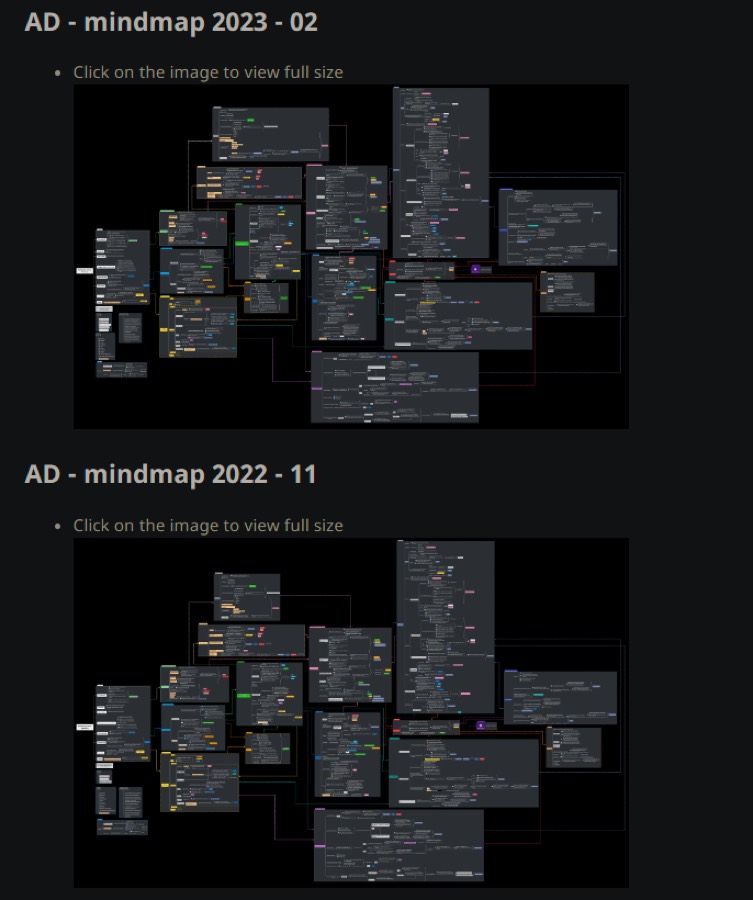
Active Directory Penetration Testing Orange Cyber-defense mind maps
Get Mind Map!
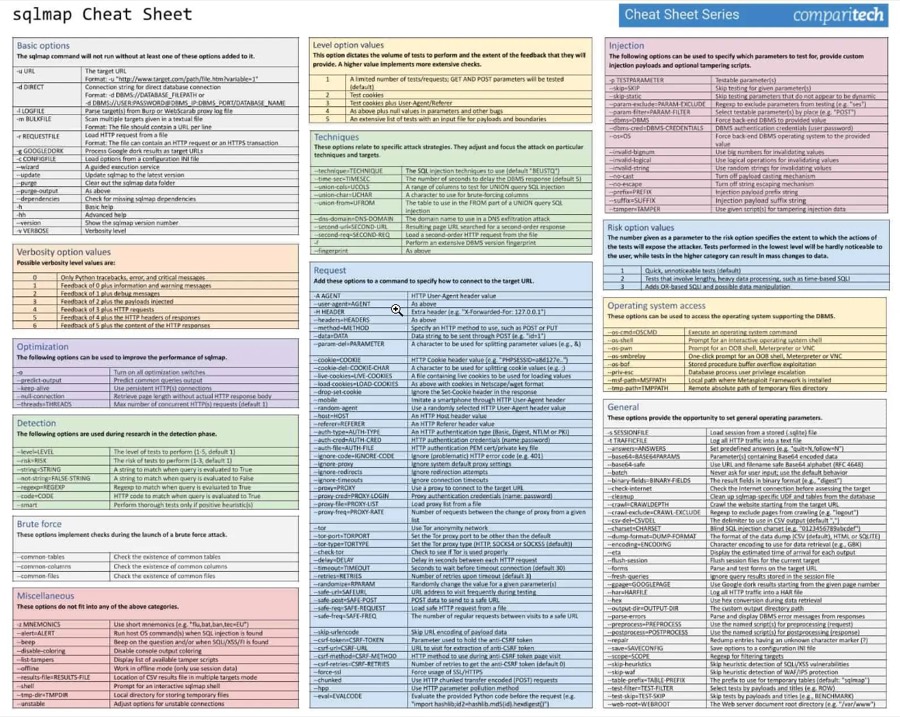
SQLmap Cheat Sheet
Link to Sheet
Announcing cvemap from ProjectDiscovery
Read Article Project Discovery Tool ManagerGitHub pdtm is a simple and easy-to-use golang based tool for managing open source projects from ProjectDiscovery. Security professionals are constantly on guard against cyber threats, especially given the rising number and sophisticatio

How to protect Evilginx using Cloudflare and HTML Obfuscation
Read Article Using a combination of Cloudflare and HTML Obfuscation, it is possible to protect your Evilginx server from being flagged as deceptive and so increase your chances of success on Red Team and Social Engineering engagements. Anyone who has tried to run a Social Enginee

How to Leverage Internal Proxies for Lateral Movement, Firewall Evasion, and Trust Exploitation
THE BUG HUNTERS METHODOLOGY LIVE
https://tbhmlive.com/ Jason Haddix TBHM Live – Course Info I am thrilled to introduce you to The Bug Hunter’s Methodology LIVE, my masterclass designed for aspiring and seasoned offensive security professionals, including web application security testers, red teamers, and bug bou
PWNAGOTCHI: DEEP REINFORCEMENT LEARNING FOR WIFI PWNING!
Project Site Pwnagotchi is an A2C-based “AI” powered by bettercap and running on a Raspberry Pi Zero W that learns from its surrounding WiFi environment in order to maximize the crackable WPA key material it captures (either through passive sniffing or by performing deauthenticat
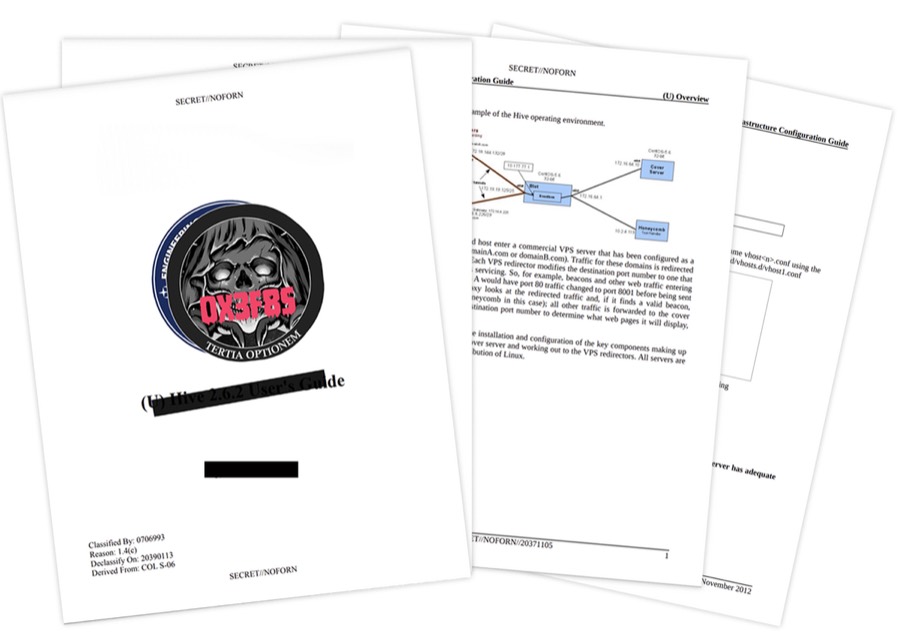
Automating C2 Infrastructure with Terraform, Nebula, Caddy and Cobalt Strike
Read Article The ability to quickly build out a C2 infrastructure within a few minutes, including all the set up and tear down logic included would be a great asset for any offensive security group or operator. In this post, I will show exactly how to build a fully automated func

FAKING BLUETOOTH LE WITH AN NRF24L01+ MODULE

SCADA systems: How secure are the systems running our infrastructure?⎥Malav Vyas (Security Researcher at Palo Alto Networks)

Review: Engineering-grade OT security: A manager’s guide

DreamBus Unleashes Metabase Mayhem With New Exploit Module
Read Article Key Takeaways

Detection 101: Top Detections for Email Phishing and BEC
Read Article Phishing Detections: Starting the DIR Process Email phishing and BEC attacks both rely on email communication, so an email security tool is integral to protecting your environment. However, while an email security tool plays a central role in detecting phishing attem

Hundreds of Thousands of Dollars Worth of Solana Cryptocurrency Assets Stolen in Recent CLINKSINK Drainer Campaigns
Read Article On January 3, 2024, Mandiant’s X social media account was taken over and subsequently used to distribute links to a cryptocurrency drainer phishing page. Working with X, we were able to regain control of the account and, based on our investigation over the following
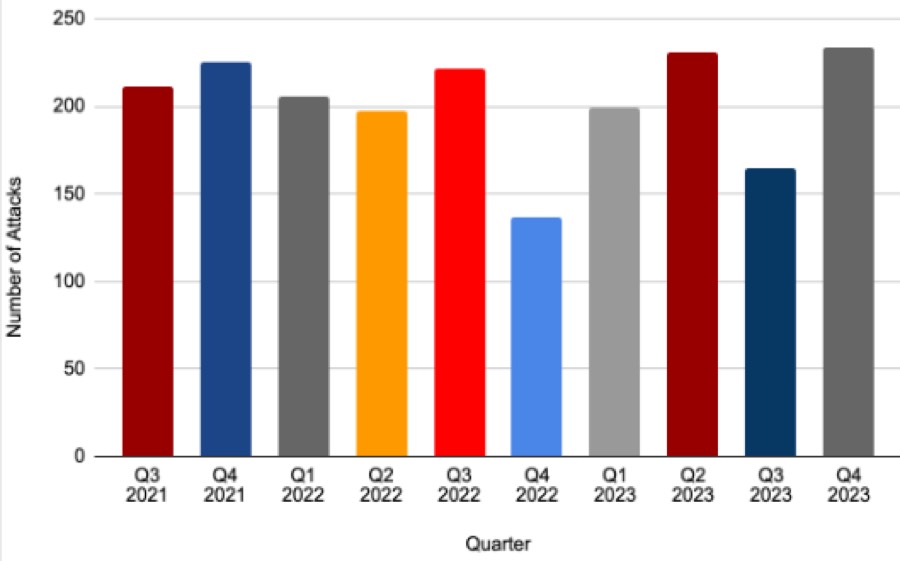
Flash Report: LockBit Ends 2023 with Record Number of Attacks
Read Article Key Findings

Backdoor.Win32 Carbanak (Anunak) / Named Pipe Null DACL
Read Article Discovery / credits: Malvuln (John Page aka hyp3rlinx) (c) 2024 Original source: https://malvuln.com/advisory/b8e1e5b832e5947f41fd6ae6ef6d09a1.txt Contact: malvuln13@gmail.com Media: twitter.com/malvuln Threat: Backdoor.Win32 Carbanak (Anunak) Vulnerability: Named Pi

Which type of malware resides only in RAM? Explaining fileless malware
Read Article Explaining malware which resides only in RAM Unlike traditional malware, which typically involves downloading and running an executable file, fileless malware operates in the system’s memory (RAM) and often exploits legitimate tools (like PowerShell, WMI, or Windows
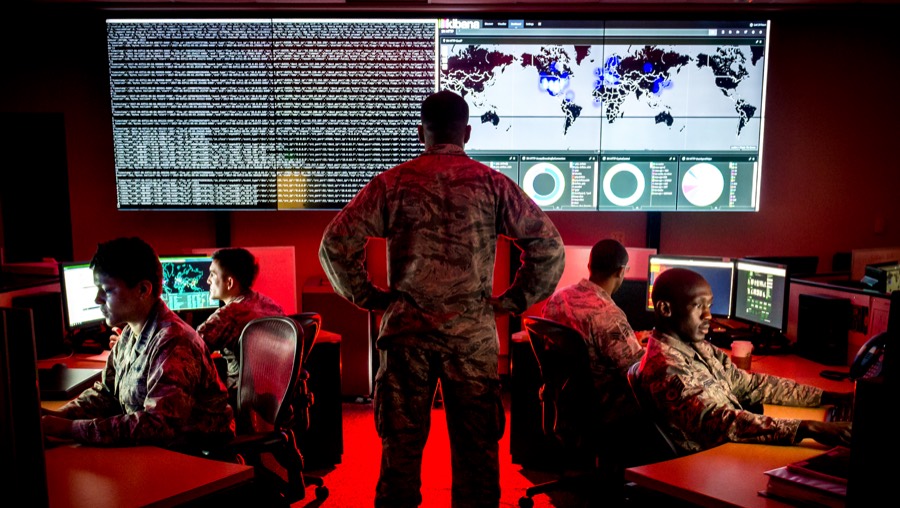
Hacked in China
Read Article foreign government’s response to a U.S. strategy document rarely earns front page coverage, but in the case of the Chinese Communist Party’s (CCP) recent reaction to the U.S. government’s new cyber strategy, we should all be paying attention. Tensions continue to esc

Financially motivated threat actors misusing App Installer
Read Article Since mid-November 2023, Microsoft Threat Intelligence has observed threat actors, including financially motivated actors like Storm-0569, Storm-1113, Sangria Tempest, and Storm-1674, utilizing the ms-appinstaller URI scheme (App Installer) to distribute malware. In

Opening a Can of Whoop Ads: Detecting and Disrupting a Malvertising Campaign Distributing Backdoors
Read Article Earlier this year, Mandiant’s Managed Defense threat hunting team identified an UNC2975 malicious advertising (“malvertising”) campaign presented to users in sponsored search engine results and social media posts, consistent with activity reported in From DarkGate to
Turkish Hackers Exploiting Poorly Secured MS SQL Servers Across the GlobeTurkish Hackers Exploiting Poorly Secured MS SQL Servers Across the Globe
Read Article Poorly secured Microsoft SQL (MS SQL) servers are being targeted in the U.S., European Union, and Latin American (LATAM) regions as part of an ongoing financially motivated campaign to gain initial access. “The analyzed threat campaign appears to end in one of two wa
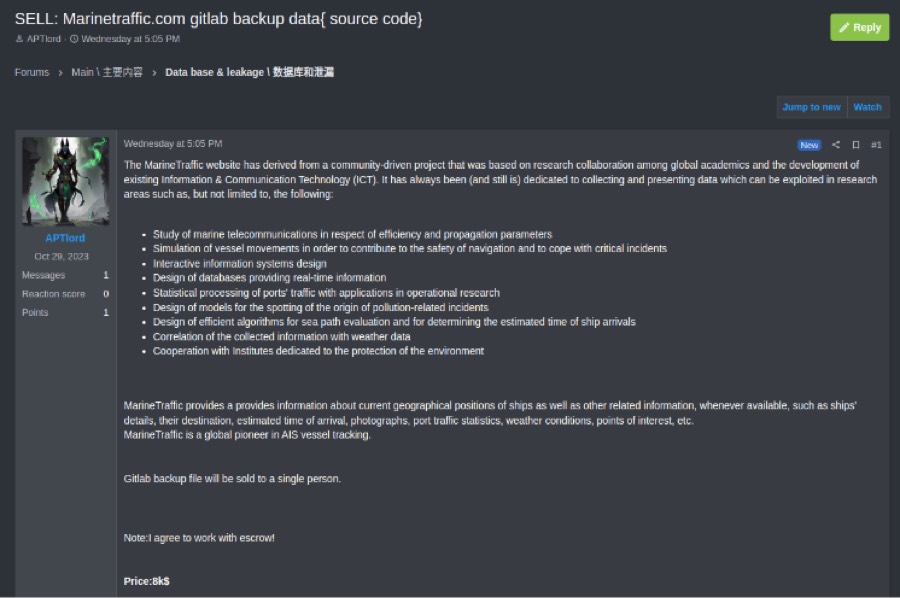
The Underground Economist: Volume 4, Issue 1
https://www.zerofox.com/blog/the-underground-economist-volume-4-issue-1/ On December 27, 2023, threat actor “APTlord” announced on the dark web forum RAMP that they were selling source code and other information owned by marinetraffic[.]com, which was allegedly obtained by the th

Custom GPTs: A Case of Malware Analysis and IoC Analyzing
Read Article On November 6, 2023, CustomGPTs, a new feature that OpenAI stated on its blog, became available. We can already say that the emergence of Custom Generative Pre-trained Transformers (GPTs) could mark a significant shift in the dynamics of both digital defense and offe
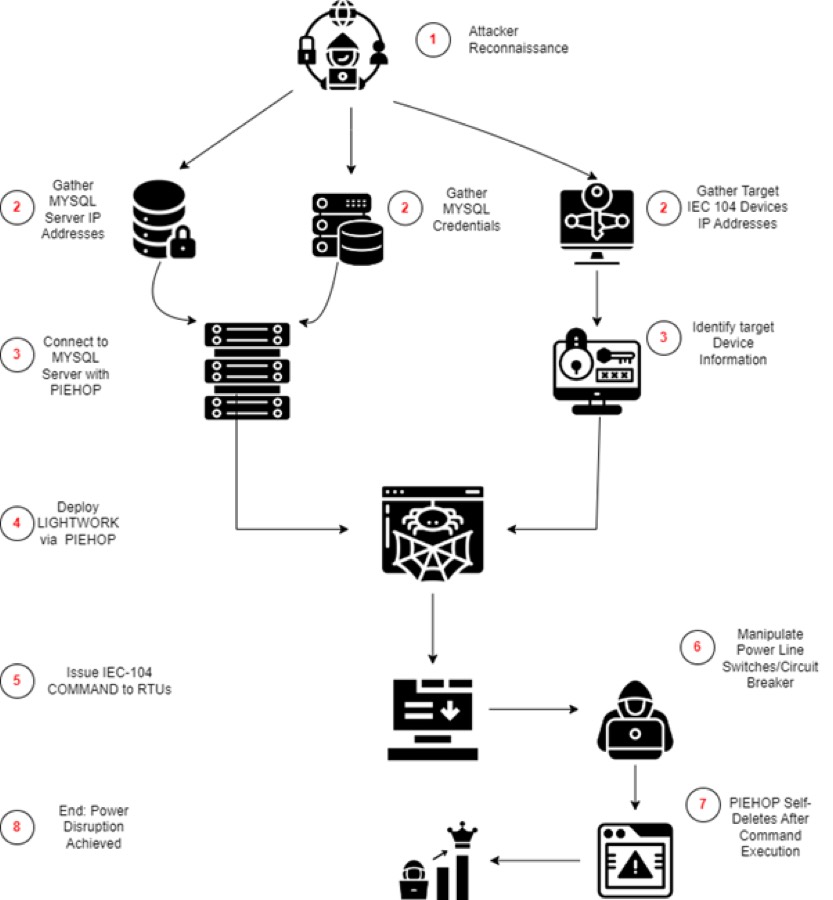
Analysis of OT cyberattacks and malwares

Hardware Implants as an Initial Access Vector
Read Article On every red team engagement, one of the first steps is to gain access to the target environment. Generally, red teams will leverage social engineering techniques to get their customer to run a payload sent through email or other digital means. Unfortunately for us,

Red Pandas Unleashed: How Webhooks, Bad USB, and WiFi Collide in Cyberspace
Read Article The Power of Automation for Pentesting Automation has become a game-changer in the world of penetration testing. With the ever-increasing complexity of networks and systems, manually tracking and responding to security events is no longer viable. This is where webhoo
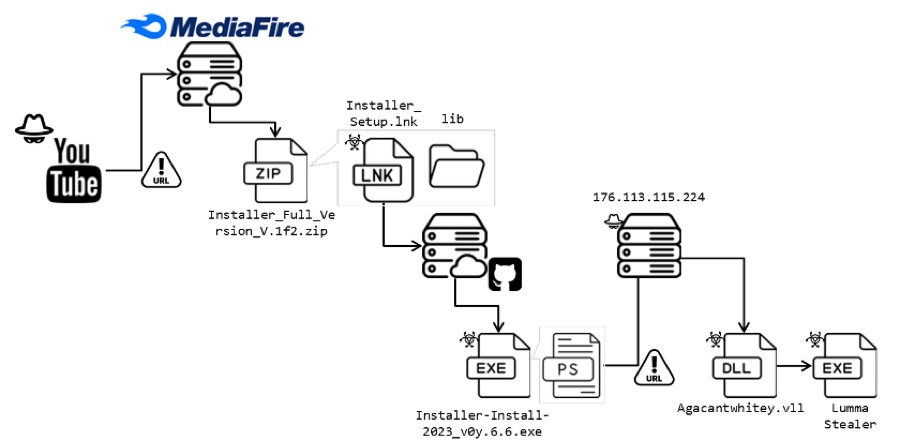
Deceptive Cracked Software Spreads Lumma Variant on YouTube
Read Article Initial Infection Vector The hacker initially breaches a YouTuber’s account and uploads videos masquerading as sharing cracked software. Figure 3 shows the video descriptions in which a malicious URL is embedded, enticing users to download a ZIP file that harbors mal

NoName on Rampage! Claims DDoS Attacks on Ukrainian Government Sites
Read Article NoName ransomware group has allegedly targeted multiple Ukrainian government websites. The latest victims of the alleged NoName ransomware attack on Ukraine include Accordbank, Zaporizhzhya Titanium-Magnesium Plant, State Tax Service, Central Interregional Tax Admini
Alert: Carbanak Malware Strikes Again With Updated Tactics

From Akamai to F5 to NTLM… with love.
Read Article Discovery Note: This paper will be covering 1 smuggle gadget out of about 10 that I use in my testing, however this paper will show how this gadget, originally found by @albinowax, can be modified to pin one provider against another in a brutal fashion as you will re

AsyncRAT loader: Obfuscation, DGAs, decoys and Govno
Read Article Executive summary AT&T Alien Labs has identified a campaign to deliver AsyncRAT onto unsuspecting victim systems. During at least 11 months, this threat actor has been working on delivering the RAT through an initial JavaScript file, embedded in a phishing page. Afte

Chapter 84: In-depth analysis and technical analysis of LockBit, the top encryption ransomware organization (Part 1)
Read Article Excerpt LockBit operators and affiliates will find ways to obtain the victim’s initial access rights and use them to deliver encrypted ransomware. The attack methods can be roughly divided into the following methods: 1. Extensive vulnerability scanning . Using Nday v

JavaScript Malware: 50,000+ Bank Users at Risk Worldwide
IOC: jscdnpack[.]com

OAuth endpoint “MultiLogin” identified as root for Google Chrome’s widely adopted session jacking exploit.
https://www.csoonline.com/article/1285861/highly-exploited-chromium-bug-traced-to-a-google-oauth-endpoint.html An undocumented Google OAuth endpoint has been identified to be the root of the notorious info stealing exploit that is being widely implemented by various threat actors

Prior to Cyber Attack, Russian Attackers Spent Months Inside the Ukraine Telecoms Giant
https://www.cysecurity.news/2024/01/prior-to-cyber-attack-russian-attackers.html Kyivstar experienced a large-scale malfunction in December 2023, resulting in the outage of mobile communications and the internet for about 24 million users for several days. How? Russian hackers br
Hackers Modifying Registry Keys to Establish Persistence via Scheduled Tasks

Tackling Anti-Analysis Techniques of GuLoader and RedLine Stealer
https://unit42.paloaltonetworks.com/malware-configuration-extraction-techniques-guloader-redline-stealer/

Hackers target Apache RocketMQ servers vulnerable to RCE attacks
https://www.bleepingcomputer.com/news/security/hackers-target-apache-rocketmq-servers-vulnerable-to-rce-attacks/

North Korea Debuts ‘SpectralBlur’ Malware Amid macOS Onslaught
https://www.darkreading.com/threat-intelligence/north-korea-debuts-spectralblur-malware-amid-macos-onslaught

Iran’s APT33 targets US defense contractors with novel malware
https://www.scmagazine.com/news/iranian-threat-group-apt33-targets-us-defense-contractors-with-novel-malware

100 Days of YARA – 2023
https://bitsofbinary.github.io/yara/2023/01/01/100daysofyara.html

Hide and Seek in Windows’ Closet: Unmasking the WinSxS Hijacking Hideout
https://www.securityjoes.com/post/hide-and-seek-in-windows-closet-unmasking-the-winsxs-hijacking-hideout