








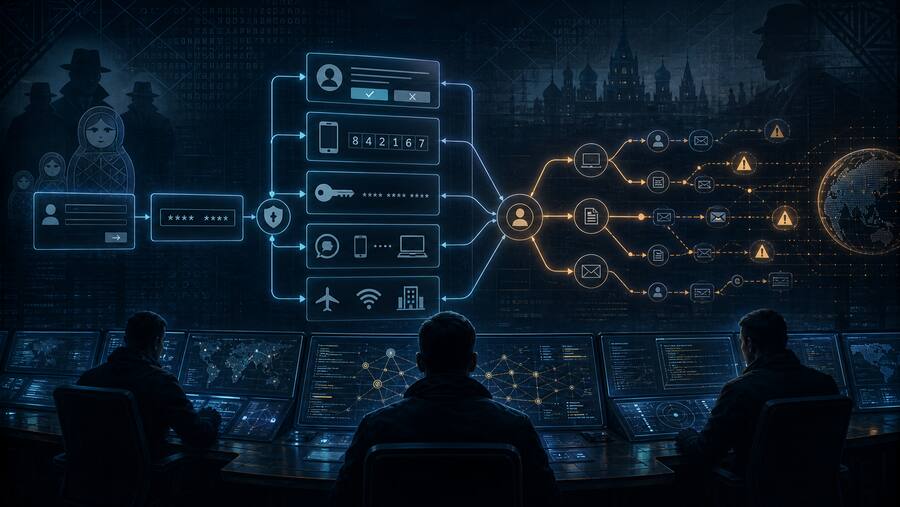

Security researchers at Malwarebytes have uncovered a new macOS infostealer called Infinity Stealer that combines the ClickFix social engineering technique with a Python payload compiled using the open-source Nuitka compiler — a first for documented macOS malware campaigns.
Why Nuitka Matters
Unlike PyInstaller, which bundles Python with bytecode that analysts can often extract and decompile, Nuitka compiles Python scripts into native C code, producing a true native binary. This makes the malware significantly harder to analyze through static reverse engineering and helps it evade detection.
The resulting 8.6 MB Mach-O binary contains a 35MB zstd-compressed archive housing the final payload: Infinity Stealer.
Attack Chain: From Fake CAPTCHA to Full Compromise
The attack begins with a ClickFix lure hosted on update-check[.]com:
- Fake CAPTCHA: Victims encounter a fake Cloudflare human verification challenge
- Malicious Command: Users are instructed to paste a base64-obfuscated curl command into macOS Terminal
- Stage 2 Loader: The command decodes a Bash script that writes the Nuitka loader to
/tmp, removes the quarantine flag, and executes it - Payload Delivery: The loader deploys Infinity Stealer (
UpdateHelper.bin) with C2 connection details passed via environment variables
Data Harvesting Capabilities
After performing anti-VM/sandbox checks, Infinity Stealer targets:
- Credentials from Chromium-based browsers and Firefox
- macOS Keychain entries
- Cryptocurrency wallets
- Plaintext secrets in developer files (e.g.,
.env) - Screenshots
All stolen data is exfiltrated via HTTP POST to the C2 server, with a Telegram notification sent to the threat actors upon completion.
Defensive Recommendations
- Never paste Terminal commands from websites — This is the core ClickFix vector
- Verify CAPTCHAs carefully — Legitimate Cloudflare challenges never require Terminal commands
- Enable macOS Gatekeeper — Helps prevent execution of unsigned code
- Monitor for suspicious
/tmpactivity — Malware often stages payloads here - Use credential managers with MFA — Reduces impact if browser credentials are stolen
Source
For the full technical analysis including indicators of compromise, see: Malwarebytes Threat Intelligence
Additional coverage: BleepingComputer